Discover 10 stylish and practical outdoor laundry ideas for your home. From smart drying stations to custom enclosures, find the best solution.

Doing the laundry is a constant in life, but where you do it doesn't have to be confined indoors. In a city like Melbourne, with its unique blend of sunny days and unpredictable weather, creating a functional and stylish outdoor laundry area is more than just a trend-it's a smart lifestyle upgrade.
An outdoor setup not only harnesses the natural power of the sun and wind to dry clothes, reducing energy bills and extending the life of your garments, but it also frees up valuable indoor space.
This guide explores 10 innovative outdoor laundry ideas, tailored specifically for Melbourne's climate and architecture. We'll move beyond the basic Hills Hoist to showcase everything from sleek, space-saving designs for compact courtyards to integrated garden solutions and custom-built drying enclosures.
Each concept is designed to be both practical and aesthetically pleasing, ensuring your utility space complements your home's overall design.
Whether you're planning a full renovation, undertaking an extension, or simply seeking to optimise your backyard, these actionable concepts will help you create an efficient and beautiful outdoor laundry space. Discover how to transform this everyday chore into a seamless, fresh-air experience that enhances your home and lifestyle.
1. Clothesline Drying Systems
The classic clothesline remains one of the most effective and eco-friendly outdoor laundry ideas available. This timeless method uses a simple line, typically made of rope or wire, strung between two fixed points to air-dry garments using natural sunlight and Melbourne’s breezes. Its enduring popularity in Australian backyards is a testament to its simplicity, cost-effectiveness, and sustainability.
Implementation and Best Practices
A well-placed clothesline can significantly reduce your reliance on electric dryers, lowering energy bills and gently preserving your fabrics. For maximum efficiency, install your line in a location that receives ample sunlight and good air circulation, away from overhanging trees that might drop debris. Modern variations offer enhanced functionality and aesthetics, making them a smart choice for any home.
- Material Choice: Opt for weather-resistant stainless steel cables or PVC-coated lines to prevent rust and sagging over time.
- Retractable Models: For homes where space is at a premium or aesthetics are a primary concern, retractable clotheslines can be discreetly mounted to a wall or post, extending only when needed.
- Ergonomic Height: Install the line at a comfortable height, typically around waist or chest level, to minimise bending and make hanging laundry easier.
Pro Tip: When hanging your laundry, organise items by their required drying time. Place heavier items like towels and denim at the start of the line where they can catch the most wind and sun, ensuring everything dries more evenly.
2. Standalone Rotary Clotheslines
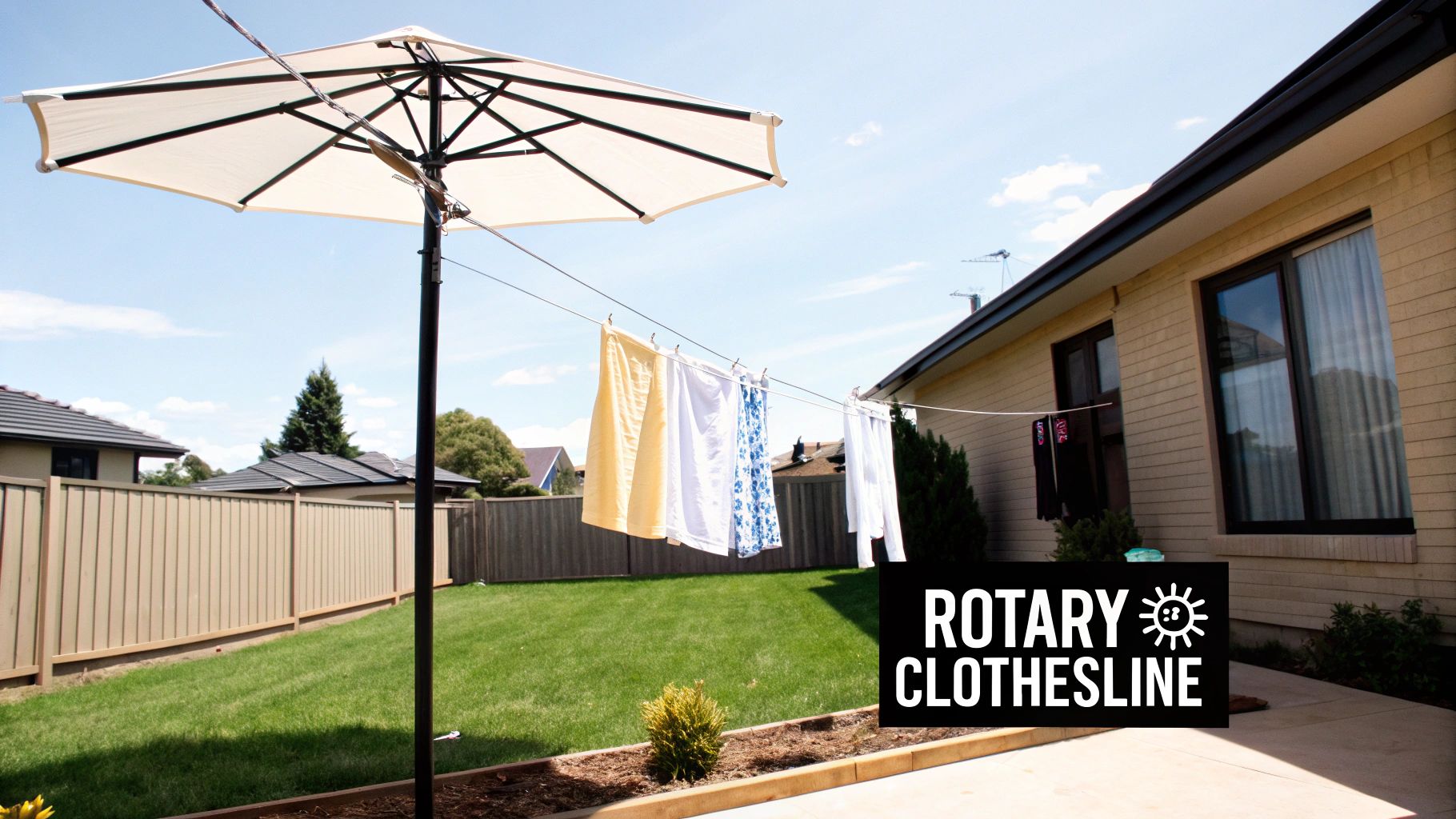
The standalone rotary clothesline, often recognised by its iconic umbrella-like shape, is a versatile and space-efficient solution for outdoor laundry. This popular design features multiple arms extending from a central pole, offering an impressive amount of line space in a compact footprint. Its rotating mechanism allows it to spin freely in the wind, which helps to accelerate drying times. Its a key feature that makes it one of the most effective outdoor laundry ideas for Melbourne homes with limited garden space.
Implementation and Best Practices
A rotary clothesline maximises drying capacity without demanding extensive garden area, making it ideal for suburban backyards, courtyards, or paved areas. Many models, such as those popularised by Australian brands like Hills and Sunflex, can be either permanently installed in the ground or placed in a weighted, portable base. This flexibility allows homeowners to position the clothesline for optimal sun and airflow and store it away when not in use.
- Secure the Base: For portable models, fill the base with sand or water to ensure it remains stable and upright, especially during Melbourne's notoriously windy days.
- Weather Protection: Consider investing in a model that comes with a protective cover. This keeps the lines clean when not in use and can also shield your laundry from unexpected light showers.
- Regular Maintenance: Once a year, check all metal components for signs of rust or wear and ensure the hoisting mechanism operates smoothly to prolong its lifespan.
Pro Tip: When hanging your laundry, distribute the weight of heavy items like wet towels and jumpers evenly around the rotary line. This balanced approach ensures the unit rotates smoothly and prevents it from tilting or becoming unstable in strong breezes.
3. Wall-Mounted Folding Clotheslines
Wall-mounted folding clotheslines are an ingenious space-saving solution, perfect for Melbourne’s compact courtyards, narrow side passages, or apartment balconies. These units mount directly onto an external wall or sturdy fence, featuring arms that extend to create taut drying lines and then fold away neatly when not in use. Their clever design offers the full benefits of a traditional line without permanently occupying valuable outdoor living space, making them one of the most practical outdoor laundry ideas for modern urban homes.
Implementation and Best Practices
A well-installed folding clothesline maximises drying efficiency while maintaining a clean, uncluttered aesthetic. Ideal for townhouses and units, they provide ample drying capacity that disappears when you need to entertain or simply enjoy your outdoor area. Choosing the right location and model is key to integrating this feature seamlessly into your home’s exterior.
- Structural Integrity: Ensure the chosen wall or fence can safely support the full weight of heavy, wet laundry. A brick or concrete wall is ideal, but a reinforced timber fence can also work.
- Rustproof Hardware: Given Melbourne's variable climate, especially in coastal suburbs, always use high-quality, rustproof stainless steel or galvanised fixings for installation to prevent corrosion.
- Sunlight Maximisation: For homes in the Southern Hemisphere, mounting the unit on a north-facing wall will capture the most sunlight throughout the day, significantly speeding up drying times.
- Scalable Capacity: For larger families, consider installing two smaller units side-by-side. This offers greater flexibility and capacity than a single large unit, allowing you to manage multiple loads at once.
Pro Tip: Before finalising the installation height, hold the unit against the wall and extend your arms as if hanging a large towel. This ensures the height is ergonomically comfortable, preventing unnecessary stretching or bending.
4. Overhead Pulley Drying Systems
Drawing inspiration from traditional European farmhouses, overhead pulley drying systems are a brilliantly efficient and space-saving outdoor laundry idea. This design utilises an elevated clothesline suspended between two tall points, such as posts or buildings, with a pulley mechanism that allows you to easily raise and lower the entire line. It keeps wet laundry high above ground-level activity, maximising exposure to sun and air while freeing up valuable yard space below.
Implementation and Best Practices
A pulley system is ideal for Melbourne homes with limited ground space or for those who want to keep the clothesline out of direct sightlines. By hoisting laundry into the open air, you accelerate drying times and keep garments away from pets, children, and ground-level moisture. Careful planning of anchor points and material selection is key to creating a safe and long-lasting system.
- Durable Components: Use marine-grade pulleys and stainless steel cable to withstand Melbourne's variable weather conditions and prevent rust or corrosion.
- Secure Anchors: Ensure the posts or wall anchors are structurally sound and deeply secured, as they will need to support the tension and weight of a full load of wet laundry.
- Safety First: Install safety stops or a cleat hitch to secure the rope, preventing the line from accidentally dropping or being over-raised.
Pro Tip: Position your pulley system to take advantage of natural thermal currents. Hot air rises, so a high-mounted line can capture upward breezes, significantly speeding up the drying process, especially on still but sunny days.
5. Solar-Powered Heated Drying Racks
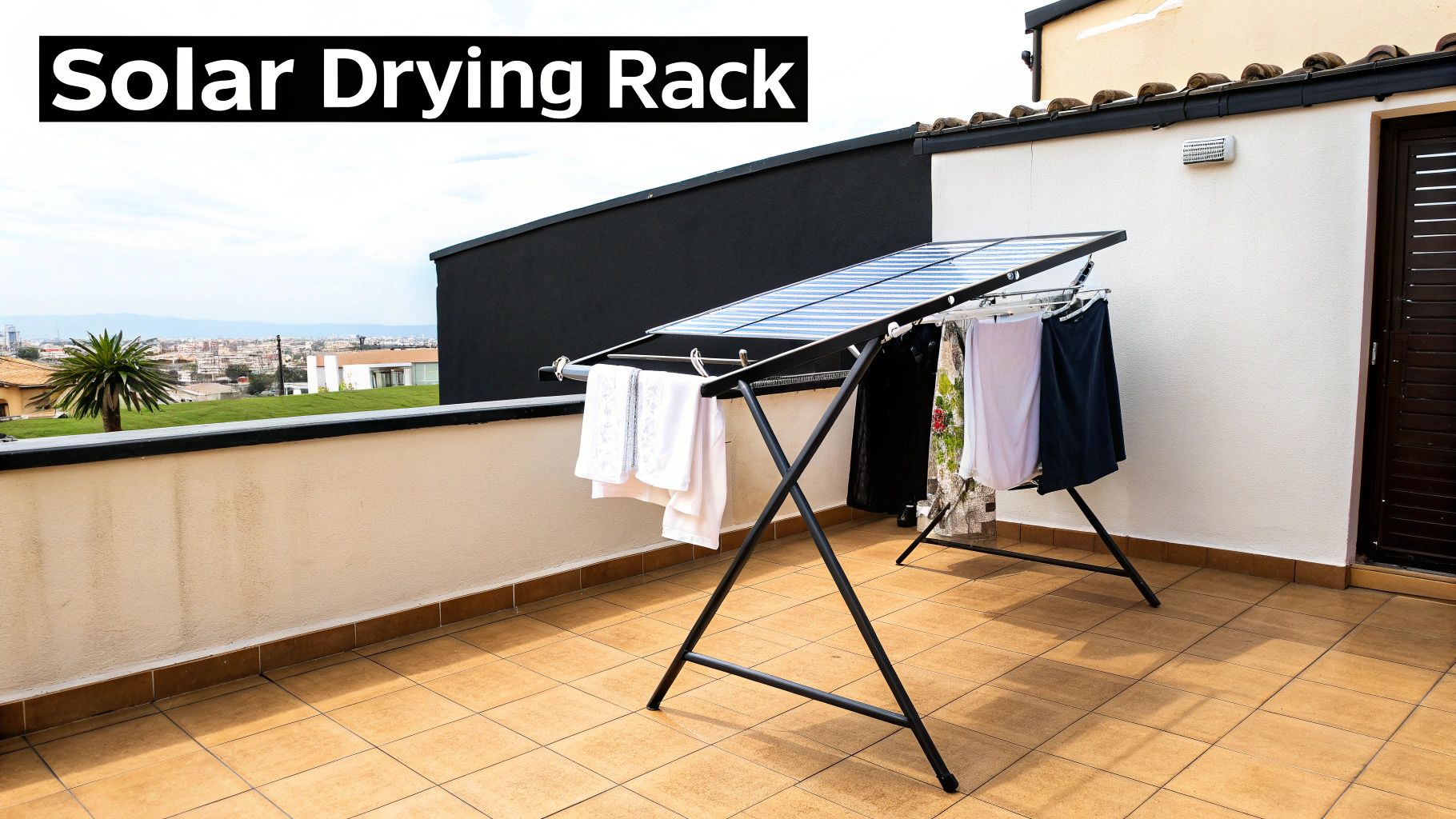
For homeowners seeking a modern, energy-efficient alternative to traditional drying, solar-powered heated drying racks offer an innovative solution. This clever outdoor laundry idea uses integrated solar panels to gently heat the rack's surfaces, which accelerates moisture evaporation without consuming mains electricity. It perfectly bridges the gap between passive air-drying and a conventional electric dryer, making it ideal for Melbourne’s variable climate.
Implementation and Best Practices
A solar-powered rack provides faster drying times, even on cooler but sunny days, reducing the risk of dampness and musty odours. To maximise its performance, the unit should be placed in an area of your backyard that receives direct, unobstructed sunlight for most of the day. This technology is gaining traction in Australian homes with abundant sunshine, offering a sustainable boost to laundry routines.
- Optimal Placement: Position the rack to face north, ensuring the solar panels capture the maximum amount of sunlight throughout the day.
- Regular Maintenance: Gently wipe down the solar panels monthly with a soft cloth to remove dust and debris, which ensures optimal energy conversion and heating efficiency.
- Battery Care: If your model includes a battery for storing solar energy, check its health and connections seasonally to ensure it holds a charge effectively for overcast periods.
Pro Tip: Plan your laundry schedule around sunny weather forecasts. Use the solar-heated rack for heavier items or when you need a quicker turnaround, capitalising on the free energy to speed up the process without increasing your power bill.
6. Natural Wind-Tunnel Drying Structures
For a truly innovative approach to outdoor laundry ideas, consider a structure designed to create a natural wind tunnel. This method uses smart architectural principles to channel prevailing breezes, significantly accelerating drying times without any mechanical assistance. Inspired by designs seen from Mediterranean coasts to rural Australian properties, these structures are both highly functional and can serve as a unique architectural feature in your garden.
Implementation and Best Practices
A purpose-built drying structure offers a sophisticated alternative to a simple clothesline, providing enhanced airflow and protection. The key is to orient the structure to capture and funnel Melbourne’s dominant winds, creating a vortex effect that whisks moisture away from fabrics. This design harmonises utility with landscape aesthetics, transforming a practical necessity into an elegant garden element.
- Strategic Positioning: Before building, research your property’s prevailing wind directions. Position the structure with wide openings perpendicular to the dominant wind path to maximise airflow.
- Slatted or Louvred Walls: Incorporate slatted timber or louvred panels into the walls. These allow wind to pass through freely while offering partial shelter from harsh sun or unexpected showers.
- Weather Protection: Include a partial or angled roof to shield laundry from rain while still allowing sunlight to penetrate and air to circulate effectively.
Pro Tip: Use weathered, sustainably sourced timber for the structure. This not only ensures durability but also helps the laundry area blend seamlessly with your garden and decking, reflecting the latest in organic outdoor living trends. For more ideas on integrating natural materials, you can explore outdoor living trends.
7. Collapsible Portable Drying Racks
For those with limited outdoor areas or a need for flexibility, collapsible portable drying racks offer an incredibly practical solution. These lightweight, foldable racks can be set up anywhere from a small balcony to a courtyard, providing instant drying space without permanent installation. Their adaptability makes them one of the most versatile outdoor laundry ideas, especially for renters, apartment dwellers, or anyone needing a temporary setup that can be easily stored away.
Implementation and Best Practices
A key advantage of portable racks is the ability to chase the sun throughout the day, ensuring garments dry quickly and efficiently. Their design is perfect for Melbourne’s variable weather, as they can be swiftly moved under cover if an unexpected shower arrives. By selecting the right model and using it strategically, you can maximise your drying capacity even in the most compact of spaces.
- Material Choice: Opt for racks made from rust-resistant materials like powder-coated steel or aluminium to withstand outdoor exposure and prevent rust stains on your clothes.
- Adjustable Designs: Look for models with adjustable heights and configurable wings. This allows you to accommodate longer items like towels and sheets without them touching the ground.
- Maximise Capacity: For larger loads, consider using multiple smaller racks. This modular approach allows for better air circulation between items and can be configured to fit unconventional spaces.
Pro Tip: Before storing your rack, wipe it down with a dry cloth. This removes any moisture and prevents mildew or rust from developing, significantly extending its lifespan and keeping it ready for its next use.
8. Laundry-Specific Garden Beds with Drying Integration
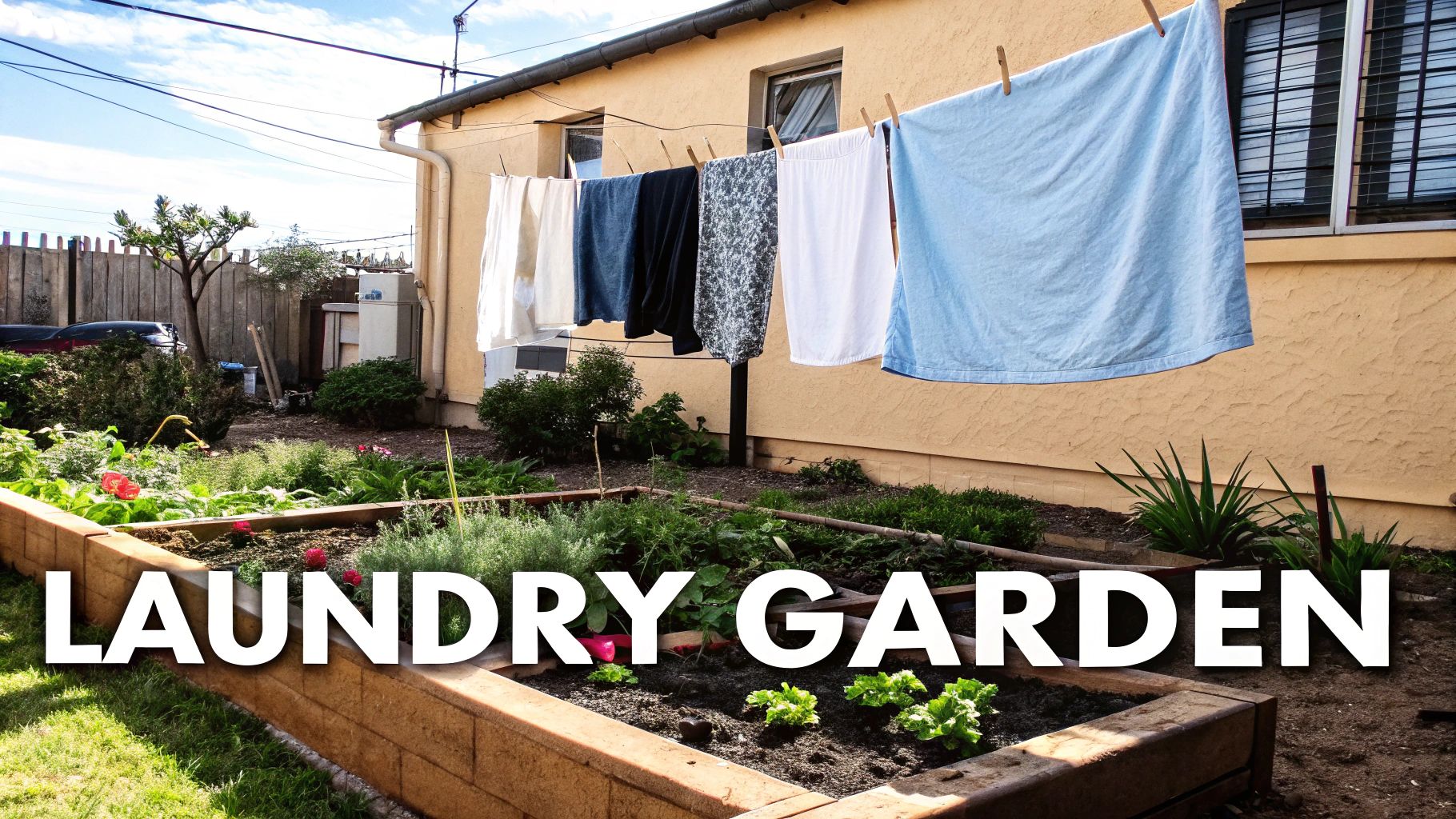
Combining utility with beauty, this outdoor laundry idea integrates your clothes drying area with functional garden beds. This clever design places herb and flower gardens beneath or adjacent to clotheslines, creating a multisensory and productive space. As laundry dries, it is surrounded by aromatic plants, while the herbs benefit from the warm, dry microclimate created by the airflow around the drying clothes.
Implementation and Best Practices
This permaculture-inspired approach turns a mundane chore into a pleasant garden activity, ideal for Melbourne homes that value both aesthetics and efficiency. Integrating your laundry with a garden is a key principle in many modern designs, and a well-thought-out plan can maximise the use of your outdoor space. For expert advice on incorporating such features, you can explore some top tips for successful laundry renovations.
- Plant Selection: Choose hardy, drought-tolerant herbs like rosemary, thyme, oregano, and lavender, as they thrive in the sunny, well-ventilated conditions found under a clothesline.
- Layout and Access: Ensure there is a clear, mud-free path to the clothesline and that the garden beds are designed for easy access for both hanging laundry and harvesting herbs.
- Watering System: Install a drip irrigation system to water plants efficiently without splashing soil onto your clean laundry.
Pro Tip: Be mindful that strongly scented herbs like lavender or rosemary can lightly infuse your drying laundry with their natural fragrance, adding a pleasant, chemical-free aroma to your clothes and linens.
9. Screened Outdoor Drying Enclosures
A screened outdoor drying enclosure offers a sophisticated solution that bridges the gap between open-air drying and the complete protection of an indoor laundry room. This concept involves a fully or partially enclosed structure, often featuring weatherproof screens, louvres, or fabric panels. It is designed to shield hanging clothes from Melbourne’s unpredictable rain, harsh sun, and insects while still promoting natural air circulation for efficient drying. This makes it one of the most versatile outdoor laundry ideas for year-round use.
Implementation and Best Practices
Creating a dedicated drying enclosure adds a functional and stylish element to your home, turning a simple utility area into a well-designed feature. These spaces are often integrated into decks, patios, or purpose-built extensions, providing a practical zone that keeps laundry out of sight. For optimal results, the design should prioritise airflow and light while offering robust protection from the elements.
- Material Selection: Use fine, durable mesh screens to prevent insects from reaching your clothes. For roofing, consider clear or tinted polycarbonate panels that allow sunlight to penetrate while blocking UV rays and rain.
- Ventilation Control: Incorporate adjustable louvres or windows that can be opened or closed to control airflow, allowing you to adapt to changing weather conditions.
- Weatherproof Design: Ensure the roof is pitched adequately for effective water drainage, preventing pooling and potential leaks during heavy downpours.
Pro Tip: Position the enclosure to capture the morning sun, which provides gentle warmth for drying without the intensity of the afternoon heat. This placement helps dry clothes faster while minimising the risk of sun-fading on delicate fabrics.
10. Smart Weather-Responsive Drying Stations
For the ultimate in convenience and fabric protection, smart weather-responsive drying stations represent the pinnacle of modern outdoor laundry ideas. These automated systems combine traditional air-drying with contemporary technology, featuring weather sensors and motorised mechanisms that automatically extend or retract your clothesline based on real-time conditions like rain or high winds. This innovation is perfect for Melbourne’s notoriously unpredictable weather, offering a set-and-forget solution.
Implementation and Best Practices
A smart drying station ensures your laundry is never caught in an unexpected downpour, providing peace of mind and protecting your garments. These systems are typically controlled via a mobile app, allowing you to monitor and manage your laundry remotely. They are an excellent investment for tech-savvy households and anyone looking to fully automate their home routines, blending seamlessly into modern architectural designs.
- Sensor Accuracy: Before installation, verify the accuracy of the system’s weather sensors for your specific Melbourne microclimate to ensure reliable operation.
- Manual Override: Choose a model that includes a backup manual operation feature, guaranteeing you can access your laundry even during a power outage or system malfunction.
- App Usability: Test the system’s mobile app interface to ensure it is intuitive and user-friendly for your day-to-day management.
Pro Tip: Check the warranty and local technical support options available for your chosen system. Having reliable support is crucial for sophisticated technology, ensuring any potential issues can be resolved quickly without disrupting your laundry routine.
10-Point Comparison: Outdoor Laundry Ideas
| Item | Resource requirements | Ideal use cases |
|---|---|---|
| Clothesline Drying Systems | Minimal materials, outdoor space; $20–$150 | Homes with outdoor space, sustainability-focused households |
| Standalone Rotary Clotheslines | Moderate materials/ballast; level ground; $80–$300 | Suburban gardens, medium-to-large households |
| Wall-Mounted Folding Clotheslines | Sturdy wall/fence and fixings; $20–$80 | Apartments, balconies, small patios |
| Overhead Pulley Drying Systems | Two tall anchor points, heavy-duty rope/pulleys; $150–$500 | Large properties, rural homes, historic houses |
| Solar-Powered Heated Drying Racks | Solar panels, battery, weatherproof rack; $200–$800 | Sunny climates, users wanting faster drying without grid power |
| Natural Wind-Tunnel Drying Structures | Significant materials/space; design input; $300–$1,500 | Properties with prevailing winds, permaculture or landscape projects |
| Collapsible Portable Drying Racks | Lightweight materials; small footprint; $30–$150 | Renters, campers, small outdoor spaces |
| Laundry-Specific Garden Beds with Drying Integration | Garden beds, plants, irrigation; $100–$400 | Home gardeners, permaculture designers, small estates |
| Screened Outdoor Drying Enclosures | Structural framing, screens/panels; $800–$3,000 | Variable climates, households wanting protected outdoor drying |
| Smart Weather-Responsive Drying Stations | Sensors, motors, app integration, power; $1,500–$5,000+ | Smart homes, premium properties, tech-forward users |
Choosing the Right Outdoor Laundry Solution for Your Home
We've explored a diverse range of outdoor laundry ideas, each offering a unique way to harness Melbourne's fresh air and sunshine, turning a routine chore into an efficient and even enjoyable task. From the classic functionality of a standalone rotary clothesline to the space-saving ingenuity of wall-mounted and overhead pulley systems, the right solution is about tailoring functionality to your specific property and lifestyle.
The key takeaway is that an outdoor laundry area is no longer just about a single clothesline. Modern solutions integrate technology, clever design, and an understanding of our unique climate. Think of the innovative solar-powered heated racks that defy a damp Melbourne day, or the architectural elegance of a natural wind-tunnel drying structure that combines form with function. These concepts prove that practicality doesn't have to come at the expense of style.
Final Considerations for Your Melbourne Home
Before making your final decision, it's crucial to evaluate your own needs against the options presented. Consider these final points:
- Space and Layout: How much dedicated space can you afford? A sprawling backyard might perfectly accommodate a large rotary hoist, while a compact courtyard or balcony is better suited for a wall-mounted folding line or a collapsible rack.
- Weather Exposure: Your home's orientation and exposure to sun and wind are paramount. A smart weather-responsive station offers the ultimate peace of mind, while a screened drying enclosure provides reliable protection from sudden downpours and debris.
- Aesthetic Integration: Does your chosen solution complement your home's architecture and garden design? A custom-built laundry garden bed or a sleek, minimalist pulley system can enhance your outdoor aesthetic, rather than detract from it.
- Lifestyle and Laundry Volume: A large, active family will benefit from high-capacity solutions like a rotary line or a multi-level screened enclosure. For smaller households or those with less frequent laundry needs, a portable or collapsible option might be sufficient.
Ultimately, crafting the perfect outdoor laundry setup is an investment in your home's efficiency and your quality of life. By moving this essential task outdoors, you free up valuable indoor space, reduce your energy consumption, and benefit from naturally fresh, sun-dried linens. The most successful outdoor laundry ideas are those that feel like a seamless extension of your home, thoughtfully designed to meet the demands of your daily routine while respecting the character of your outdoor space.
Are You Ready?
Ready to transform your backyard with a practical and stylish outdoor laundry solution? The expert team at Smarter Home Renovations specialises in creating bespoke outdoor living and utility areas tailored to Melbourne homes.
Visit Smarter Home Renovations to see how we can design and build the perfect outdoor laundry setup that is durable, functional, and beautifully integrated with your property.