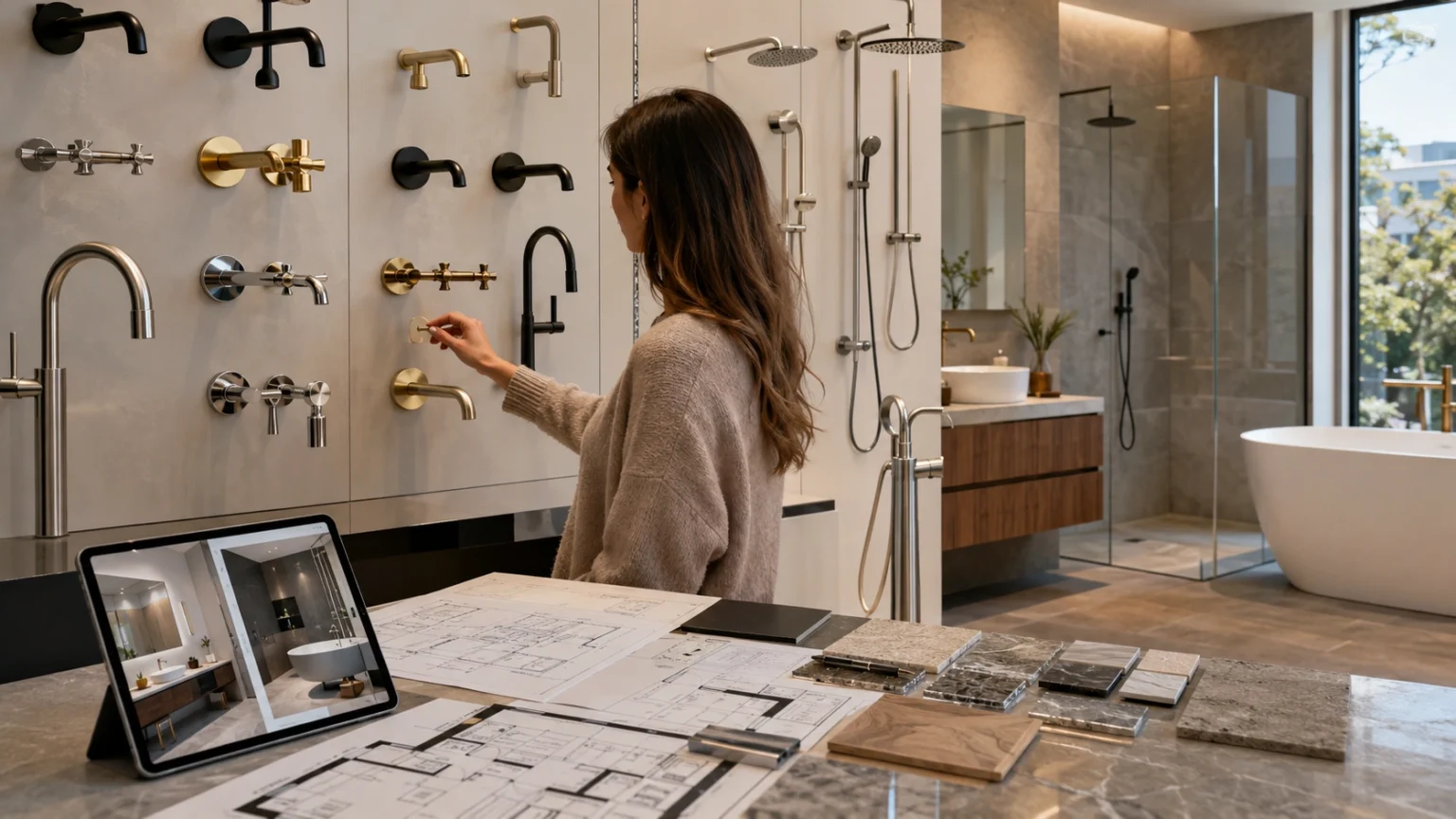
Discover the best Bathroom Tapware Melbourne homeowners love. Compare finishes, WELS ratings, and styles for your 2026 renovation.
You’re probably looking at a screen full of tapware right now. Chrome mixers, matte black wall sets, brushed brass spouts, pin lever handles, cross handles, goosenecks, floor-mounted fillers. They all look good in isolation, and that’s usually where the confusion starts.
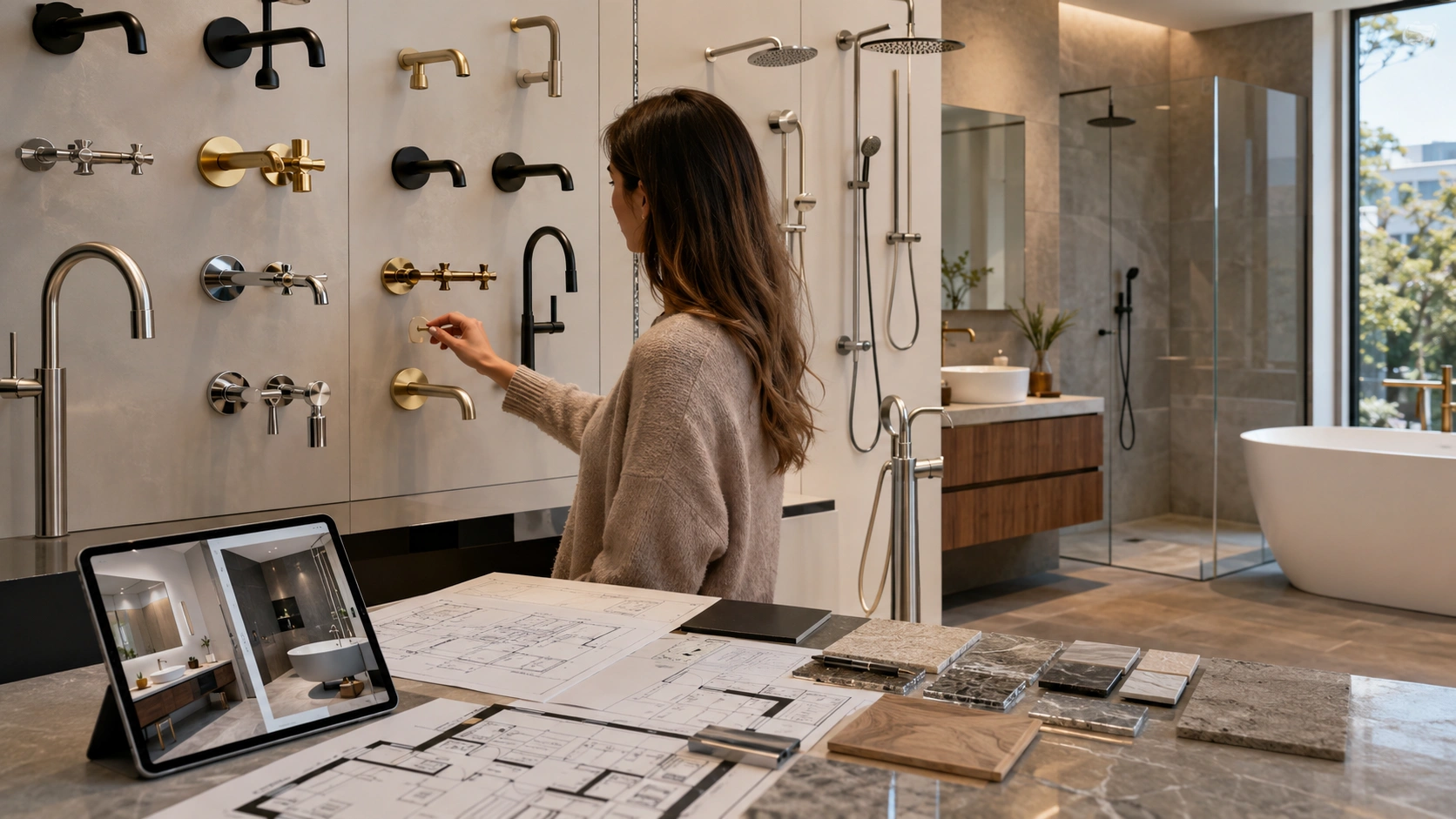
The right choice for bathroom tapware for melbourne homes isn’t just about what looks best in a showroom. It has to suit the way your bathroom is built, the plumbing already in the walls, the finish level you want, and how much maintenance you’re willing to live with after the renovation is done.
Melbourne homeowners now have access to a larger and far more competitive bathroom products market than many people realise. According to the Expert Market Research Australia Bathroom Products Market Report, Australia’s bathroom products sector is projected to grow significantly over the next decade, driven by rising renovation activity, modern design trends, and increasing demand for premium fixtures and fittings.
For homeowners, this means more choice across tapware, vanities, showers, basins, tiles, and accessories than ever before. However, with such a wide range of products, suppliers, and price points available, it also increases the risk of choosing poor-quality materials, incompatible fittings, or products that simply do not suit the space long term.
Good tapware selection comes down to four things. Function, finish, compliance, and installation reality.
Get those four right and the bathroom feels cohesive and works properly every day. Get one wrong and you end up with a bathroom that either dates quickly, marks easily, feels awkward to use, or costs more to install than expected.
Your Guide to Choosing Bathroom Tapware in Melbourne
A lot of people choose tapware too late.
They pick tiles, vanity, mirror and shower screen first, then try to match taps at the end. That’s backwards. Tapware affects wall set-out, spout reach, mixer position, basin compatibility, rough-in planning and, in some bathrooms, whether you need extra plumbing work inside the wall.
That matters even more in Melbourne, where homes vary so much. A compact apartment ensuite has different constraints from a Californian bungalow, a brick veneer family home, or a period property with older plumbing and non-standard wall conditions.
Start with how the bathroom will actually be used
Before you compare finishes, decide how each fixture needs to perform.
- Family bathroom: Prioritise easy-clean finishes, straightforward controls and durable materials.
- Ensuite: You can lean further into design because usage is usually lighter and more predictable.
- Investment property: Choose compliant, readily serviceable tapware with replacement parts that are easier to source.
- Period home: Keep the visual language consistent with the house, but don’t let heritage style force you into impractical selections.
A stylish tap that splashes all over the vanity or feels cramped over a basin isn’t a good choice. A simpler product that works properly often ages better.
The biggest mistake is treating tapware as a standalone purchase
Tapware has to work with the basin shape, vanity depth, splashback height and wall construction. That’s why people often run into trouble when they buy online based on finish alone.
Practical rule: Choose your basin and tapware as a pair, not as separate design decisions.
The strongest outcomes usually come from deciding in this order:
- Bathroom layout
- Basin type
- Tapware format
- Finish
- Installation method
That order keeps the renovation practical. It also helps you avoid paying for changes later when the plumber or tiler finds a mismatch on site.
Understanding Tapware Types and Bathroom Styles
Some tapware looks interchangeable until it’s time to install it. It isn’t.
The tapware format changes how the vanity reads, how easy the bathroom is to clean, and how much work sits behind the wall.

Common tapware types that work in Melbourne bathrooms
- Basin mixer: Best for most renovations. One fitting, simple operation, cleaner look, and usually the easiest option when you want practicality without overcomplicating the plumbing.
- Wall mixer and wall spout: Great for a cleaner vanity top and easier wiping around the basin. It needs better planning because set-out matters. If the rough-in is wrong, the final result feels awkward every day.
- Three-piece tap set: Suits heritage and traditional bathrooms. Separate hot and cold handles can look excellent in period homes, but they usually require more thought around spacing and basin compatibility.
- Floor-mounted bath filler: Works when the bath sits away from the wall and the room has enough space to justify it. In smaller bathrooms, it often becomes a visual obstacle rather than a feature.
If you’re weighing utility beyond the bathroom, some households also look at specialty fixtures such as an instant hot water tap in Melbourne, especially when they want convenience features coordinated across multiple wet areas.
What suits which bathroom style
A tap can look perfect on its own and completely wrong once it’s paired with the room.
- Modern: Clean lines, restrained shapes, slim mixers, simple spouts. This style works best when the rest of the room is also disciplined. Too many curves or decorative details weaken it.
- Industrial: Strong silhouettes, darker finishes, knurled details, exposed forms. It suits concrete-look tiles, framed shower screens and textured joinery. Used badly, it can feel cold.
- Coastal: Softer edges, lighter finishes, and fittings that don’t dominate the room. Coastal bathrooms need restraint. Over-styling them with statement tapware usually misses the point.
- Heritage or period: Cross handles, curved spouts and more classical detailing. These work well in older Melbourne homes, especially where architraves, ceiling roses or traditional joinery are already doing visual work.
A good way to keep the room coherent is to repeat the same design language through the accessories. Towel rails, robe hooks and shower controls should feel related to the basin set, not chosen as afterthoughts.
For homeowners comparing finishes and layouts, current bathroom design trends for 2025 can be useful as a reference point, but trends should come second to fit-for-purpose planning.
If you’re torn between two tapware styles, choose the one that matches the architecture of the home first. That decision usually lasts longer than the trend-led option.
How to Select Durable Tapware Finishes and Materials
Most tapware problems don’t start with colour. They start with the base material, the coating quality, and whether the finish suits the way the bathroom is used.
Melbourne homes can be hard on poor-quality tapware. Water quality, daily cleaning habits, and pressure conditions all expose weak products quickly. For that reason, material matters as much as appearance.

Finishes that homeowners compare most often
Chrome
- Durability: Usually the safest all-rounder when product quality is sound.
- Maintenance: Easy to wipe clean, but it shows water marks more readily than brushed finishes.
- Cost position: Often easier to source across many price points.
- Best use case: Family bathrooms, investment properties, and bathrooms where you want a timeless look without fuss.
Chrome works because it doesn’t fight with other selections. It also makes replacement or matching accessories simpler later.
Matte black
- Durability: Looks sharp, but the finish has to be good. Lower-quality products can mark or scratch more obviously.
- Maintenance: Better at hiding fingerprints than polished surfaces, but soap residue and fine wear can become visible over time.
- Cost position: Often sits above basic chrome options.
- Best use case: Contemporary bathrooms with strong contrast and a controlled palette.
Matte black can look excellent, but it needs discipline across the rest of the room. If every other choice is soft or traditional, it can feel forced.
Brushed nickel
- Durability: A practical middle ground with a softer visual result.
- Maintenance: Usually forgiving. It tends to hide minor spotting better than highly reflective finishes.
- Cost position: Commonly a more premium-looking option than standard chrome.
- Best use case: Warm modern bathrooms and spaces where you want softness without going decorative.
Brushed brass or gold
- Durability: Depends heavily on manufacturing quality and coating consistency.
- Maintenance: Better than many people expect if the finish is brushed rather than mirror-polished.
- Cost position: Often selected as a feature finish, so buyers should expect less flexibility on range and replacements.
- Best use case: Feature ensuites, curated period updates, and bathrooms where tapware is meant to stand out.
Brass can enhance a room quickly. It can also date a bathroom quickly if everything else is trend-driven.
Core materials that deserve more attention
Solid brass
- Key benefit: Proven and widely used in quality tapware.
- Limitation: Product quality still varies, and not every brass-bodied tap is equal.
- Best use case: Homeowners wanting an established premium material with broad design availability.
SS304 stainless steel
- Key benefit: Strong choice for Melbourne conditions. Yabby’s product guidance notes that SS304 stainless steel tapware handles variable water chemistry well, withstands higher chloride levels, helps prevent pitting corrosion seen in lesser materials, resists pressure surges up to 500kPa in line with the AS/NZS 3500.1 benchmark for urban mains, and reduces limescale build-up.
- Limitation: The aesthetic is more specific. It won’t suit every heritage scheme.
- Best use case: Homes where longevity, hygiene and lower maintenance matter more than decorative finish trends.
What actually works in real bathrooms
The safest long-term combination is often a durable core material with a finish that doesn’t demand constant attention.
- Low-maintenance priority: Chrome or brushed nickel.
- Design-first priority: Matte black or brushed brass, but only if the rest of the room supports it.
- Performance-first priority: SS304 stainless steel where water conditions and durability are bigger concerns.
Don’t choose a finish based only on a sample board. Look at it next to your tile, vanity colour, mirror frame and natural light.
Meeting Melbourne's Water Efficiency and Plumbing Standards
Compliance sounds boring until it saves you from replacing the wrong product.
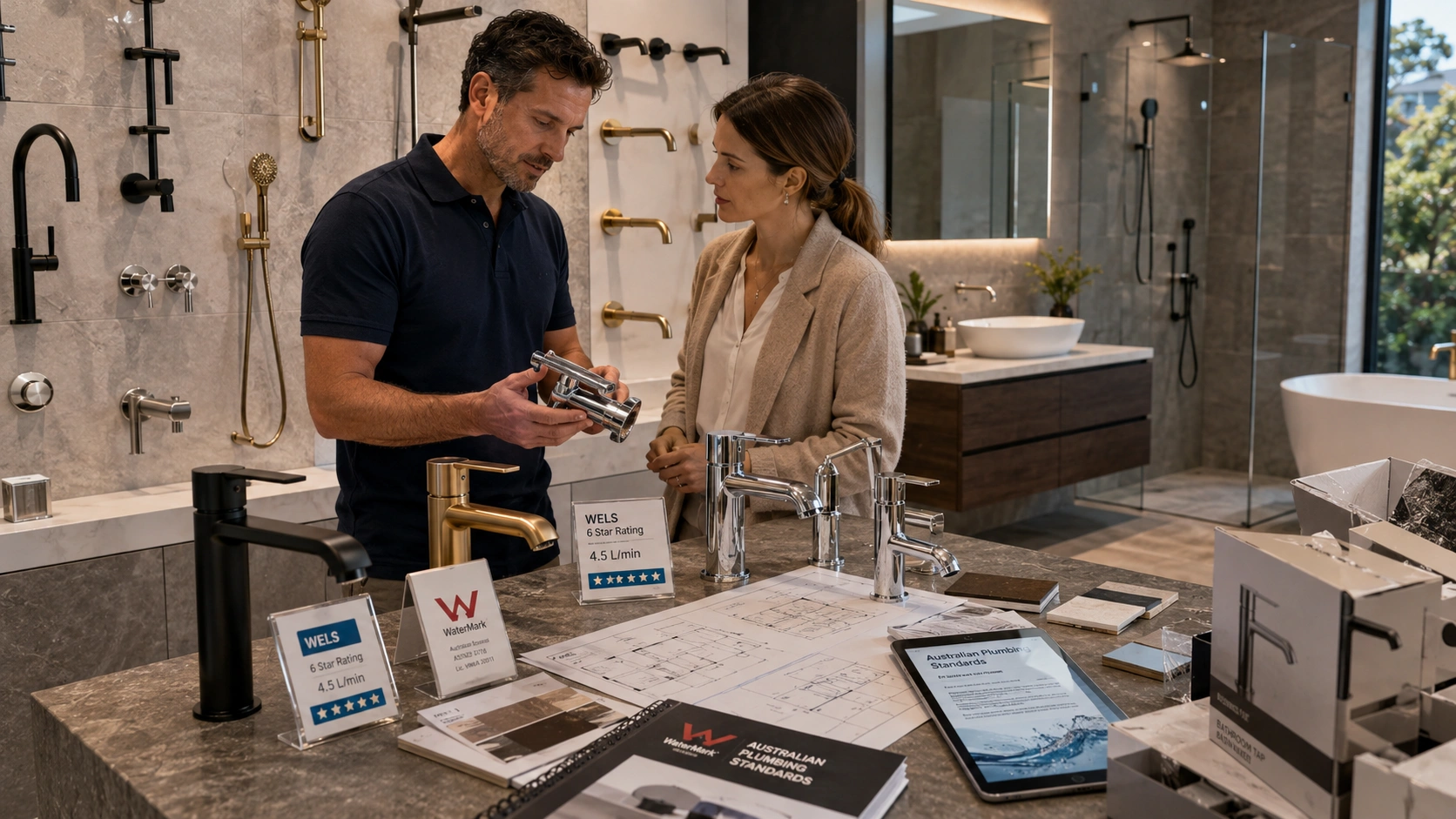
In bathrooms, the two labels that matter most are WELS and WaterMark. If you ignore them, you risk choosing tapware that either performs poorly, isn’t suitable for the installation, or creates trouble when the plumber checks the product.
Why WELS matters in a real bathroom
WELS tells you how much water a product uses. For basin taps, that affects daily running costs and how the tap feels in use.
According to Cook & Bathe’s tapware collection information, a WELS 6-star rated tap uses 4.5 litres per minute and can save a Melbourne household about 25,000 litres of water per year from a single basin compared with older 9L/min taps. The same source says that equates to about AUD 80 in annual savings per tap at current Melbourne Water tariffs.
That’s not just a label benefit. In a busy family home, a better-rated basin tap can reduce waste without making the basin unpleasant to use.
WaterMark is not optional
WaterMark is the product compliance side. It tells your plumber and your renovator that the tapware is approved for plumbing use in Australia.
If a product doesn’t have proper certification, it may still look good online. That doesn’t make it suitable. Imported tapware is where people often get caught, especially when the listing focuses on finish and price but says very little about compliance.
Site check: Before buying any tapware, confirm the WELS rating, WaterMark compliance, and the exact installation requirements. Don’t assume a seller has checked it for you.
Plumbing standards affect product choice
A good tapware selection also depends on how the bathroom is roughed in. Wall-mounted fittings, in particular, need accurate set-out and coordination with basin depth and tile finish.
If you want a clearer picture of what gets locked in behind the wall before the bathroom is finished, this guide to plumbing rough-ins is useful context. It explains why so many tapware decisions need to be made early rather than after the walls are sheeted or tiled.
Planning Your Tapware Installation and Renovation Timeline
Tapware often gets treated like a simple fit-off item. In reality, the installation cost can range from straightforward to frustrating depending on what you’re changing.
The problem isn’t usually the tap itself. It’s the plumbing work that sits behind it.
Why tapware changes can blow out labour
Many online guides make installation sound easy, but Bright Renovation’s Melbourne tapware article points out that the total project cost is heavily influenced by labour, that Victorian law requires a professional plumber, and that altering existing plumbing can add major unforeseen costs and delays.
Those hidden issues usually show up in a few common scenarios:
- Changing from three-piece tapware to a mixer: This can mean reworking existing penetrations and changing rough-in positions.
- Switching to wall-mounted basin tapware: The wall needs accurate plumbing placement before waterproofing and tiling are complete.
- Moving the basin location: Even a small shift can affect waste, water feeds, cabinetry and wall patching.
- Working in older homes: Existing pipework can be less predictable, and rectification often takes longer than people expect.
What tends to be simple and what doesn’t
A like-for-like replacement is usually the most controlled option. If the new tapware format matches the existing set-out, the install path is more straightforward.
A format change is where complexity starts. Once you alter the plumbing layout, you’re no longer just swapping a tap. You’re affecting rough-in, wall prep, waterproofing sequence, and often the tiling schedule too.
The easiest-looking design upgrades often create the most work behind the wall.
Timing matters as much as the product choice
Tapware selection should happen before rough-in decisions are finalised. Waiting too long forces trades to make assumptions, and those assumptions can create rework.
This is why full-scope renovation planning matters. Homeowners comparing build approaches can get a sense of what coordinated professional bathroom renovation services include, especially when multiple trades have to line up properly rather than arriving in isolation.
If you want a realistic sense of how these decisions affect the broader schedule, this overview of how long a bathroom remodel takes gives useful timing context. It helps explain why one tapware decision can influence several later stages of the renovation.
Where to Buy Your Bathroom Tapware in Melbourne
Where you buy tapware changes the level of risk as much as the level of convenience.
Melbourne buyers have plenty of options, from hardware chains to specialist showrooms to online stores. The best buying channel depends on how confident you are in specifications, compliance and compatibility.

The main buying options
- Large hardware retailers: Convenient and accessible. Good for basic replacements, but the range can lean toward broad appeal rather than tightly coordinated design schemes.
- Specialist bathroom showrooms: Better for comparing finishes, handle shapes and full collections in person. This is often where homeowners make stronger style decisions.
- Online-only stores: Useful for range and browsing speed, but you need to check dimensions, compliance and returns carefully.
- Through a renovation company or designer-led selection process: Best when you want the tapware to be checked against layout, plumbing and overall project scope before purchase.
Why local supply matters
Melbourne’s premium tapware market has local depth. In 2024, global sanitaryware leader Roca Group acquired Melbourne-based Phoenix Tapware. According to Roca Group’s acquisition announcement, Phoenix had AUD $57.8 million turnover and two local facilities in Melbourne. That move signals strong confidence in the local market and supports supply access to premium, design-led products.
For homeowners, that matters because replacement parts, finish consistency, and local product availability all become more manageable when the supply chain is stronger.
What usually goes wrong when people buy tapware too early
The most common purchasing mistake isn’t choosing ugly tapware. It’s choosing tapware before checking:
- Basin compatibility
- Wall or bench mounting requirements
- Compliance
- Lead times
- Serviceability
- Whether the selected format suits the plumbing plan
Buying smart means asking practical questions before paying the invoice. If a seller can’t clearly answer how the product will be installed, that’s a warning sign.
Making the Smart Choice for Your Melbourne Bathroom
The best bathroom tapware melbourne homeowners choose usually isn’t the flashiest option. It’s the one that suits the bathroom layout, feels right with the home’s style, holds up to daily use, meets compliance requirements, and doesn’t create unnecessary installation work.
A smart decision balances type, finish, material, water efficiency and installation reality. If even one of those is ignored, the bathroom can cost more, wear faster, or feel wrong once it’s finished.
Choose tapware early. Check compliance properly. Match the fixture to the basin and the room, not just to a trend photo. And if the plumbing change is more complex than it looks, treat it that way from the start.
Frequently Asked Questions About Bathroom Tapware
Can I use modern tapware in a Period Melbourne home
Yes, but it has to be intentional.
Modern tapware can work in a period home if the bathroom itself is being interpreted in a cleaner, updated way. If the room keeps heritage details such as traditional joinery, classical tiling or period-inspired fittings, a tap set with softer lines or separate handles often sits more naturally.
What finish is easiest to maintain
Chrome and brushed finishes are usually the easiest to live with.
Highly reflective finishes show marks sooner. Darker finishes can hide some fingerprints but may show wear or scratches more obviously if the product quality is poor or cleaning is too aggressive.
Is wall-mounted tapware worth it
Often, yes.
Wall-mounted basin tapware creates a cleaner vanity surface and can look more refined. The trade-off is planning. Set-out has to be right, and the basin and spout pairing need more care than a standard bench-mounted mixer.
Can I install bathroom tapware myself in Victoria
For bathroom plumbing work, assume you need a licensed plumber.
The legal side matters, but so does the practical side. Even when a swap looks simple, mistakes in sealing, connections or product selection can create leaks, pressure issues or expensive rectification work later.
Should I buy tapware online
You can, but only if you verify the important details first.
Check compliance, dimensions, mounting style, thread compatibility, warranty support and return terms. The biggest online mistakes happen when buyers focus on finish and price, then discover the product doesn’t suit the basin or plumbing layout.
Is expensive tapware always better
No.
Better tapware usually shows its value in build quality, cartridge quality, finish consistency, serviceability and long-term durability. But a more expensive tap in the wrong format is still the wrong tap.
What should I decide first, the basin or the tapware
Choose them together, with the basin slightly ahead.
Spout height, projection and mixer placement all depend on the basin form. If you lock in tapware first, you narrow your basin options and increase the chance of splash or awkward reach.
How do I avoid regretting a trendy finish
Test it against the whole room, not just a sample.
A finish should work with tile colour, vanity tone, mirror shape, shower frame and lighting. If the finish is the only strong design statement in the bathroom, it can date faster than a more balanced selection.
If you want help choosing tapware that fits your bathroom layout, budget and renovation scope, speak with Smarter Home Renovations.
Tony Simonovski and the team handle bathroom renovations across Melbourne with a practical, end-to-end approach, including design guidance, trade coordination, transparent pricing and on-site advice that helps you avoid costly tapware mistakes before work begins.