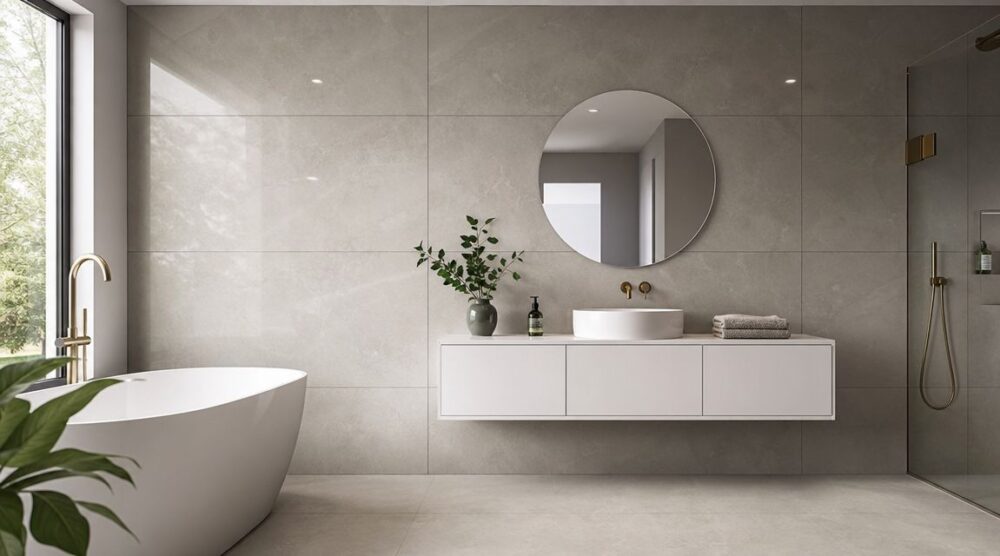
Discover 10 stunning bathroom feature wall ideas for 2026. From tile to timber, costs and design get expert tips for your next bathroom reno.
A lot of homeowners hit the same point with a bathroom renovation. The layout is mostly settled, the fittings are chosen, and then the room still feels flat. It looks clean, but it doesn't look finished. That's usually when the feature wall question comes up.
Done well, a feature wall gives the bathroom a focal point without blowing the budget across every surface. Done badly, it creates cleaning headaches, moisture problems, or a wall that looks dated long before the rest of the room wears out. In Melbourne, that trade-off matters even more because plenty of bathrooms sit inside older brick homes, weatherboards, and apartments with less-than-ideal ventilation.
That's why I always treat bathroom feature wall ideas as a building decision first and a styling decision second. In Australian bathrooms, wet-area performance matters. Feature walls in shower zones and vanity areas need to cope with moisture, cleaning, and ventilation demands, which is one reason tiled statement walls dominate local renovation advice in practice, especially where waterproofing needs to integrate cleanly with the rest of the room.
If you're weighing options, start with what will survive your bathroom, not just what looks good on a screen. For broader inspiration before you settle on finishes, this guide to transforming your bathroom is a useful place to start.
1. Large Format Tile Feature Wall
Large format tile is the safest modern choice if you want impact without too much visual clutter. It suits new builds, apartments, and period-home renovations where you want the bathroom to feel sharper without introducing fussy detail.
A big tile on the vanity wall or the end wall of a shower can make a standard bathroom look more custom. Porcelain that mimics marble, limestone, or concrete works especially well because it gives you that high-end look without the maintenance burden of some natural materials.

Where It Works Best
If the room is narrow, use the tile on the shorter wall to make the space feel deliberate rather than tunnel-like. If the vanity is the hero piece, run the feature wall full height behind it and keep the side walls plain.
Large format tile also makes sense in Australia because bathroom feature walls are often chosen where waterproofing can be integrated cleanly, such as a vanity wall, shower end wall, or full-height tiled wall under current wet-area design practice tied to AS 3740 expectations.
Builder's view: Large tiles look expensive when the wall is dead straight. They look cheap the second the substrate waves or lippage shows at eye level.
What to Watch
- Wall prep: The substrate has to be flat. Old plaster in period homes often isn't.
- Handling: Bigger tiles need a tiler who knows how to move, cut, and bed them properly.
- Layout: Dry-lay the pattern first so you don't end up with skinny cuts in the corners.
- Finish choice: Matte hides water spotting better than polished in most family bathrooms.
This is one of the best bathroom feature wall ideas if you want something current that won't date quickly.
2. Textured Wallpaper or Vinyl Wall Covering
Wallpaper gets people excited because it changes the room fast. In the right spot, it works. In the wrong spot, it peels, stains, and starts looking tired well before the renovation should.
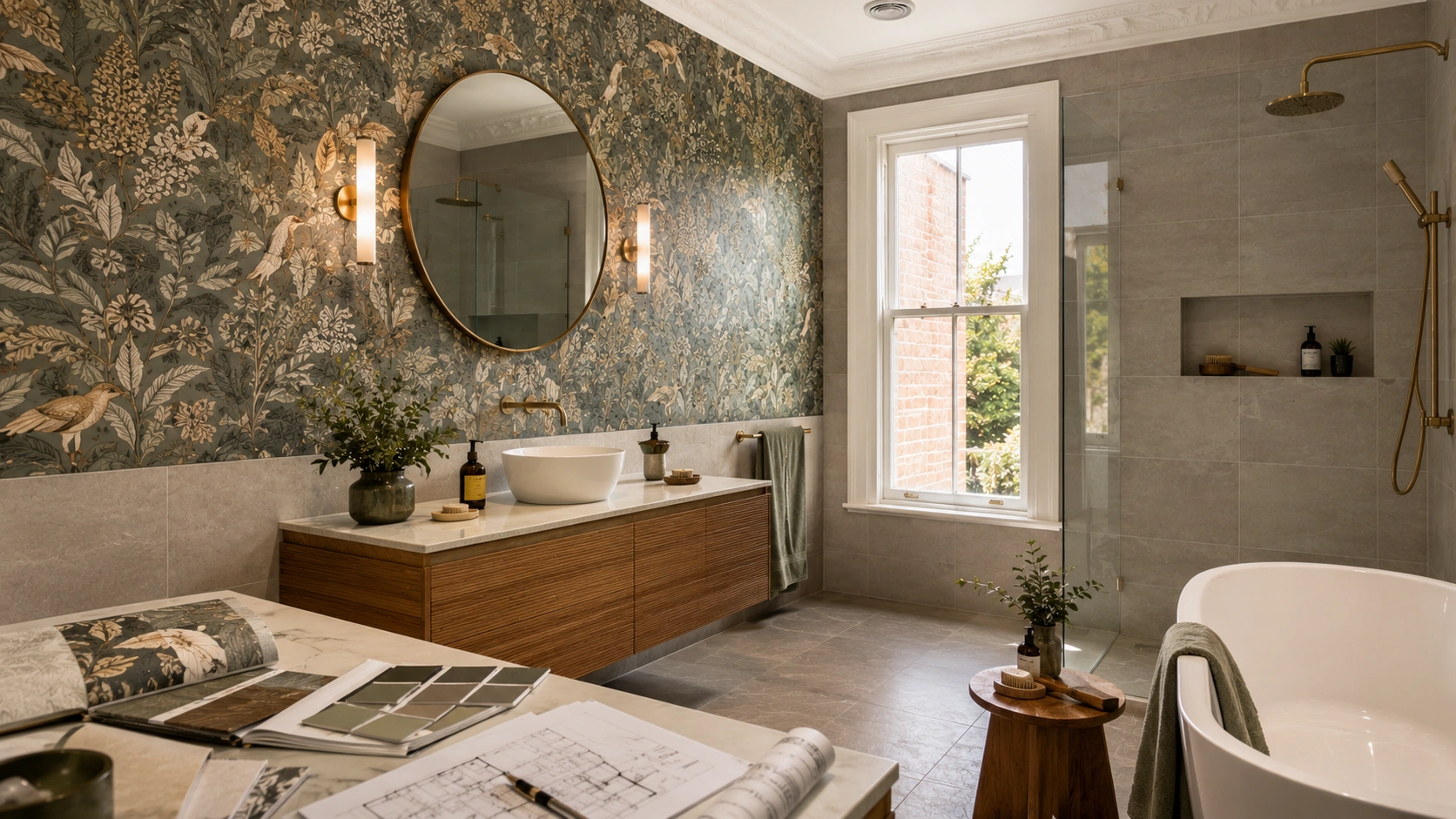 I only like wallpaper or vinyl wall covering on the dry side of the bathroom. Think the wall opposite the shower, a powder room, or above a tiled dado where direct water contact isn't part of daily life. Heritage-style prints can be brilliant in period homes, especially where you're trying to keep some character instead of making everything look like a generic hotel bathroom.
Best Use Cases
Bathroom-grade vinyl is the safer option than standard wallpaper. It handles humidity better and gives you more forgiveness if the room gets steamy.
Patterns also do a lot of heavy lifting in older homes. If the vanity isn't perfectly centred or the room has awkward nib walls, a patterned finish can distract the eye better than plain paint.
- Best position: Use it on a non-wet feature wall, not inside the shower or beside a bath with regular splash.
- Best style match: Botanical, geometric, and heritage prints suit Federation and Victorian homes well.
- Best support move: Pair it with a decent exhaust fan so the room dries out properly after use.
Keep wallpaper out of direct splash zones. That's the line between “character” and “callback job.”
If you want low-mess bathroom feature wall ideas without full retiling, this option has a place. Just be realistic about where it belongs.
3. Natural Stone or Slate Accent Wall
Natural stone gives a bathroom weight and texture that porcelain can imitate but not fully replace. Slate, basalt-look stone, honed marble, and some granites all bring a more grounded feel, especially in larger bathrooms where you want one wall to carry the design.
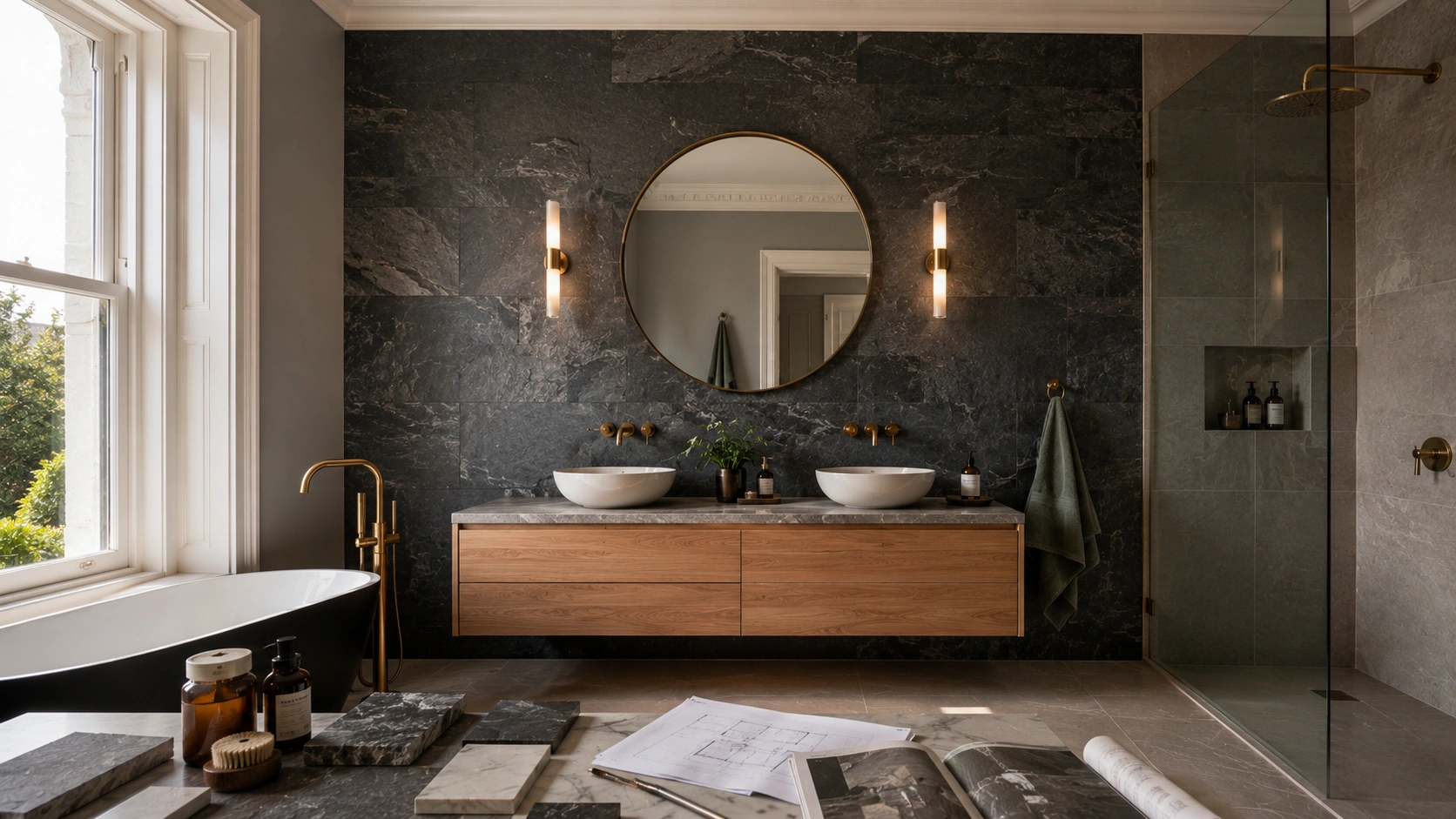
In Melbourne period homes, stone can work beautifully when the rest of the palette is restrained. A timber vanity, brushed brass tapware, and a stone feature wall behind the mirror often land better than trying to make every finish a statement.
Performance Comes First
Stone isn't one material. That's where a lot of homeowners get caught out. Some stones are far more suitable for wet areas than others, and sealing matters.
Australian bathroom design decisions lean heavily on ceramic tile and waterproofing performance rather than décor alone. In practical terms, wet-area feature walls should be treated as a system with a low-porosity finish, compatible waterproof membrane, and movement joints where the wall meets corners or changing substrates.
Before choosing stone for a shower wall or splash-prone zone, it's worth understanding the best waterproofing for bathrooms.
- Good picks: Slate and denser stone finishes are generally more forgiving than softer, porous options.
- Risk area: Heavy-textured stone can trap soap residue and be harder to clean.
- Best location: Behind a vanity or freestanding bath usually gives you the look with less maintenance.
Natural stone is one of the stronger bathroom feature wall ideas when you want a premium finish, but only if you accept the upkeep and detail it properly.
4. Painted Accent Wall with Moisture-Resistant Paint
Paint is the cheapest way to change the room, and sometimes it's the right answer. If the budget is tight or the renovation already includes expensive plumbing moves, a painted wall can still give you contrast and personality without loading cost into the build.
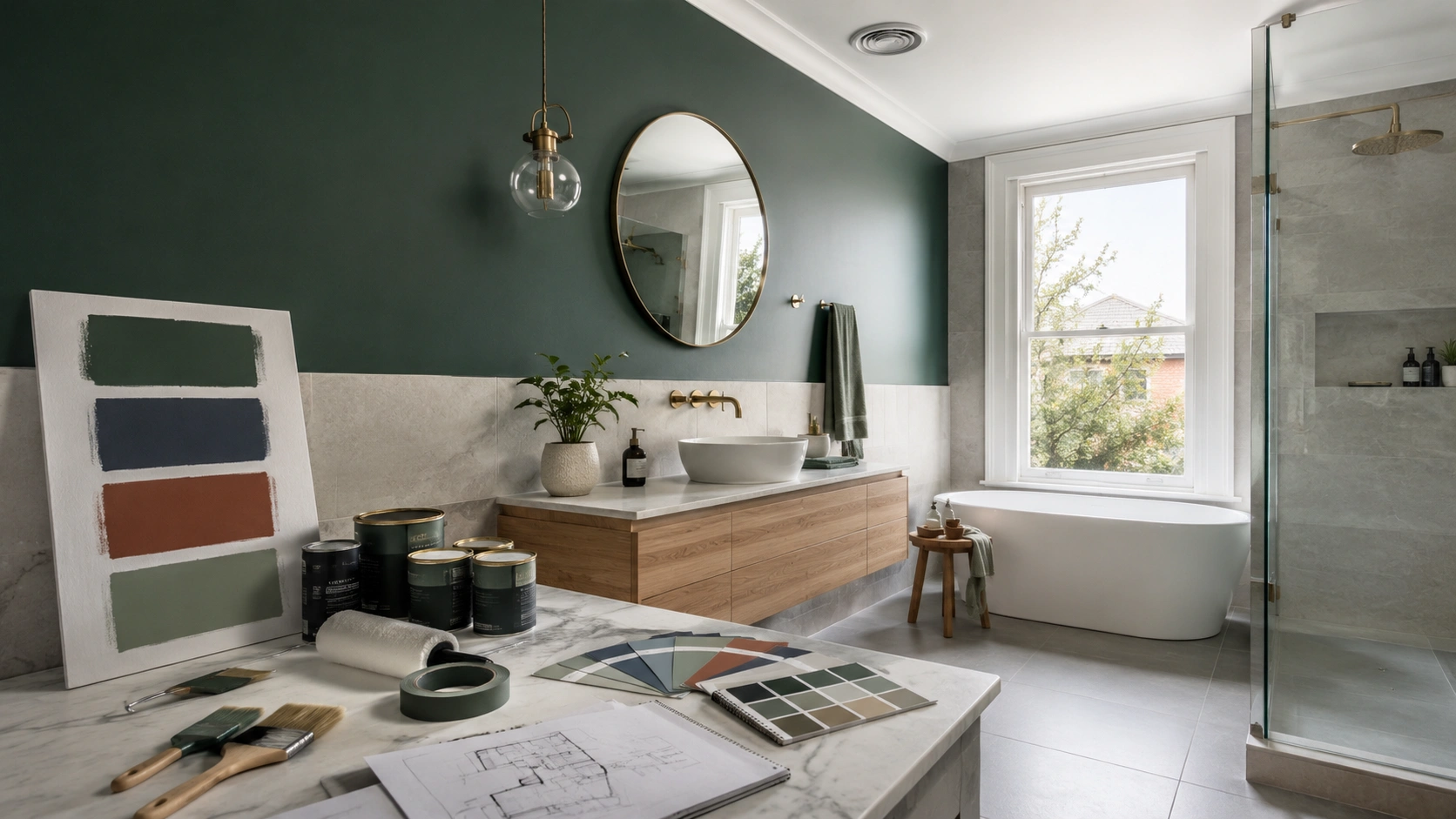
Deep green, navy, warm clay, and muted eucalyptus shades all work in Melbourne bathrooms. In period homes, warmer tones often sit better with original character details than stark black or icy grey.
Where Paint Makes Sense
Paint belongs in dry areas or lightly exposed zones. I wouldn't rely on it as the hero finish inside a shower recess, and I wouldn't use standard interior paint anywhere in a bathroom.
The broader gap in many design articles is that they treat feature walls as a styling exercise, even though in Australian bathrooms material choice needs to respond to shower zones, splash zones, ventilation, and long-term maintenance under the AS 3740 and NCC compliance framework, especially in older homes and apartments with limited airflow.
The Trade-Off
- Lowest cost: Paint gives strong visual change for relatively little disruption.
- Higher risk: Poor ventilation will show up fast through mould marks or patchy wear.
- Best placement: Behind the vanity, above wall tiling, or around a freestanding bath.
Use a bathroom-specific paint system, prep the wall properly, and don't expect miracles from a rushed coat over old plaster. Paint is one of the most accessible bathroom feature wall ideas, but it has the shortest margin for error in damp rooms.
5. Shiplap or Timber Accent Wall
Timber has warmth that tile and stone don't. That's why people are drawn to it. It softens a hard bathroom and helps period homes feel like homes, not sterile boxes.
That said, timber in a bathroom needs discipline. I'd keep it away from direct shower spray and use it where it reads as joinery or architectural detail rather than a wet-area lining. A vanity backdrop, bath wall, or powder room feature is the smarter move.

What Works and What Doesn't
White-painted shiplap suits coastal and farmhouse-style bathrooms. Stained timber battens or lined boards work better in more contemporary spaces. In a Californian Bungalow or Edwardian home, timber can bridge old and new nicely if the rest of the renovation isn't trying too hard.
- Works well: Dry-side wall behind a bath or vanity.
- Doesn't work well: Unsealed timber beside a shower screen or in low-ventilation ensuites.
- Best approach: Use stable, well-finished material and leave enough spacing and detailing for movement.
Timber is one of those bathroom feature wall ideas that looks effortless in photos. On site, it only stays good if the sealing, ventilation, and placement are right.
6. Mosaic or Patterned Tile Feature Wall
If large format tile is the quiet achiever, mosaic and patterned tile is the louder option. It can be brilliant, but it needs restraint.
These walls suit vanity backdrops, shower niches, end walls, and powder rooms where you want colour, craft, or a bit of personality. Moroccan-inspired zellige, geometric encaustic-look porcelain, and handmade-look gloss mosaics are all common requests. The trick is to let one surface do the talking.

Why It Can Go Wrong
Patterned tile adds visual noise fast. In a small bathroom, too much of it makes the room feel busy and smaller than it is. In a period renovation, it can also clash with decorative cornices, leadlight, or ornate vanity profiles if you don't simplify elsewhere.
Use one strong pattern, then calm everything around it down.
If you're comparing sizes, layouts, and finishes first, this guide on how to choose bathroom tiles helps narrow the field.
- Best move: Keep the surrounding walls plain.
- Common mistake: Pairing bold tile with busy stone tops and statement tapware.
- Maintenance note: More grout means more cleaning, especially in family bathrooms.
Among bathroom feature wall ideas, this one gives the most personality per square metre. It also gives you the least room for indecision. Here's an example in Glenroy.
7. Concrete or Polished Plaster Feature Wall
Concrete-look finishes and polished plaster can look sharp in the right bathroom. They suit minimalist, industrial, and contemporary homes where the design relies on texture more than colour.
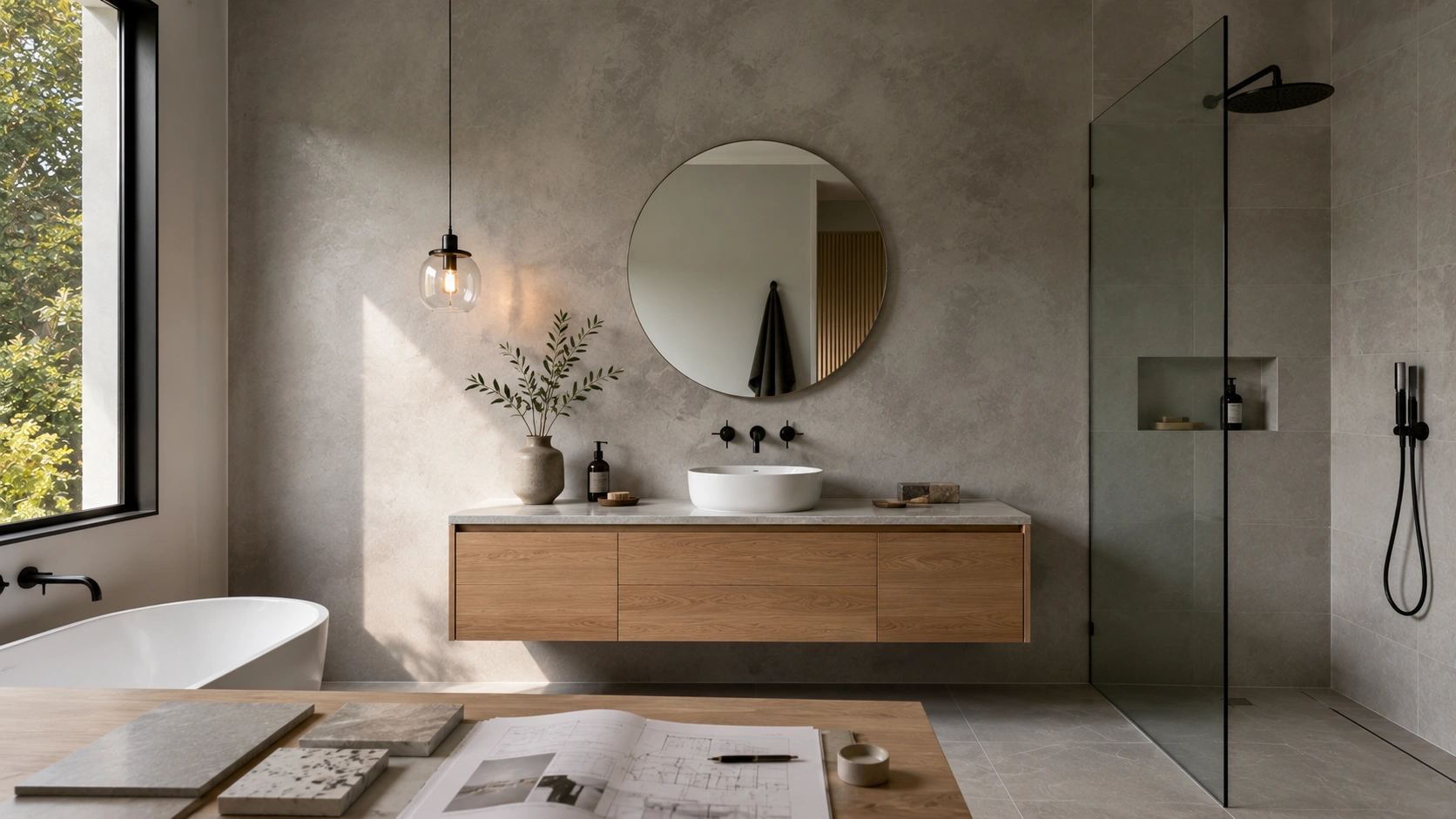
I'd be cautious using these finishes in heavily used family bathrooms unless the installer does this work all the time. They're not forgiving materials. Surface prep, sealing, and moisture management all matter.
Best Applications
A polished plaster wall behind a vanity can look refined and soft, especially under warm lighting. A concrete-look finish can work in an ensuite where the rest of the fit-out is simple and architectural.
The main issue isn't style. It's long-term performance. If the finish chips, stains, or shows water marks badly, the whole room starts looking tired faster than a tiled wall usually would.
- Best location: Dry-side feature wall or lightly exposed area.
- Less ideal: High-splash family shower zones unless the system is specifically designed for it.
- Important detail: Resealing is part of ownership, not an optional extra.
These are strong bathroom feature wall ideas for homeowners who want something less common, but they require a specialist touch and realistic expectations.
8. Brick or Stone Veneer Feature Wall
Exposed brick gets a lot of attention in Melbourne because so many older homes already have it somewhere in the shell. Sometimes it's worth celebrating. Sometimes it's better left behind the plaster.
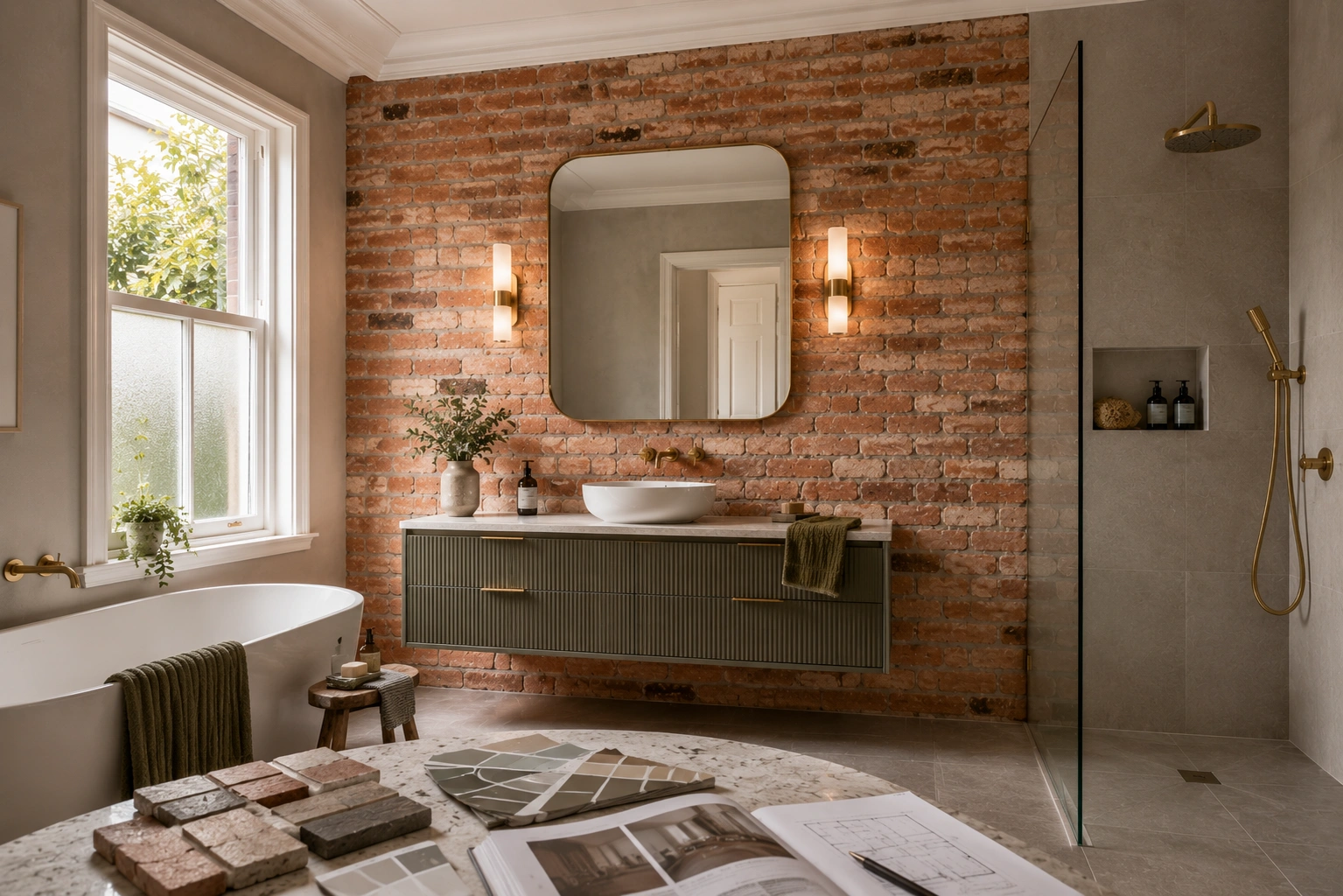
A cleaned-up brick wall in a powder room or a larger bathroom can add real character. Thin stone veneer can do a similar job where you want texture without the depth and weight of full masonry.
Period Home Reality Check
Not every old wall is renovation gold. Some brickwork is too rough, too patchy, or too compromised to be worth exposing. And in older homes, substrate condition always matters more than the romantic idea of “original features”.
There's also the budget question. Design choices are more consequential when renovation costs are already high, and homeowners need to think in terms of visual impact per dollar, not just statement value, especially in metro-specific markets like Melbourne.
- Worth it when: The existing brick is sound and suits the home's character.
- Not worth it when: You'll spend heavily making a rough wall look only half-finished.
- Safer use: Keep it on the dry side and seal it properly.
Brick and veneer are good bathroom feature wall ideas when the architecture supports them. If the house doesn't, they can look forced.
9. Accent Lighting Feature Wall
Sometimes the feature wall isn't about the surface alone. It's about what the lighting does to it. A plain tiled wall can look far more expensive once you add the right mirror lights, wall sconces, LED strip lighting in a niche, or concealed lighting under a floating vanity.
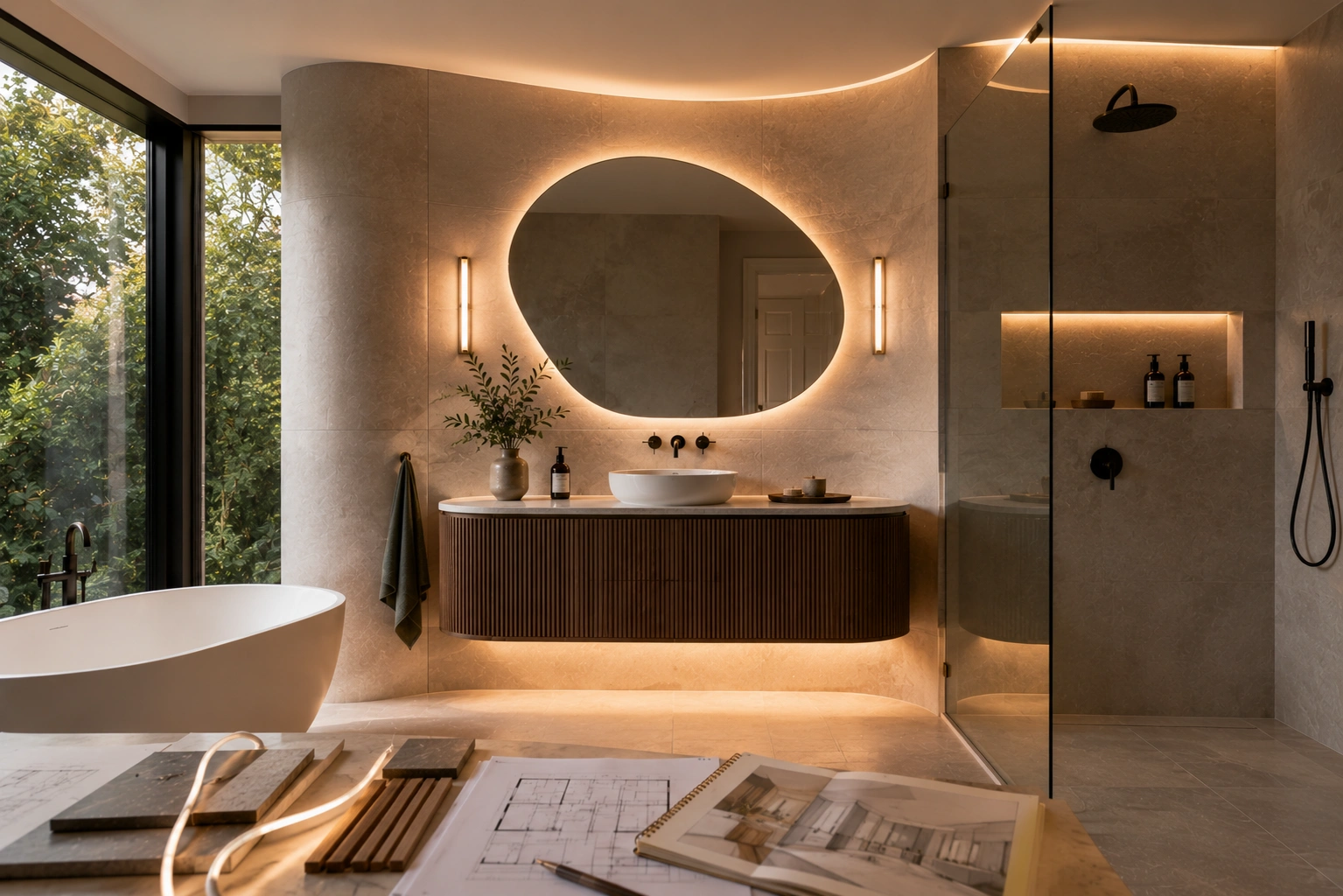
Lighting is especially useful when the bathroom materials are already modest. If you can't justify premium stone or handmade tile, good lighting can lift simple finishes and create more depth.
Where Lighting Helps Most
Textured tile, stone, timber battens, and plaster all benefit from side lighting or backlighting because shadow gives the wall shape. Flat, glossy surfaces tend to need more restraint or they can produce glare.
Good bathroom lighting also has to be practical. The room still needs task lighting at the mirror and safe fixture selection for humid zones. If electrical changes are part of the renovation, it helps to understand typical bathroom remodel electrical cost considerations early so lighting doesn't become an afterthought.
The best lighting plan starts before the sheeting and waterproofing stages, not after tile selections are locked in.
- Best use: Highlight one textured wall, niche, or vanity backdrop.
- Common mistake: Relying on accent lights and forgetting face-level mirror lighting.
- Smart pairing: Simple tiles plus strong lighting often outlast trendier surface choices.
This is one of the most underrated bathroom feature wall ideas because it can improve both look and function.
10. Mixed Material or Hybrid Feature Wall
Hybrid feature walls can look custom and architectural when they're done with control. Tile with timber trim, stone with a recessed niche, painted upper wall over tiled lower wall, or microcement paired with joinery can all work.
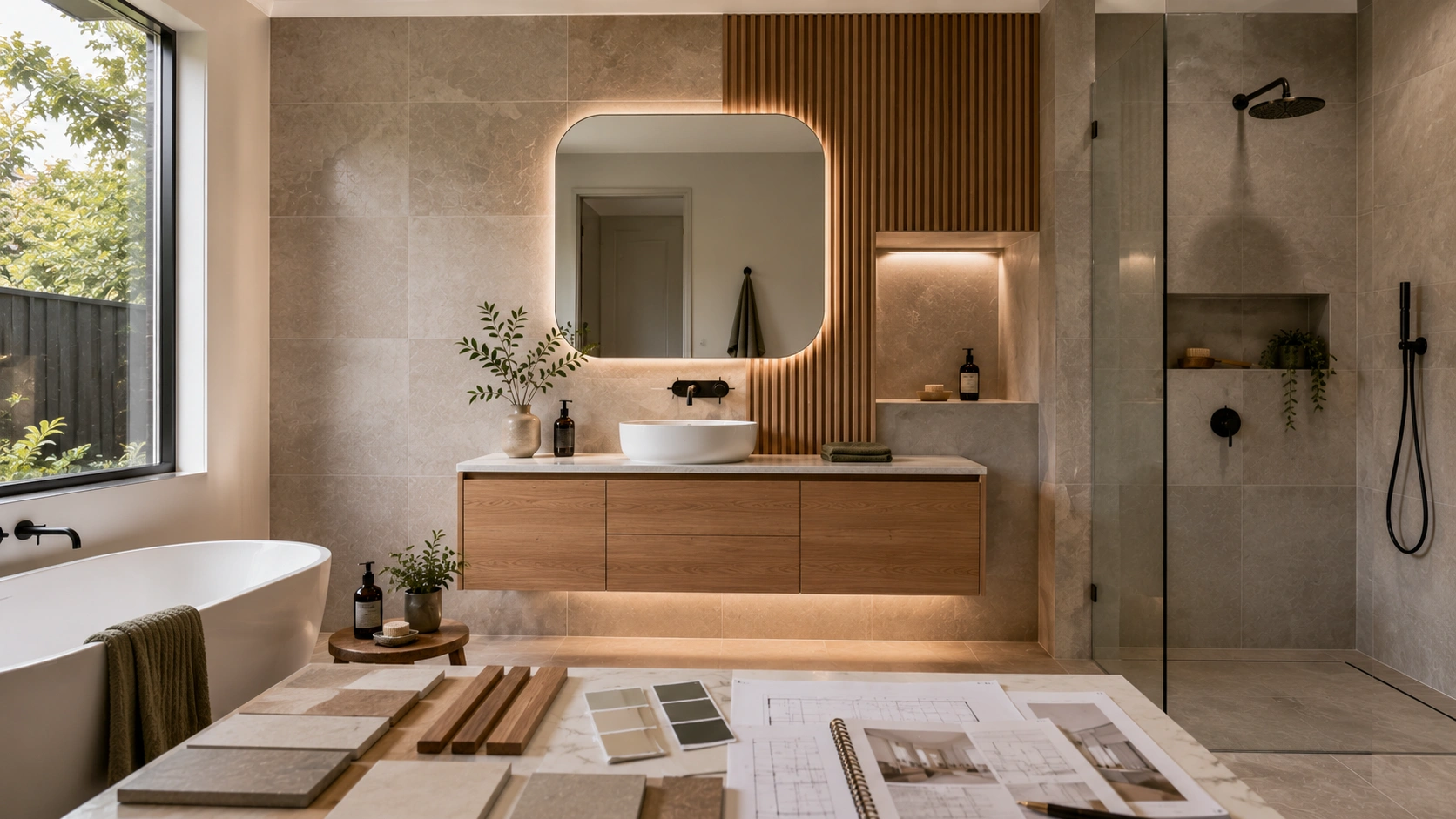
The danger is trying to combine too many ideas in one small room. Bathrooms don't give you much space to recover from a bad material mix. If the tones fight each other or the junctions look clumsy, the room feels overdesigned quickly.
Keep the Hierarchy Clear
One material should lead. The second material should support it. The third, if there is one, should be there for function or subtle contrast, not attention.
This approach is often useful in Melbourne renovations where part of the room needs a durable wet-area finish and another part needs warmth or softness. You might tile the shower and vanity zones, then use timber lining or paint on the dry side to stop the room feeling too clinical.
- Good combo: Porcelain tile plus timber-look joinery.
- Another good combo: Full-height tile with a painted ceiling and wall nibs.
- Risky combo: Patterned tile, veined stone, and strong timber grain all competing together.
The best mixed-material bathroom feature wall ideas solve both a practical problem and a visual one. If they're only there to show off materials, they usually miss.
10 Bathroom Feature Wall Ideas: Quick Comparison
Large Format Tile Feature Wall
Implementation Complexity
High. Large format tiles require a perfectly level substrate, precise measurements, and an experienced tiler to achieve clean alignment and minimal lippage.
Resource Requirements
Premium or mid-range large format tiles, high-quality tile adhesive, grout, levelling systems, waterproofing materials, and a skilled installer.
Expected Outcomes
A sleek, seamless bathroom feature wall with fewer grout lines, creating a contemporary and spacious appearance while providing excellent moisture resistance.
Ideal Use Cases
Modern bathroom renovations, luxury homes, contemporary apartment bathrooms, and period homes being updated with a modern aesthetic.
Key Advantages
-
Premium, high-end appearance
-
Fewer grout lines for easier cleaning
-
Creates a sense of space
-
Durable and moisture resistant
-
Timeless modern design
Textured Wallpaper or Vinyl Wall Covering
Implementation Complexity
Low to medium. Proper surface preparation is essential, but installation is generally simpler than tiling or stone cladding.
Resource Requirements
Moisture-resistant wallpaper or vinyl wall covering, primer, adhesive, and optional professional installation.
Expected Outcomes
A quick transformation that introduces texture, colour, or pattern without major renovation work.
Ideal Use Cases
Rental properties, family homes, powder rooms, and period homes seeking decorative character on non-wet walls.
Key Advantages
-
Affordable design upgrade
-
Quick installation
-
Wide range of colours and patterns
-
Can conceal minor wall imperfections
-
Easy to replace when styles change
Natural Stone or Slate Accent Wall
Implementation Complexity
Very high. Natural stone is heavy and often requires structural consideration, specialist installation, and sealing.
Resource Requirements
Premium stone products, sealers, specialist fixing systems, and experienced stonemasons.
Expected Outcomes
A luxurious and timeless bathroom feature wall with natural variation and outstanding durability.
Ideal Use Cases
Luxury bathroom renovations, spa-inspired bathrooms, heritage homes, and premium residential projects.
Key Advantages
-
Unique natural appearance
-
Exceptional durability
-
Increases perceived property value
-
Creates a luxury spa atmosphere
-
Timeless appeal
Painted Accent Wall with Moisture-Resistant Paint
Implementation Complexity
Low. A straightforward option requiring proper surface preparation and adequate bathroom ventilation.
Resource Requirements
Moisture-resistant paint, quality primer, paint rollers or brushes, and a suitable exhaust fan.
Expected Outcomes
An immediate and affordable visual refresh that introduces colour and personality.
Ideal Use Cases
Budget-conscious renovations, rental properties, quick bathroom updates, and vanity feature walls.
Key Advantages
-
Lowest installation cost
-
Fast project completion
-
Unlimited colour options
-
Easy to update or repaint
-
Minimal disruption during installation
Shiplap or Timber Accent Wall
Implementation Complexity
Medium. Timber products require correct sealing, fastening, and moisture management to ensure longevity.
Resource Requirements
Timber boards or engineered wall panels, sealants, fixings, and professional installation.
Expected Outcomes
A warm and inviting feature wall that adds texture and natural character to the bathroom.
Ideal Use Cases
Coastal-style bathrooms, farmhouse-inspired designs, heritage homes, and powder rooms away from direct water exposure.
Key Advantages
-
Adds warmth and texture
-
Creates visual interest
-
Complements traditional and coastal styles
-
Can conceal minor wall irregularities
-
Brings natural materials into the space
Mosaic or Patterned Tile Feature Wall
Implementation Complexity
High. Intricate tile layouts require detailed planning, precise installation, and additional grouting work.
Resource Requirements
Decorative tiles, specialist adhesives, grout, and an experienced tiler.
Expected Outcomes
A striking design statement that introduces colour, pattern, and personality while maintaining excellent durability.
Ideal Use Cases
Statement bathrooms, vanity splashbacks, period home renovations, and eclectic interior designs.
Key Advantages
-
Highly decorative appearance
-
Endless design possibilities
-
Excellent durability
-
Water resistant
-
Allows for personalised styling
Concrete or Polished Plaster Feature Wall
Implementation Complexity
High. Specialist application techniques, curing, and sealing are required to achieve a flawless finish.
Resource Requirements
Decorative concrete or polished plaster systems, waterproofing products, sealers, and specialist trades.
Expected Outcomes
A seamless and contemporary feature wall with a refined industrial aesthetic.
Ideal Use Cases
Modern architectural homes, industrial-style renovations, minimalist bathrooms, and luxury contemporary projects.
Key Advantages
-
Seamless appearance
-
Custom colours and textures available
-
Contemporary architectural appeal
-
Low visual clutter
-
Potentially sustainable material options
Brick or Stone Veneer Feature Wall
Implementation Complexity
Medium to high. While lighter than full masonry, veneer products still require skilled installation and sealing.
Resource Requirements
Stone or brick veneer products, mortar, grout, sealers, and experienced installers.
Expected Outcomes
A textured and authentic-looking feature wall that adds warmth and depth.
Ideal Use Cases
Industrial-inspired bathrooms, farmhouse styles, heritage renovations, and rustic interior designs.
Key Advantages
-
Authentic character
-
Strong visual texture
-
Lighter than full masonry construction
-
Durable finish
-
Adds warmth and architectural interest
Accent Lighting Feature Wall
Implementation Complexity
High. Electrical planning, wiring, and installation by a licensed electrician are typically required.
Resource Requirements
LED strip lighting, wall lights, control systems, transformers, and electrical installation.
Expected Outcomes
A dramatic feature that highlights materials, improves ambience, and enhances functionality.
Ideal Use Cases
Luxury bathrooms, hotel-inspired designs, modern renovations, and bathrooms with premium feature materials.
Key Advantages
-
Creates atmosphere and mood
-
Highlights architectural details
-
Improves task lighting
-
Energy-efficient LED options available
-
Works with almost any wall material
Mixed Material or Hybrid Feature Wall
Implementation Complexity
Very high. Combining multiple materials requires careful design coordination and multiple trades.
Resource Requirements
A combination of tiles, timber, stone, metal, lighting, and specialist installers depending on the design.
Expected Outcomes
A highly customised feature wall that balances aesthetics, practicality, and zoning within the bathroom.
Ideal Use Cases
Architect-designed renovations, bespoke bathrooms, luxury homes, and period homes blending heritage and modern elements.
Key Advantages
-
Unlimited design flexibility
-
Creates a truly unique bathroom
-
Allows strategic use of materials
-
Balances visual appeal with functionality
-
Ideal for premium renovation projects
Implementation Complexity
High. Large format tiles require a perfectly level substrate, precise measurements, and an experienced tiler to achieve clean alignment and minimal lippage.
Resource Requirements
Premium or mid-range large format tiles, high-quality tile adhesive, grout, levelling systems, waterproofing materials, and a skilled installer.
Expected Outcomes
A sleek, seamless bathroom feature wall with fewer grout lines, creating a contemporary and spacious appearance while providing excellent moisture resistance.
Ideal Use Cases
Modern bathroom renovations, luxury homes, contemporary apartment bathrooms, and period homes being updated with a modern aesthetic.
Key Advantages
-
Premium, high-end appearance
-
Fewer grout lines for easier cleaning
-
Creates a sense of space
-
Durable and moisture resistant
-
Timeless modern design
Implementation Complexity
Low to medium. Proper surface preparation is essential, but installation is generally simpler than tiling or stone cladding.
Resource Requirements
Moisture-resistant wallpaper or vinyl wall covering, primer, adhesive, and optional professional installation.
Expected Outcomes
A quick transformation that introduces texture, colour, or pattern without major renovation work.
Ideal Use Cases
Rental properties, family homes, powder rooms, and period homes seeking decorative character on non-wet walls.
Key Advantages
-
Affordable design upgrade
-
Quick installation
-
Wide range of colours and patterns
-
Can conceal minor wall imperfections
-
Easy to replace when styles change
Implementation Complexity
Very high. Natural stone is heavy and often requires structural consideration, specialist installation, and sealing.
Resource Requirements
Premium stone products, sealers, specialist fixing systems, and experienced stonemasons.
Expected Outcomes
A luxurious and timeless bathroom feature wall with natural variation and outstanding durability.
Ideal Use Cases
Luxury bathroom renovations, spa-inspired bathrooms, heritage homes, and premium residential projects.
Key Advantages
-
Unique natural appearance
-
Exceptional durability
-
Increases perceived property value
-
Creates a luxury spa atmosphere
-
Timeless appeal
Implementation Complexity
Low. A straightforward option requiring proper surface preparation and adequate bathroom ventilation.
Resource Requirements
Moisture-resistant paint, quality primer, paint rollers or brushes, and a suitable exhaust fan.
Expected Outcomes
An immediate and affordable visual refresh that introduces colour and personality.
Ideal Use Cases
Budget-conscious renovations, rental properties, quick bathroom updates, and vanity feature walls.
Key Advantages
-
Lowest installation cost
-
Fast project completion
-
Unlimited colour options
-
Easy to update or repaint
-
Minimal disruption during installation
Implementation Complexity
Medium. Timber products require correct sealing, fastening, and moisture management to ensure longevity.
Resource Requirements
Timber boards or engineered wall panels, sealants, fixings, and professional installation.
Expected Outcomes
A warm and inviting feature wall that adds texture and natural character to the bathroom.
Ideal Use Cases
Coastal-style bathrooms, farmhouse-inspired designs, heritage homes, and powder rooms away from direct water exposure.
Key Advantages
-
Adds warmth and texture
-
Creates visual interest
-
Complements traditional and coastal styles
-
Can conceal minor wall irregularities
-
Brings natural materials into the space
Implementation Complexity
High. Intricate tile layouts require detailed planning, precise installation, and additional grouting work.
Resource Requirements
Decorative tiles, specialist adhesives, grout, and an experienced tiler.
Expected Outcomes
A striking design statement that introduces colour, pattern, and personality while maintaining excellent durability.
Ideal Use Cases
Statement bathrooms, vanity splashbacks, period home renovations, and eclectic interior designs.
Key Advantages
-
Highly decorative appearance
-
Endless design possibilities
-
Excellent durability
-
Water resistant
-
Allows for personalised styling
Implementation Complexity
High. Specialist application techniques, curing, and sealing are required to achieve a flawless finish.
Resource Requirements
Decorative concrete or polished plaster systems, waterproofing products, sealers, and specialist trades.
Expected Outcomes
A seamless and contemporary feature wall with a refined industrial aesthetic.
Ideal Use Cases
Modern architectural homes, industrial-style renovations, minimalist bathrooms, and luxury contemporary projects.
Key Advantages
-
Seamless appearance
-
Custom colours and textures available
-
Contemporary architectural appeal
-
Low visual clutter
-
Potentially sustainable material options
Implementation Complexity
Medium to high. While lighter than full masonry, veneer products still require skilled installation and sealing.
Resource Requirements
Stone or brick veneer products, mortar, grout, sealers, and experienced installers.
Expected Outcomes
A textured and authentic-looking feature wall that adds warmth and depth.
Ideal Use Cases
Industrial-inspired bathrooms, farmhouse styles, heritage renovations, and rustic interior designs.
Key Advantages
-
Authentic character
-
Strong visual texture
-
Lighter than full masonry construction
-
Durable finish
-
Adds warmth and architectural interest
Implementation Complexity
High. Electrical planning, wiring, and installation by a licensed electrician are typically required.
Resource Requirements
LED strip lighting, wall lights, control systems, transformers, and electrical installation.
Expected Outcomes
A dramatic feature that highlights materials, improves ambience, and enhances functionality.
Ideal Use Cases
Luxury bathrooms, hotel-inspired designs, modern renovations, and bathrooms with premium feature materials.
Key Advantages
-
Creates atmosphere and mood
-
Highlights architectural details
-
Improves task lighting
-
Energy-efficient LED options available
-
Works with almost any wall material
Implementation Complexity
Very high. Combining multiple materials requires careful design coordination and multiple trades.
Resource Requirements
A combination of tiles, timber, stone, metal, lighting, and specialist installers depending on the design.
Expected Outcomes
A highly customised feature wall that balances aesthetics, practicality, and zoning within the bathroom.
Ideal Use Cases
Architect-designed renovations, bespoke bathrooms, luxury homes, and period homes blending heritage and modern elements.
Key Advantages
-
Unlimited design flexibility
-
Creates a truly unique bathroom
-
Allows strategic use of materials
-
Balances visual appeal with functionality
-
Ideal for premium renovation projects
Ready to Plan Your Bathroom Feature Wall?
The best feature wall isn't always the boldest one. It's the one that suits the way the bathroom gets used, the condition of the existing room, and the budget you're working with. That matters in Melbourne, where one project might be a fresh ensuite in a newer home and the next might be a tight bathroom in a weatherboard or brick period property with uneven walls, old framing, and limited ventilation.
If you're choosing between bathroom feature wall ideas, start by deciding where the wall sits in relation to water. That single decision rules out a lot of bad options early. In wet zones, tiled finishes usually make the most sense because they can be detailed to meet local waterproofing expectations and stand up better to repeated cleaning and humidity over time. In dry zones, you've got more freedom to use paint, wallpaper, timber, or texture for character.
The next step is to be honest about maintenance
Stone, grout-heavy mosaics, timber, textured coatings, and exposed brick all ask more of you than a straightforward porcelain tile wall. That doesn't make them bad choices. It just means they need to earn their place.
I'd also look at the age and style of the home before locking anything in. Period homes often carry strong architectural cues already. A feature wall should support those cues, not compete with them. In newer homes and apartments, the wall often needs to create character because the room shell is more neutral.
If resale, rental appeal, or overall value matters, keep the rest of the bathroom in mind. A modest but well-detailed feature wall often does more than an expensive statement surface surrounded by tired fittings and poor lighting. Buyers and guests notice the room as a whole. They don't assess one wall in isolation.
The Best Bathrooms Are Built in the Right Order
Structure first. Waterproofing next. Then finishes. Then lighting, mirrors, and accessories that make the feature wall look intentional. If you get that order right, the wall won't just photograph well. It'll still work years later.
If you want practical advice on which bathroom feature wall ideas suit your home, budget, and layout, talk to Smarter Home Renovations. Their Melbourne team handles bathroom renovations end to end, with a strong focus on durable finishes, clear pricing, and renovation decisions that make sense in real homes, including period properties.