Learn how to choose bathroom tiles with our expert guide. We cover materials, size, colour & budget to help you design your perfect bathroom.
Choosing the right bathroom tiles really comes down to finding that sweet spot between functionality, aesthetics, and cost. When you choose bathroom tiles, you’re on the hunt for a tile that’s safe and tough enough for a wet space, looks the part for your personal style, and doesn’t blow the budget.
Your Starting Point for Choosing Bathroom Tiles
Picking tiles can feel like one of the biggest calls you'll make in a bathroom reno, but it doesn't have to be a headache. If you break it down into smaller, more manageable decisions, you’ll be able to confidently choose bathroom tiles that will look fantastic and hold up for years to come.
Especially in Australian homes, where our bathrooms cop everything from steam-filled humidity to constant foot traffic, a practical choice is just as crucial as a stylish one.
First things first, let's talk about the non-negotiables. Functionality has to lead the charge. Your floor tiles, particularly inside the shower, absolutely must have good slip resistance to keep everyone safe whenever you choose bathroom tiles for wet zones.
Water resistance is the other big one. You need a material that won't soak up moisture. Porcelain is a champion here, absorbing less than 0.5% water, which makes it a brilliant choice for both floors and shower walls.
Balancing Practicality with Personal Style
Once you’ve got the practical side sorted, the fun part begins: aesthetics. This is where you get to choose Bathroom tiles that set the whole mood for the room and reflect the look you love. Are you dreaming of a light and airy coastal retreat, or something more dramatic and moody? Your tile material, colour, and size are the main tools you'll use to bring that vision to life.
Ceramic tiles, for example, come in a huge range of colours and patterns at a really accessible price point, making them perfect for a standout feature wall. On the other hand, natural stone like marble or travertine delivers a level of luxury that’s hard to beat, but it comes with a higher price tag and needs a bit more looking after.
A well-planned bathroom renovation considers every detail from the start. Using a comprehensive guide, like a detailed bathroom renovation checklist, can prevent costly mistakes and ensure you don't overlook crucial steps like waterproofing or proper tile selection.
To make that initial choice a bit easier, here’s a quick rundown of the most popular tile materials. Think of this table as your first step in figuring out which direction to go, weighing up the pros and cons of each before we dive deeper.
Quick Comparison of Popular Bathroom Tile Materials
Here's a quick summary of the key characteristics of ceramic, porcelain, and natural stone tiles to help you make an initial decision.
| Material | Durability | Average Cost (per m²) | Best For |
|---|---|---|---|
| Ceramic | Good | $30 - $80 | Walls, splashbacks, low-traffic floors |
| Porcelain | Excellent | $50 - $150 | High-traffic floors, shower walls and floors |
| Natural Stone | Varies | $80 - $250+ | Luxury feature walls and floors |
This comparison gives you a solid foundation and helps narrow down your options based on what matters most for your specific bathroom project, especially when you choose bathroom tiles that balance durability with style.
Matching Tile Materials to Your Bathroom's Needs
Picking the right tile material is about so much more than what looks good on a showroom floor. Understanding where each tile works best ensures you choose bathroom tiles that last in every part of the room. A bathroom is a demanding environment, it has to stand up to daily humidity, constant foot traffic, and endless splashes. The real secret is matching the material’s natural strengths to specific areas of the room, which ensures your bathroom is not only beautiful but also built to last.
For bathroom floors, porcelain is the undisputed workhorse. Its super-dense composition means it absorbs less than 0.5% water, making it virtually waterproof. This makes it a brilliant choice for high-traffic family bathrooms where spills and splashes are a given. Think of it as the ultimate peace-of-mind material for the wettest parts of your home.
Ceramic, on the other hand, is a fantastic and wallet-friendly option for walls and splashbacks. While it’s not quite as tough as porcelain for floors, its glazed surface offers excellent water resistance. It also comes in an endless array of colours and patterns, allowing you to inject some real personality into your space without blowing the budget.
High-Traffic Floors vs. Statement Walls
For a busy family bathroom floor, durability is king. A textured porcelain tile is a seriously smart choice here, and many homeowners choose bathroom tiles like these for safety and long-term performance. You won’t have to stress about scratches from shoes or the kids dropping things, and that texture provides much-needed grip underfoot, especially in the shower.
Walls, however, are your canvas. This is where you can have some fun and play with materials that might be less practical for floors. Easy-to-clean glass mosaics, for instance, can create a stunning vanity splashback that bounces light around the room, making a small space feel brighter and more open.
Natural stone like marble brings an undeniable sense of luxury, but it does require a bit of commitment. It’s naturally more porous and needs regular sealing to fend off stains and water damage. While it looks incredible on a feature wall, you'll want to think carefully before using it on a high-use shower floor unless you’re prepared for the upkeep. To get a better feel for which materials are best suited to your specific project, you can explore our detailed guide on selecting the right bathroom renovation materials in Melbourne.
Innovative and Practical Tile Choices
Beyond the usual suspects, innovative materials are really gaining traction in Australian homes. We’re seeing a lot of large-format sintered stone or advanced porcelain that perfectly mimics natural marble or timber. These options give you the best of both worlds, a high-end look without the maintenance headache.
To help you visualise this selection process, we've put together a simple decision tree. This guide walks you through the key questions of budget, use, and style to help you narrow down the options.
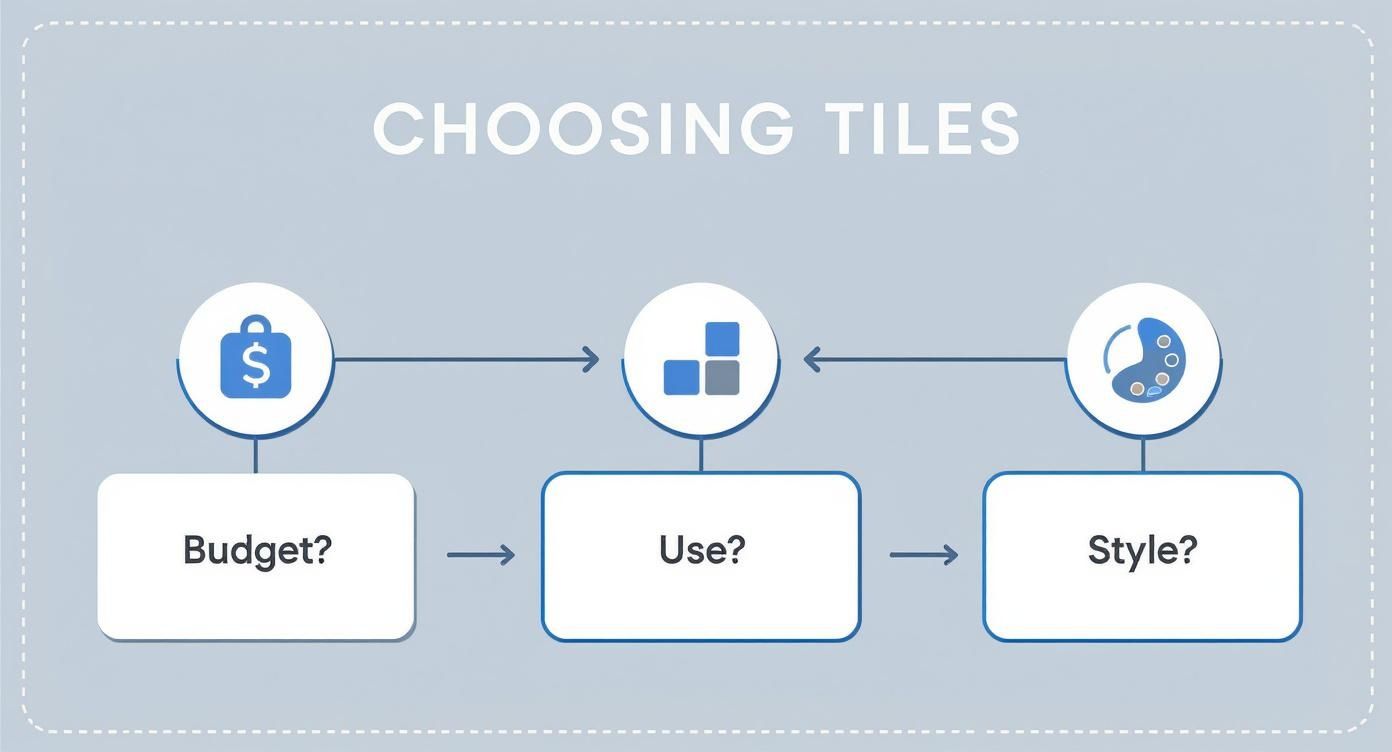
As the infographic shows, your practical needs like whether the tile is for a floor or a wall should be decided early. This will directly influence your material choice and help you stick to your budget.
This focus on durable, low-maintenance surfaces reflects a broader trend. Australia's ceramic tile market was valued at approximately USD 1.78 billion in 2024 and is projected to grow, driven by a surge in renovations and a preference for practical surfaces. You can find more details in this in-depth market analysis on openpr.com.
Key Takeaway: The best approach is to zone your bathroom. Use highly durable, non-slip porcelain for floors and shower bases, then let your creativity shine with ceramic, glass, or natural stone on walls and features where wear and tear is much less of a concern.
How Tile Size and Shape Transform Your Space
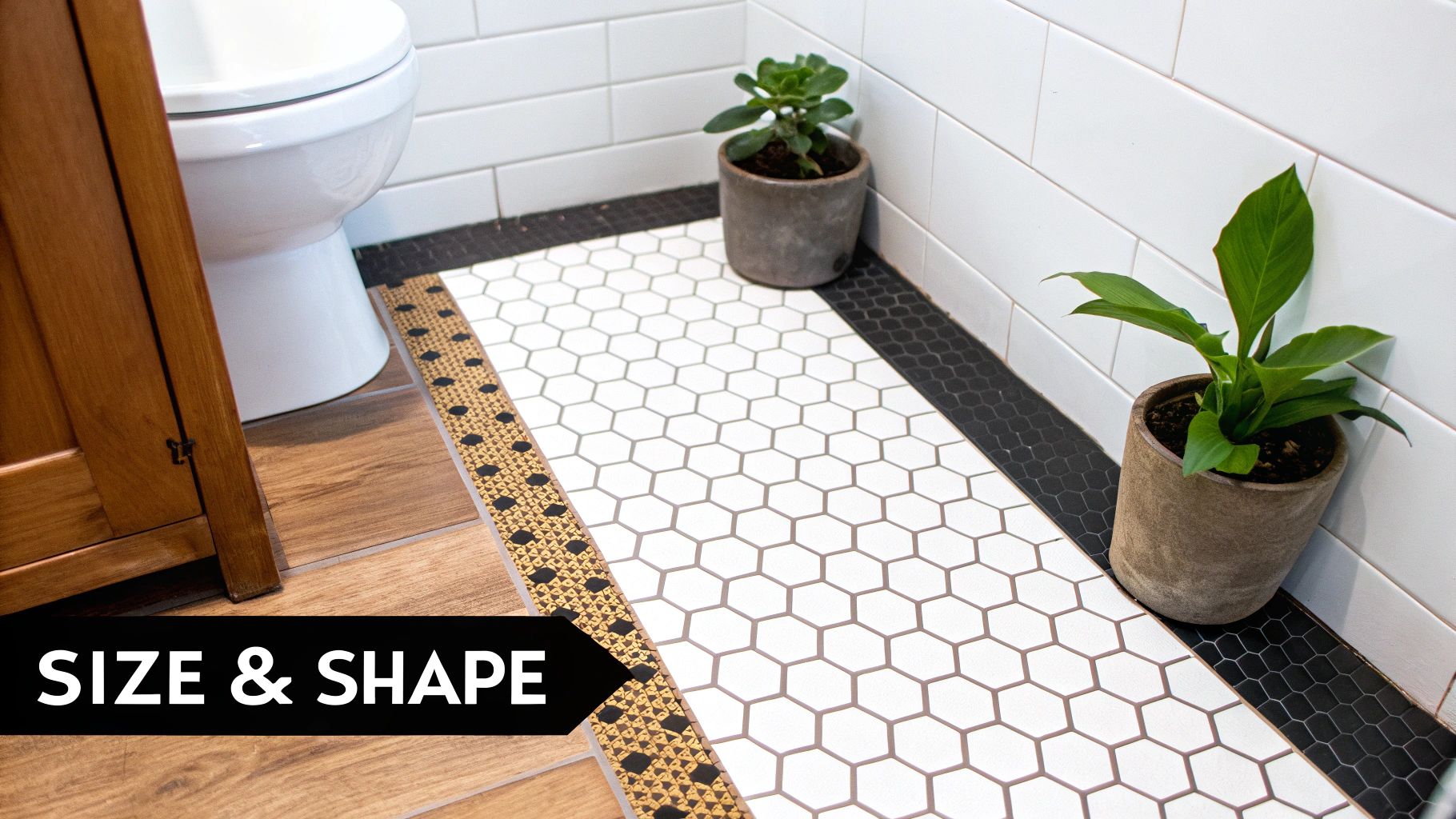
Beyond material and colour, the size and shape of your tiles are powerful design tools that can completely alter the perception of your bathroom. The right format can make a cramped room feel expansive, draw attention to a beautiful feature, or add a layer of texture that brings the whole space to life.
It’s all about visual strategy.
Think of it this way: the grout lines in your tiling act like a grid. More lines create a busier, more textured look, while fewer lines result in a calmer, more seamless surface. This single principle is the key to mastering tile selection for your space.
The Case for Large Format Tiles
In recent years, large format tiles, think 600x600mm, 300x600mm, or even larger have become incredibly popular in Australian bathrooms, and for good reason. Their main superpower is making a small bathroom feel significantly larger.
With fewer grout lines breaking up the floor or walls, the surface appears continuous and uncluttered, creating a brilliant illusion of spaciousness. This seamless effect is perfect for achieving a clean, modern, or minimalist aesthetic.
And from a practical standpoint? Fewer grout lines mean less cleaning and maintenance. Grout can be prone to discolouration and mould in a humid bathroom, so minimising it is a real win for any busy household.
A fantastic tip for small bathrooms is to use the same large format tile on both the floor and the walls. This technique blurs the boundaries between surfaces, tricking the eye into seeing a larger, more cohesive space.
Using Small Tiles for Impact and Texture
While large tiles open up a space, small tiles are your go-to for adding character, detail, and texture. Options like penny rounds, small hexagons, or classic mosaics are perfect for creating visual interest in specific zones.
They absolutely excel in areas where you want to make a statement, such as:
- A feature wall behind a vanity or bathtub.
- An intricate shower niche that provides a pop of contrast.
- A decorative border to frame a larger tiled area.
The dense network of grout lines that comes with small tiles also provides a huge practical benefit: enhanced slip resistance. This makes them an excellent choice for shower floors, where grip is a top priority. A floor of tiny hexagonal tiles doesn't just look great; it adds a valuable layer of safety.
Directing the Eye with Shape and Pattern
The way you lay your tiles can be just as impactful as their size. A standard grid layout is timeless, but other patterns can solve common design challenges and add dynamic energy to your bathroom.
Take a classic subway tile. Laid horizontally in a traditional brick pattern, it creates a classic, familiar feel. But if you stack those same tiles vertically, they will draw the eye upward, making a low ceiling feel much taller. A brilliant trick for older Melbourne homes.
Similarly, laying rectangular floor tiles in a herringbone pattern adds a sense of movement and sophistication. This is particularly effective in a long, narrow bathroom, as the diagonal lines can make the floor feel wider. It’s a simple change in layout that delivers a high-end, custom-designed result without needing a more expensive tile.
Choosing Colour, Texture and Finish
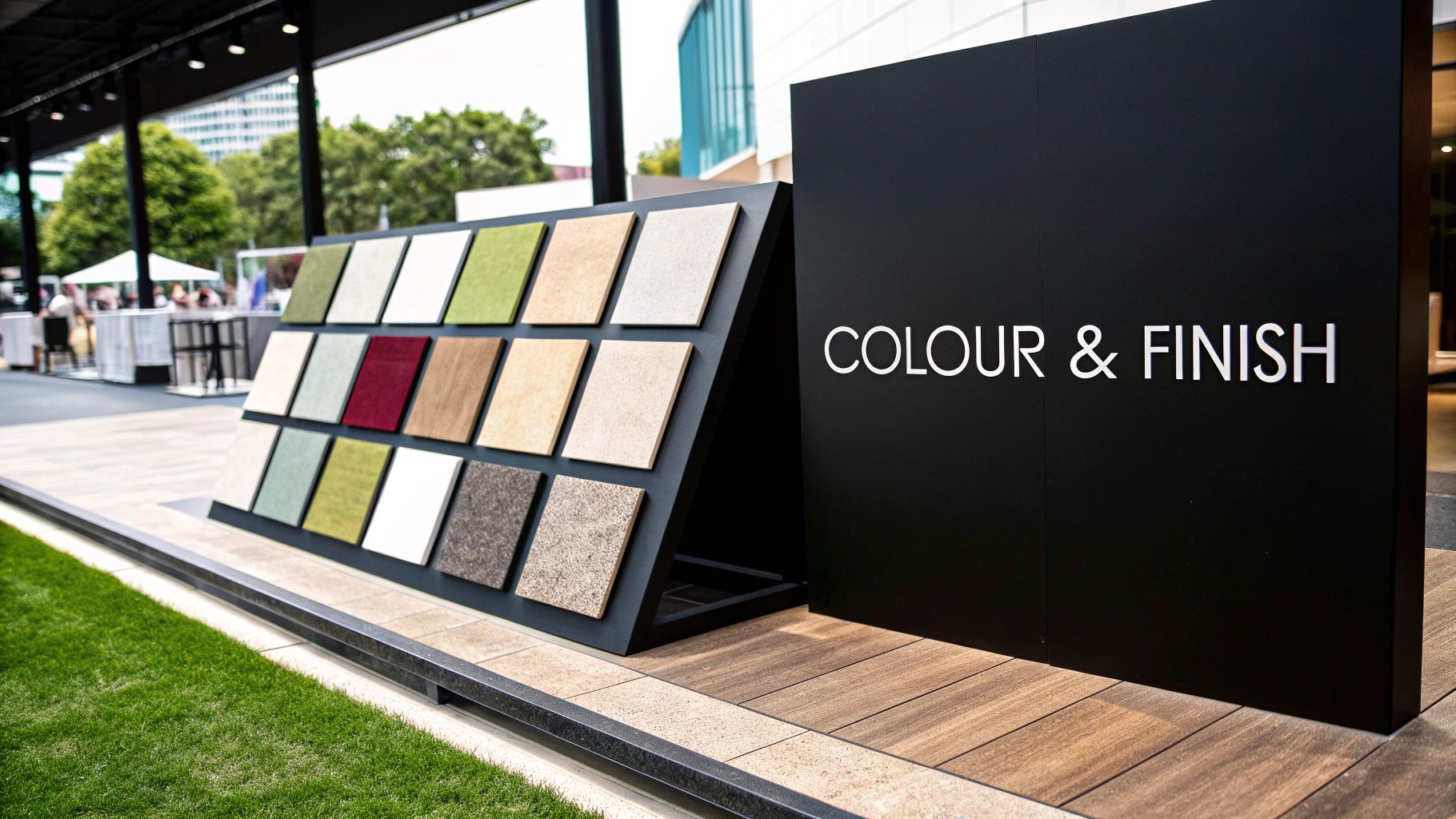
Alright, this is where the fun really begins. Once you’ve nailed down the practical side of things like material and size, you get to inject your own style into the space. Colour, texture, and finish are the three elements that truly set the mood and bring your bathroom’s personality to life.
Your colour choice is the foundation of the whole look. Are you dreaming of a serene, coastal escape? Think soft blues, sandy beiges, and clean whites. Or maybe you're after something a bit more dramatic and moody? Deep charcoal greys, rich navy, or even bold black tiles can create a stunning, sophisticated atmosphere.
The Power of a Cohesive Colour Palette
Getting a cohesive look right usually starts with your main tile – this will probably be your floor tile or the one you use on most of the walls. From that starting point, you can then pick out complementary colours for a feature wall, your splashback, or inside a shower niche.
And don't shy away from contrast! It's a powerful design tool. A mostly light-coloured bathroom can be beautifully anchored with a darker floor tile. On the flip side, a vibrant, colourful feature wall can inject a burst of energy into a neutral space, almost like a piece of art.
Texture Is the Secret to a Spa-Like Feel
Texture is what takes a bathroom from being just a functional, sterile room to an inviting, warm sanctuary. It adds a tactile quality and a sense of depth that feels incredibly luxurious. We’re seeing a big shift in Australian design, moving away from flat, stark minimalism towards spaces that feel richer and have more character.
Lately, homeowners are really leaning into tiles with organic, touchable surfaces. You can get this look with:
- Matte Finishes: These give you a sophisticated, non-reflective surface that feels soft and modern.
- Structured Surfaces: Tiles that mimic the texture of natural stone, concrete, or timber are perfect for bringing a bit of the outdoors in.
- Handmade Looks: Tiles with subtle variations in their surface and glaze, like the popular Zellige-style tiles, add a beautiful, artisanal charm.
This embrace of texture is a huge trend in Australian bathrooms right now. There's a definite move towards materials that add warmth, transforming what can be a cold space into a personalised retreat. Many are choosing textured ceramic or natural stone looks paired with matte finishes, which has the added bonus of better slip resistance in wet areas. You can dive deeper into these emerging styles in this 2025 Australian tile trends forecast.
Choose Bathroom Tiles Between Gloss and Matte Finishes
The finish of your tile makes a massive difference to both the look and the day-to-day usability of your bathroom. It's a classic case of balancing aesthetics with practicality.
Gloss Finish:
A gloss finish is brilliant for bouncing light around a room. If you're working with a small or dark bathroom, glossy wall tiles are your best friend. They can make it feel instantly brighter and bigger. They're also a dream to wipe down, which makes them a top pick for shower walls and vanity splashbacks.
The big catch? They are not recommended for bathroom floors. Once they get wet, they become incredibly slippery.
Matte Finish:
A matte finish offers a modern, understated elegance. It tends to absorb light rather than reflect it, which helps create a much softer, calmer vibe. Its key advantage is excellent slip resistance, making it the far safer and superior choice for all bathroom floors, especially inside the shower.
Pro Tip: Don't feel like you have to choose just one. Combining finishes creates a sophisticated, layered design. Try using glossy subway tiles on the walls to maximise light, paired with a coordinating matte hexagonal tile on the floor for safety and a hit of textural contrast. It’s the best of both worlds.
Budgeting for Your Tile Project Without Surprises
Every beautiful renovation starts with a realistic budget. It’s so easy to get swept up by the price per square metre on a tile you absolutely love, but trust me, that number is only the beginning of the story. To avoid nasty surprises down the line, you need to look at the entire picture, from what’s going on underneath the tile to the person laying it.
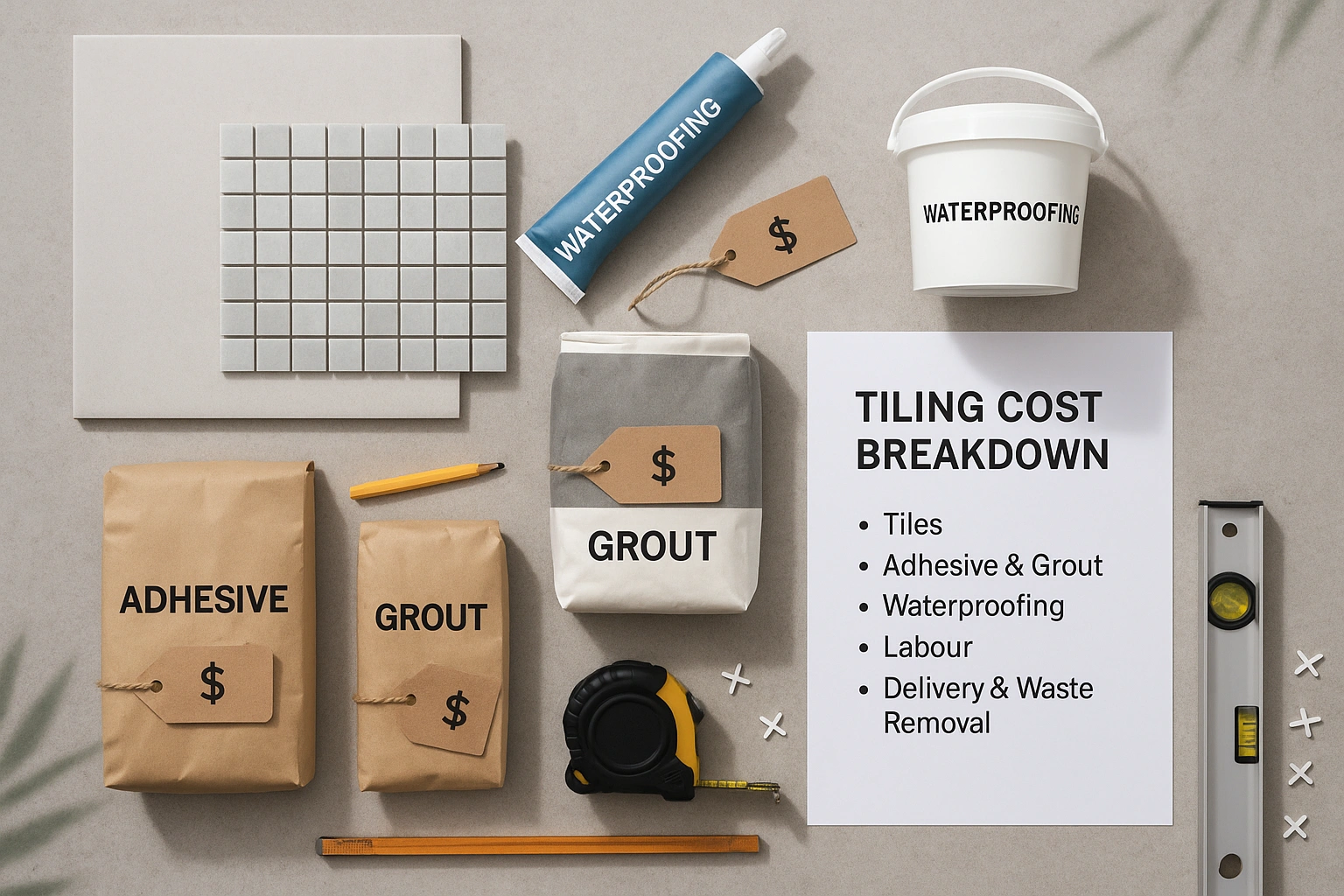
The final cost of your tiling project includes a whole lot more than just the tiles themselves. Think of it like a recipe; you need every single ingredient for the final dish to turn out right.
These aren't "hidden" costs so much as essential components for a durable, long-lasting result:
- Adhesive and Grout: These are completely non-negotiable. Their cost will vary depending on the type of tile you've chosen.
- Waterproofing: This is a critical step in any Australian bathroom. Proper waterproofing is an absolute must to protect your home’s structure from water damage.
- Labour: Getting a professional tiler is a significant part of the budget. Tilers' rates can vary quite a bit, so it's always a good idea to get a few quotes.
- Delivery and Waste Removal: Don't forget the logistics. You've got to get the new materials to your site and have a plan for clearing out all the old ones.
For a really detailed breakdown of what to expect, our guide on understanding bathroom renovation costs in Melbourne has some valuable local insights.
Finding Value Without Compromising on Style
Working with a tight budget doesn't mean you have to settle for a look you don't love. There are plenty of savvy ways to get that high-end feel for less.
One of the best strategies is to hunt for end-of-line or clearance tiles. You can often find stunning, high-quality options for a fraction of their original price if you time it right.
Another fantastic tip is to choose a high-quality ceramic or porcelain tile that expertly mimics expensive natural stone like marble or travertine. Modern manufacturing has become so good that these lookalikes are incredibly realistic, giving you that luxe aesthetic without the hefty price tag and demanding maintenance.
Broader Market Influences on Your Budget
It's also worth being aware of how the wider construction market can nudge your project's cost up or down. Government policies here in Australia play a big role in the demand for building materials, including tiles.
For example, the government's National Housing Accord aims to build 1.2 million new homes between mid-2024 and mid-2029. This is expected to ramp up demand for durable and cost-effective tiles, which can affect availability and pricing. You can discover more insights about these market trends on ibisworld.com.
By planning for all the expenses, from adhesive to installation and shopping smart for your tiles, you can keep your project on track and on budget. This kind of foresight ensures your dream bathroom remains a source of joy, not a financial headache.
Common Questions on how to Choose Bathroom Tiles
Even with a solid plan, a few practical questions always pop up during a renovation. Getting these common dilemmas sorted will help you lock in your choices with confidence, making sure the tiles you pick are absolutely perfect for your space.
What Is the Best Tile for a Small Bathroom?
This might surprise you, but for a small bathroom, large-format tiles (600x600mm or bigger) are a fantastic choice. Because there are far fewer grout lines chopping up the surface, they create a clean, uncluttered look that makes the whole room feel more open and expansive.
You can amplify this effect by pairing large tiles with a light colour scheme, think soft greys, beiges, or classic white to reflect more light. Here’s a pro tip: use the same tile on both the floor and the walls. This blurs the edges of the room, tricking the eye into seeing a larger, more cohesive space.
Should Floor Tiles Be Darker Than Wall Tiles?
Using a darker tile on the floor is a classic design trick for a reason, it works beautifully. It visually grounds the space and can even make the ceiling feel higher, which is a great bonus in rooms with lower ceilings.
But this is by no means a strict rule you have to follow. A popular modern approach is to use the exact same tile on both floors and walls to create a seamless, spa-like atmosphere. The best choice really comes down to your personal style. A darker floor is brilliant for hiding dirt, while a uniform colour scheme delivers a clean, minimalist aesthetic.
When you're deciding on a tile layout, don't feel boxed in by tradition. A floor-to-ceiling uniform tile can feel incredibly luxurious and modern, while the classic dark-floor-light-wall combo offers timeless appeal. Think about the mood you want to create.
How Much Extra Tile Should I Order?
This is a crucial step that will save you a massive headache later on. You should always order 10-15% more tiles than what your bathroom's exact measurements call for. This surplus is your safety net, covering any cuts, breakages, or mistakes that inevitably happen during installation.
If you’re planning a more complex pattern like herringbone or a diagonal layout, which requires a lot more cuts, it’s wise to bump that figure up to 15-20% extra. Having spares is also a lifesaver for any future repairs. Tile batches can vary slightly in colour over time, making a perfect match down the track next to impossible.
Do I Need Special Tiles for the Shower?
Absolutely. For the shower floor, safety is your number one priority. You must use tiles with a high slip-resistance rating to prevent accidents on such a wet surface. Look for options with a matte or textured finish, as they provide much better grip underfoot.
Smaller tiles are also a really smart choice for the shower base. Why? The increased number of grout lines provides extra traction. For the shower walls, durability and how easy they are to clean are key. Glazed ceramic and porcelain tiles are perfect here, as they're completely waterproof and simple to wipe down.
Ready to bring your dream bathroom to life with the perfect tiles? The expert team at Smarter Home Renovations offers end-to-end design and installation services across Melbourne. Contact us for a consultation and let's create a space you'll love for years to come.