What's the average kitchen renovation cost in Australia? Get a clear cost breakdown, budget-saving tips, and a guide to planning your dream kitchen.
In Australia, the average kitchen renovation cost can feel like a moving target, typically landing somewhere between $25,000 to over $150,000. The final figure all comes down to the project's complexity and your taste in materials.
For a standard, mid-range renovation, most homeowners find themselves investing between $22,000 and $45,000.
Your Guide To Kitchen Renovation Costs In Australia
Trying to pin down the cost of a kitchen remodel can be a bit overwhelming. I find it helps to think of it like buying a car. You've got different tiers to choose from, a reliable budget model, a mid-range option packed with features, and a high-end luxury vehicle. Each has a different price tag and set of inclusions, so you can find what fits your life and your finances.
It’s the same story with kitchen renovations. The average cost isn’t one single number but a whole spectrum. The final amount you’ll spend is a direct result of the choices you make along the way.
Breaking Down The Renovation Tiers
To get a realistic financial starting point, it’s smart to break projects down into three distinct levels. This approach makes it much clearer what your money can actually get you and helps avoid any nasty surprises later on.
- Budget Renovations: These are your go-to for a quick, cosmetic refresh. We're talking about things like painting your existing cabinetry, swapping out the benchtops for a modern laminate, and putting in a new splashback. You stick with the current layout, which cleverly dodges expensive plumbing or electrical work.
- Mid-Range Renovations: This is the sweet spot for most people, involving a full gut-and-replace job. It usually includes new semi-custom cabinets, engineered stone benchtops, a fresh suite of appliances, and updated lighting, all done within the kitchen's original footprint.
- Premium Renovations: This is the top-tier, bespoke solution where the sky's the limit. It often involves major structural work like moving walls, completely reconfiguring the layout, installing custom-built joinery, and fitting high-end appliances and premium materials like natural marble or quartzite.
It's worth noting that costs have been creeping up recently, driven by demand for materials and labour. The Housing Industry Association (HIA) now puts the average cost for a typical kitchen renovation at around $35,800. This number really drives home how crucial careful budgeting has become for anyone planning an upgrade. If you want to dive deeper into what's driving prices, you can explore detailed insights on kitchen renovation costs.
To help you get started with confidence, I've put together a table that gives you a clear snapshot of what to expect at each price point.
Australian Kitchen Renovation Tiers At A Glance
This table breaks down the typical costs and inclusions for each renovation level, giving you a handy reference point for your initial planning.
| Renovation Tier | Average Cost Range | Typical Inclusions |
|---|---|---|
| Budget | $15,000 – $25,000 | Cosmetic updates, painting existing cabinets, laminate benchtops, basic appliances, and DIY elements. |
| Mid-Range | $25,000 – $55,000 | New semi-custom cabinetry, quartz or engineered stone benchtops, mid-tier appliances, new flooring, and professional installation. |
| Premium | $60,000+ | Custom joinery, structural layout changes, high-end stone benchtops, luxury appliances, and architectural design services. |
Seeing it all laid out like this helps take the guesswork out of budgeting, allowing you to match your vision with a realistic financial plan.
What Really Drives Your Renovation Budget
Ever looked at two stunning kitchens and wondered why one renovation cost a modest $25,000 while the other soared past $100,000? It's a common question, and the answer isn't some big secret. It all comes down to the specific components you choose. Getting a handle on these key cost drivers is the first step toward building a realistic budget and sidestepping any nasty surprises down the road.
Think of your kitchen renovation like customising a pizza. The base and sauce are your foundational costs, but every premium topping, from imported prosciutto to buffalo mozzarella, adds to the final bill. In your kitchen, these "toppings" are your cabinetry, benchtops, appliances, and splashbacks, not to mention the labour that pulls it all together. Every single choice has a direct impact on your overall spend.
This visual guide breaks down how costs can scale across different tiers, from budget-friendly updates to premium, high-end transformations.
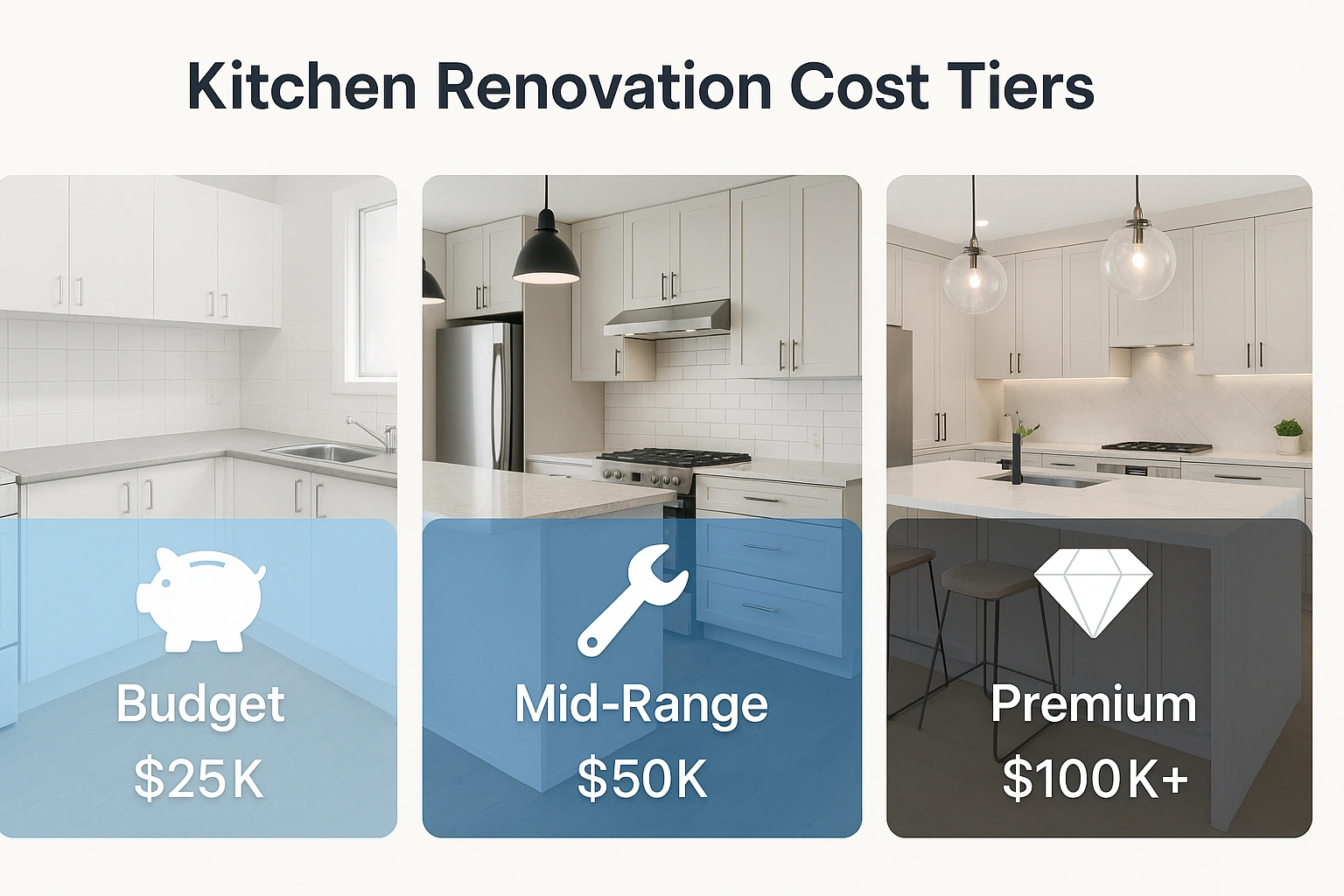
As you can see, the jump from a budget project to a premium one is significant. This leap reflects different choices in materials, the level of customisation, and the sheer complexity of the job.
Let's break down where your money actually goes. The following table shows the typical budget allocation for each major component in a kitchen renovation, giving you a clearer picture of how the costs stack up.
Kitchen Renovation Cost Breakdown By Component
| Component | Percentage of Total Budget | Notes & Material Options |
|---|---|---|
| Cabinetry & Hardware | 30% - 35% | The biggest slice. Options range from affordable flat-pack to high-end custom joinery. |
| Labour & Installation | 25% - 40% | Covers all trades: plumbers, electricians, carpenters, tilers. Can vary with project complexity. |
| Benchtops | 10% - 15% | Laminate is the most budget-friendly. Engineered stone is a popular mid-range choice, while natural stone is premium. |
| Appliances | 10% - 15% | Costs can vary wildly, from a basic package to a suite of high-end, smart European appliances. |
| Splashbacks | 5% - 10% | From simple ceramic tiles to sleek glass panels or a luxurious full-height stone slab. |
| Flooring | 5% - 7% | Options include vinyl, tiles, or timber. Costs depend on the material and preparation needed. |
| Fixtures & Fittings | 3% - 5% | Taps, sinks, lighting, and handles. Small items that can make a big impact on the final look and feel. |
Understanding this breakdown helps you prioritise where to spend and where you might be able to save. Now, let's dig into each of these key players a bit more.
The Heart Of The Kitchen: Cabinetry
Cabinetry is almost always the single largest expense in a kitchen renovation, typically chewing up 30-35% of the total budget. It sets the tone for the entire space, both functionally and aesthetically, which is why its cost can swing so dramatically.
Your main choices fall into three camps:
- Flat-Pack Cabinets: The most budget-friendly route, available off-the-shelf. They save you a lot of money upfront but offer limited sizes and styles, and you'll likely be assembling them yourself.
- Semi-Custom Cabinets: A great middle ground. These are pre-made cabinets that come with a much wider range of finishes, door styles, and sizes, giving you more design flexibility without the full custom price tag.
- Custom Joinery: This is the premium choice. Here, your cabinets are designed and built from scratch to perfectly fit your space and meet your exact needs. It offers unlimited design potential but, you guessed it, comes at the highest price.
Don't forget, a simple cabinet door replacement or a quick refresh can also make a huge impact for a fraction of the cost. If your cabinet boxes are still in good shape, sometimes all you need are some smart DIY fixes. You can find some fantastic tips in our guide on easy DIY repairs to fix kitchen cabinets.
The Workhorse: Benchtops
Benchtops are the next major cost driver, and they have a huge say in both the look and durability of your kitchen. The material you choose is everything here. A simple laminate benchtop is highly affordable and comes in a dizzying array of designs, making it a go-to for budget-conscious renovations.
Moving up the ladder, engineered stone (like quartz) has become a mid-range favourite in Australia. It offers a premium look and incredible durability without the high maintenance of natural stone. At the top end, you have materials like natural marble, granite, or high-end quartzite, which deliver unique, luxurious finishes but demand a much bigger investment and more careful upkeep.
The Engine Room: Appliances
Appliances are what make your kitchen work, and their cost can range from a few thousand dollars to tens of thousands. A basic package with the essentials might set you back around $3,000, while a full suite of high-end, European-branded, or smart appliances can easily blow past $20,000.
When you're budgeting for appliances, think beyond the upfront cost. Check their energy efficiency ratings, a better rating can save you a fair bit on your power bills over the long term. It's also worth keeping an eye out for package deals or end-of-financial-year sales to snag premium features for less.
The Style Statement: Splashbacks
While it might be a smaller component, the splashback plays a massive role in the kitchen's final look. The cost here is tied directly to the material and how complex the installation is.
Simple ceramic tiles are an economical and timeless choice. For a sleek, modern look, glass, stainless steel, or acrylic panels are solid mid-range options. If you're after a high-impact, premium finish, a full-height stone slab that matches your benchtop creates a seamless, luxurious effect but is also the most expensive path to take.
The Final Piece: Labour Costs
Finally, labour is the invisible cost that pulls everything together, typically making up 25-40% of your total budget. This covers the skilled work of carpenters, plumbers, electricians, tilers, and project managers. The average kitchen renovation cost is heavily influenced by these professional fees.
Trying to DIY everything can seem like a great way to save money, but mistakes in the kitchen can be incredibly costly to fix. Hiring licensed and insured tradespeople ensures the work is done safely, to code, and to a high standard. It's about protecting your investment for years to come.
Comparing Costs For Different Project Scopes
To get your head around the average kitchen renovation cost, you first need to realise that not every project starts with a sledgehammer. Kitchen renovations aren't a one-size-fits-all deal; they run the gamut from a simple facelift right through to a complete architectural overhaul.
Thinking about your project in terms of its scope is the best way to line up your vision with a realistic budget. Let's break down the three most common project types to help you figure out where your dream kitchen fits and what kind of investment you’re likely looking at.
The Cosmetic Refresh: A Quick and Impactful Update
A cosmetic refresh is the simplest and most wallet-friendly way to transform your kitchen. The main goal here is to modernise the look and feel of the space without messing with its fundamental structure. Think of it as giving your kitchen a new outfit rather than performing major surgery.
The key is working with what you've already got. You'll keep the existing layout, which means no costly re-routing of plumbing or electrical wiring.
What does a cosmetic refresh typically include?
- Painting existing cabinet doors or just replacing the doors while keeping the cabinet boxes.
- Swapping out old hardware like handles and knobs for modern designs.
- Installing a new, affordable benchtop, like a high-quality laminate.
- Putting in a new splashback, maybe with some stylish and easy-to-install subway tiles.
- Upgrading your tapware for a more contemporary look.
This type of project is perfect if you're generally happy with your kitchen's layout but can't stand the dated aesthetic anymore. It delivers a massive visual punch for a relatively modest investment.
The Full Gut-And-Replace: The Most Common Renovation
This is the mid-range reno that most Aussie homeowners go for. A full gut-and-replace project means tearing everything out, cabinets, benchtops, appliances, and sometimes flooring, and starting again with a clean slate.
While it’s a complete teardown, the project is still contained within the kitchen's original footprint. The plumbing and electrical points generally stay where they are, which helps stop the budget from spiralling into the premium tier. This is what most people picture when they think of a "renovation".
Recent trends show a strong, ongoing commitment to these kinds of projects in Australia. Even with economic pressures, homeowners see the kitchen as the heart of the home, worth investing in for both lifestyle and property value. While basic refreshes might start around $15,000, this more comprehensive mid-range scope typically lands between $25,000 to $50,000. Of course, high-end projects can easily shoot past $75,000. You can dive deeper into why Aussies are still prioritising these renos by reading the full analysis of 2025 kitchen renovation costs.
A mid-range budget usually covers:
- New semi-custom or high-quality flat-pack cabinetry.
- Durable and popular engineered stone or quartz benchtops.
- A complete suite of new mid-tier appliances.
- New flooring, lighting, and sink fixtures.
- Professional installation by licensed tradies.
The Structural Remodel: A Complete Transformation
The structural remodel is the premium, top-tier of kitchen renovations. This goes way beyond just replacing what's there; it involves completely re-imagining the entire space. If your project involves moving walls, changing the location of windows or doors, or totally reconfiguring the layout, you've landed in this category.
This is where the average kitchen renovation cost can really climb. The complexity jumps tenfold when you introduce major structural, plumbing, and electrical work. You'll almost certainly need an architect or interior designer, a structural engineer, and a builder to manage the whole process, including getting council permits.
A structural remodel budget will include everything from the mid-range scope, plus hefty additional costs for:
- Demolition and Structural Work: The cost to safely remove walls (especially if they’re load-bearing) and re-engineer the space.
- Extensive Trades Labour: Rerouting water lines, gas pipes, and electrical circuits to fit the new layout.
- High-End Materials: This tier often includes premium selections like natural stone benchtops, custom-built joinery, and architectural lighting.
- Luxury Appliances: Top-of-the-line, integrated appliances from premium brands.
- Professional Fees: Costs for designers, architects, and obtaining the necessary building permits.
By figuring out which of these three scopes best describes your project, you can go from a vague idea of the cost to a well-defined and realistic budget. It's the first step to setting your renovation up for success.
Uncovering The Hidden Kitchen Renovation Costs

That first quote you get for your kitchen renovation is a great starting point, but it's rarely the final number you'll pay. It's a bit like booking a holiday, you budget for the big things like flights and hotels, but you know you’ll need cash for airport transfers, travel insurance, and that must-have souvenir. In the same way, the average kitchen renovation cost almost always has a few other expenses tagging along just out of sight.
This isn't a sign of a dodgy quote; it's just the reality of a major construction project. The key to keeping your project on track, on budget, and free from stress is understanding what these potential extra costs are before the sledgehammer comes out. A smart budget isn't just about what you plan to spend, but also what you're prepared for.
Expenses Hiding In Plain Sight
Many of the most common "hidden" costs aren't really hidden at all. They're simply items that fall outside the standard scope of a builder's initial quote. Knowing about them lets you build a truly comprehensive budget from day one.
Here are a few of the usual suspects:
- Council Permits and Fees: If your renovation involves moving walls or making structural changes, you'll almost certainly need council approval. These applications come with fees that can range from a few hundred to well over a thousand dollars.
- Waste Removal: A full demolition creates a mountain of debris. Hiring a skip bin or arranging for rubbish removal is a necessary cost that’s often billed separately.
- Setting Up a Temporary Kitchen: Let's be honest, living without a kitchen for several weeks is tough. The cost of a temporary setup, a microwave, a portable cooktop, and an increased reliance on takeaway, can add up surprisingly fast.
A renovation budget without a contingency fund is like a ship without a life raft. It might be smooth sailing, but you'll be in serious trouble if you hit an unexpected storm. Preparing for the unknown is the most important part of planning.
The Surprises Behind The Walls
The most unpredictable costs are the ones nobody can see until the old kitchen is ripped out. Once demolition starts, your builder might uncover pre-existing issues that absolutely have to be fixed to meet current building codes and ensure your new kitchen is safe and built to last.
Some common discoveries include:
- Water Damage: A slow, hidden leak from an old dishwasher or pipe can lead to rotted flooring or wall frames that must be replaced.
- Pest Infestations: Termites or other pests may have caused structural damage that needs immediate and expert attention.
- Outdated Wiring or Plumbing: Older homes often have electrical or plumbing systems that don't meet modern safety standards. This discovery means a mandatory and often costly upgrade is on the cards.
Why A Contingency Fund Is Non-Negotiable
This is where a contingency fund becomes your most valuable tool. Think of it as a separate pool of money, usually 10% to 20% of your total project budget, set aside specifically for these nasty surprises.
For a $40,000 mid-range renovation, this means having an extra $4,000 to $8,000 ready to go. If you get to the end and haven't needed it, fantastic, you can splash out on that statement appliance you've been eyeing or just bank the savings. But if you uncover a major issue, this fund ensures the problem gets fixed properly without derailing your entire project or forcing you to compromise on your dream design. It’s the buffer that turns potential disasters into manageable bumps in the road.
How To Get A High-End Look On A Budget
Getting that luxurious kitchen aesthetic doesn’t mean you need a bottomless bank account. With some clever planning and strategic choices, you can create a high-end feel while keeping the average kitchen renovation cost firmly under control. It really boils down to knowing where to put your money for the biggest impact, and where smart substitutions can deliver the same stylish result for less.
Think of it like putting together a designer outfit. You might splurge on a timeless, quality handbag but pair it with an affordable, on-trend dress. The same idea applies to your kitchen, blending a few premium touches with cost-effective solutions is the secret to a beautiful, budget-friendly space.
Keep Your Layout And Save Big
Honestly, the single most effective way to keep your renovation budget in line is to keep your kitchen's existing layout. While the idea of moving walls or completely reconfiguring the space is tempting, it sends costs skyrocketing.
Changing the layout means calling in plumbers to move water lines, electricians to reroute wiring, and possibly builders for structural changes. By sticking with your current footprint, you completely sidestep these complicated and expensive jobs. That frees up thousands of dollars that you can then pour into the more visible, exciting elements like your benchtops and appliances.
Smart Material And Appliance Choices
You don't have to go for the most expensive materials to get that sophisticated look. Today's alternatives are incredibly convincing and durable, offering premium style without the hefty price tag.
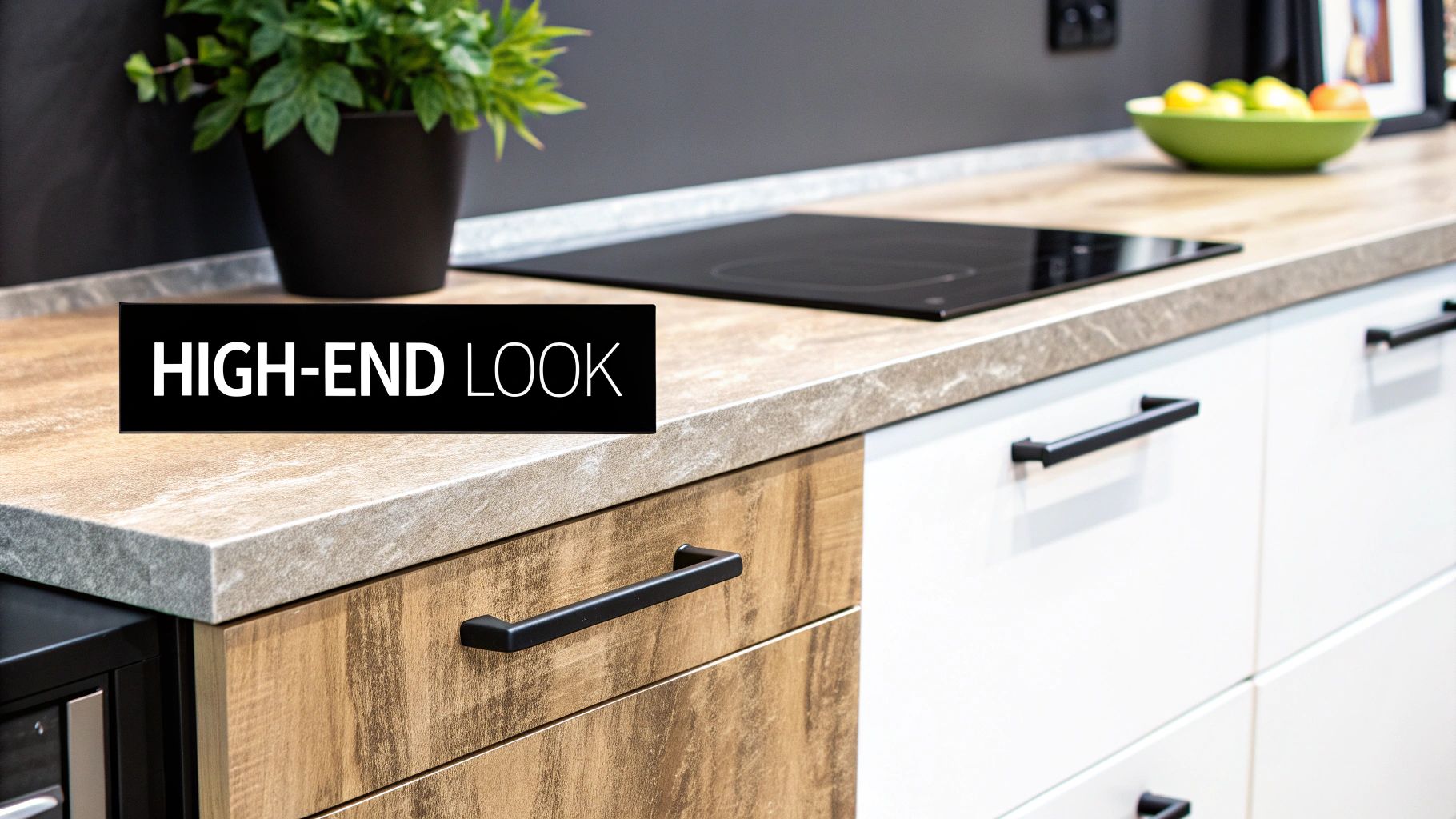
- Benchtops: Natural marble is absolutely stunning, but it's also pricey and requires a lot of upkeep. High-quality laminate or engineered quartz can mimic the look of natural stone for a fraction of the cost, and they're far better at resisting stains and scratches.
- Cabinetry: Instead of splashing out on full custom joinery, think about just upgrading your existing cabinet doors. If the cabinet boxes are still in good shape, simply replacing the fronts can totally transform your kitchen's appearance. Even a fresh coat of paint in a modern colour can work wonders.
- Appliances: It's all about timing. Keep an eye out for major sales events like the end of the financial year or Boxing Day to buy your appliances. You can often snag a complete package from a single brand for a significant discount, getting you mid-range features for an entry-level price.
Embrace Strategic DIY
Rolling up your sleeves and taking on a few tasks yourself is a fantastic way to cut down on labour costs, which can easily eat up to 40% of a renovation budget. But, it's really important to be realistic about what you can handle.
Focus on tasks that are high-impact but low-risk. Demolition (done carefully!), painting, and assembling flat-pack cabinets are perfect DIY projects. Leave the plumbing, electrical work, and benchtop installation to the licensed pros to avoid expensive, and dangerous, mistakes.
Even small DIY projects can lead to big savings. For instance, installing your own splashback can save you a few hundred dollars in tiling fees. Building a stylish island can also be a manageable project; for some great ideas, check out these creative and affordable kitchen island design ideas.
Focus On High-Impact Details
Sometimes, it’s the small finishing touches that take a kitchen from standard to stunning. These details often have a surprisingly small impact on the overall budget but a massive effect on the final look and feel.
Where to Splurge for Maximum Impact:
- Tapware: A beautiful, high-quality tap can act like the "jewellery" of your kitchen, instantly making the sink area a focal point.
- Hardware: Swapping out basic handles and knobs for something more stylish and substantial is a quick, easy, and affordable upgrade that makes cabinetry look much more expensive than it is.
- Lighting: A statement pendant light hanging over an island or dining area can add a real layer of sophistication and create a warm, inviting atmosphere.
By making these deliberate choices, keeping your layout, picking smart materials, tackling some DIY, and investing in those key details, you can stretch your budget much further than you ever thought possible. This strategic approach is how you get a beautiful, functional, and high-end kitchen without breaking the bank.
Building Your Kitchen Renovation Budget
Bringing a dream kitchen to life always starts with a solid financial game plan. A detailed budget isn't just a list of costs; it's the roadmap that turns your vision into a manageable, real-world project. Getting this right from the start helps you stay in control of your spending, from the very first quote to the final coat of paint.
The first step is to get out there and gather multiple quotes from reputable, licenced tradespeople. You'll want to aim for at least three different estimates. This isn't about finding the cheapest price, but about getting a clear picture of the market rate and understanding what each professional includes, their proposed timelines, and their overall approach.
Tracking Your Expenses
Once you've chosen your team, meticulous tracking becomes your best friend. A simple spreadsheet or a budgeting app is perfect for logging every single expense as it comes up. This means everything, from the initial deposit on your cabinetry to the cost of a skip bin for the old benchtops.
This active monitoring lets you see how your actual spending is stacking up against your initial estimates in real time. It’s the key to catching any potential overruns early, giving you the chance to adjust your plans before the budget gets away from you.
A well-managed budget is the best tool for a stress-free renovation. By planning for both known and unknown costs, you transform financial uncertainty into confident decision-making, ensuring your project stays on track from start to finish.
Your Financial Safety Net
Remember to formally include your 10-20% contingency fund as a line item in your budget. Think of this not as leftover cash, but as a dedicated buffer for those classic renovation surprises, like finding hidden water damage behind the splashback or dealing with outdated wiring. For a project with an estimated average kitchen renovation cost of $40,000, this means setting aside $4,000 to $8,000.
To help you visualise how these costs can change based on where you live and the choices you make, our guide to the kitchen renovation cost in Melbourne offers a detailed local breakdown. Understanding these principles, from gathering quotes to managing your contingency, will equip you to handle your renovation’s finances with confidence, paving the way for a stunning result without the financial headache.
Still Have Questions About Kitchen Renovation Costs?
It's completely normal to have a few questions floating around when you're thinking about the financial side of a kitchen remodel. Let's tackle some of the most common ones head-on so you can finalise your plans with confidence.
How Much Value Does A Kitchen Renovation Add To My Home?
A well-planned kitchen renovation is almost always a fantastic investment. Most real estate experts agree that you can expect to recoup between 60% and 80% of what you spend when it's time to sell.
Think about it: a modern, functional kitchen is a massive drawcard for potential buyers. It can seriously boost your property's market appeal and even nudge up the final sale price.
How Long Does A Typical Kitchen Renovation Take?
The timeline really comes down to the scope of your project. A simple cosmetic refresh, think new paint and handles, can often be knocked over in just one or two weeks.
A standard mid-range renovation, where everything is stripped out and replaced, usually takes about four to six weeks from demolition day to the final polish. If you're planning a major structural remodel with layout changes, you'll want to set aside eight weeks or more to allow for things like custom orders and council inspections.
Should I Hire A Designer Or Manage The Project Myself?
This is a big one, and the right choice really depends on your budget, how much time you have, and your own experience level.
Managing the project yourself can definitely save you money on professional fees, but it demands a huge amount of your time to coordinate tradespeople and troubleshoot problems as they pop up.
On the other hand, bringing in a professional kitchen designer or project manager can streamline the entire process. They help you sidestep costly mistakes and often have access to trade-only discounts on materials that you wouldn't get otherwise. While going the DIY route seems cheaper upfront, a professional's expertise is an invaluable investment for more complex jobs, ensuring you get a smoother process and a higher-quality result.
Ready to transform your kitchen with a team that guarantees transparent pricing and meticulous workmanship?
The experts at Smarter Home Renovations are here to guide you every step of the way. Contact Tony today for a consultation.