Our guide to hiring house renovation builders in Melbourne. Learn how to vet builders, understand quotes and keep your project on track.
Embarking on a home renovation is an incredibly exciting prospect, but its success almost always hinges on one thing: finding the right house renovation builders. The ideal team doesn't just put up walls and lay floors; they translate your vision into a liveable reality, manage the mountain of complex logistics, and ultimately become your trusted partner in the process. This guide will walk you through the essential steps to find and engage the best builders in Melbourne for your project.
Defining Your House Renovation Vision and Scope

Before you can even think about finding the right builder, you need to get crystal clear on what you want to achieve. A well-defined project scope is the bedrock of a successful renovation. It’s what prevents misunderstandings, arguments, and painful budget blowouts down the line.
The best way to start is by thinking big, dream a little! Then, you can begin refining those ideas into a concrete, actionable plan.
The first step is figuring out the scale of your project. Are you planning a simple cosmetic facelift, or is this a major structural overhaul? These are two very different paths, each requiring different levels of planning, expertise, and, of course, investment.
Distinguishing Project Types
You need to know what kind of reno you're actually planning. Broadly, they fall into two camps:
- Cosmetic Renovations: These projects are all about aesthetics and surface-level improvements. Think a fresh coat of paint, ripping up old carpet for new floorboards, installing modern light fittings, or simply replacing tired cabinetry fronts. They generally don't require building permits and cause less disruption to your daily life.
- Structural Renovations: This is where things get serious. We're talking about altering the very layout of your home, like knocking down walls to create that dreamy open-plan living area, adding an extension, or completely reconfiguring a bathroom. These projects almost always require architectural plans and council permits.
Having a solid idea of your project's complexity is vital. It directly influences the type of builder you’ll need and the questions you should be asking from day one. For a deeper dive, you can explore our comprehensive guide to full home renovations, which breaks down the entire process from start to finish.
Why a Clear Vision Matters
A well-defined vision acts as your project's compass. It's what allows potential builders to give you an accurate quote and ensures everyone involved is working towards the exact same goal. This clarity minimises the risk of those dreaded, costly changes mid-project and makes decision-making a whole lot simpler.
A detailed scope is more than just a wishlist; it’s a critical communication tool that bridges the gap between your ideas and a builder's execution. Without it, you're navigating without a map.
This initial planning phase also connects to what's happening in the broader Australian housing market. With population growth driving demand, many homeowners are choosing to upgrade their current home rather than move. As highlighted by the Housing Industry Association, strong renovation activity is expected as homeowners adapt their properties to new needs. This makes the role of skilled house renovation builders more crucial than ever. You can read more about these housing market trends and what they mean for homeowners.
How To Create A Realistic House Renovation Budget

Before you fall in love with tapware or start picking out paint colours, you need to get real about the numbers. A successful renovation is built on a solid financial plan, not guesswork. Nailing down a realistic budget is the single most important thing you'll do before you even think about talking to house renovation builders.
Why? Because your budget sets the entire tone for the project. It dictates the scope, influences material choices, and prevents those heart-stopping moments when costs spiral out of control. A vague budget is a recipe for stress, but a well-researched financial plan means you can walk into conversations with builders feeling confident and in control.
Itemising Your House Renovation Expenses
Right, let's get down to it. Open up a spreadsheet and start listing every single conceivable cost. And I mean everything. Don't leave anything out, no matter how small it seems right now. The more detailed you are, the fewer surprises you'll have later.
Break your list down into clear categories so nothing gets missed. Your budget should cover:
- Labour Costs: This is usually the biggest chunk of the pie, covering everyone from the chippy and sparky to the plumber.
- Materials and Finishes: Think flooring, cabinetry, benchtops, tiles, paint, and all those fixtures you've been eyeing.
- Permits and Fees: Don't forget council permits, inspection fees, and any drawings from architects or engineers. They add up.
- Fixtures and Appliances: Ovens, cooktops, taps, and lighting can have wildly different price tags.
- Waste Removal: Hiring a skip bin is an easy-to-forget but essential cost.
As a rough guide, a quality home renovation in Australia typically falls somewhere between $3,000 to $5,000 per square metre. A simple cosmetic update to a living room might land between $4,000 and $6,000. These figures give you a ballpark to start with.
To help you get a clearer picture, here’s a look at some common renovation projects and what you might expect to invest.
Estimated Renovation Costs in Melbourne
This table provides a general overview of typical project costs in the Melbourne area. Keep in mind that these are estimates; the final price will depend on your specific choices regarding materials, finishes, and the complexity of the work.
| Project Type | Typical Scope | Estimated Cost Range (AUD) |
|---|---|---|
| Kitchen Renovation | New custom cabinetry, stone benchtops, mid-range appliances, tiling, plumbing, and electrical. | $35,000 - $70,000+ |
| Bathroom Renovation | Full strip-out, new waterproofing, tiling (floor-to-ceiling), vanity, shower screen, toilet, and fixtures. | $25,000 - $50,000+ |
| Laundry Upgrade | New cabinetry for storage, benchtops, sink, and updated plumbing connections. | $10,000 - $25,000 |
| Deck or Pergola | Construction of a timber deck or covered outdoor area, including footings and basic finishes. | $15,000 - $40,000+ |
| Full Home Renovation | Multiple rooms including kitchen and bathrooms, potential structural changes, new flooring, and painting throughout. | $150,000 - $500,000+ |
Use these figures as a starting point for your own budgeting. They'll help you align your project dreams with financial reality before you get too far down the track.
The Non-Negotiable Contingency Fund
Now for the most important part of your budget: the contingency fund. Even with the most meticulous planning, renovations can throw curveballs, especially in older Melbourne homes. You never know what's hiding behind a wall.
This is your financial safety net. Always, always allocate an additional 15-20% of your total estimated project cost to a contingency fund. This buffer is there to cover the unexpected, rotten structural timbers, ancient wiring, or hidden asbestos, without derailing your entire project.
Think of it this way: on a $100,000 kitchen renovation, a 20% contingency means setting aside an extra $20,000. If you don't end up needing it, fantastic! You've got a bonus for landscaping or furniture. But if you do need it, you'll be incredibly glad it's there.
For a more detailed breakdown of project costs, have a look at our comprehensive guide on the cost of renovation in Melbourne.
Alright, you've got your vision and you know your numbers. Now for the exciting part, finding the right team to bring it all to life. The search for great house renovation builders in Melbourne isn't a quick Google-and-go exercise. It's more of a matchmaking process, where you carefully gather names, do your homework, and look for genuine signs of quality. The aim here is to build a solid longlist of about five to seven potential builders to explore further.
Word-of-mouth is hands down the best place to start. Think about friends, family, or colleagues who've recently gone through a renovation in Melbourne. A personal referral is worth its weight in gold because you get the real, unfiltered story of their experience, the highs, the lows, and everything in between.
Don't just ask if they liked the finished product. Dig a little deeper. How was the builder's communication? What happened when unexpected problems cropped up? Did they stick to the timeline and, crucially, the budget? These are the insights that separate a good builder from a great one.
Look to the Industry Pros
Beyond your personal network, the next stop should be the official industry organisations. These aren't just random directories; they're curated lists of builders who have to meet certain standards to even be included.
For anyone renovating in Melbourne, these two are essential:
- Master Builders Victoria (MBV): As the peak industry body, their "Find a Master Builder" tool is a fantastic resource. You can search for members who specifically focus on renovations in your local area. A builder with MBV membership shows a serious commitment to their craft.
- Housing Industry Association (HIA): The HIA is another major player. Their directory is full of builders who are generally on top of the latest industry standards and building codes.
Using these directories gives you a bit of a head start. It's a layer of pre-vetting that tells you a builder is invested enough in their reputation to be part of a professional body.
Put on Your Detective Hat
Once you've got a handful of names, it's time to do some digging. Don't just take their website's word for it; you need to look closer to understand what they're truly capable of and what their past clients really think. Your first port of call is their online portfolio.
Look for projects that feel similar to what you're planning. If you're hoping to add a modern extension to your period home, you want to see that they've nailed that kind of project before. Pay close attention to the little details, the quality of the finishes, the complexity of the work they showcase. Does it look sharp?
A builder's portfolio is their resume. Look past the glossy photos and ask yourself: "Does this work reflect the quality and style I want for my own home?" If the answer is no, they aren't the right fit, no matter how good their reviews are.
Next, head over to platforms like Google or Houzz and dive into the reviews and testimonials. Read them carefully and look for recurring themes. Are people consistently praising their "excellent communication," "clean worksite," or "on-time finish"? Those are huge green flags.
On the flip side, a pattern of complaints about budget blowouts or poor follow-up should set off alarm bells. One grumpy review can be an anomaly, but a consistent stream of unhappy clients is a clear sign to steer clear. This detailed research is what helps you narrow that initial list down to the most promising house renovation builders, the ones who truly seem like a great fit for your project.
Vetting Your Builder Shortlist Like a Pro
You've got a longlist of promising candidates, great. Now comes the most critical part of the entire process: digging in and properly vetting them. This is where you separate the true professionals from the rest. It's your best defence against dodgy operators, blown budgets, and renovation nightmares.
Think of it as your due diligence phase. It’s about going much deeper than a slick website or a polished portfolio.
This simple decision tree maps out the initial search, whether you kick things off with a word-of-mouth referral or by hitting up online directories.
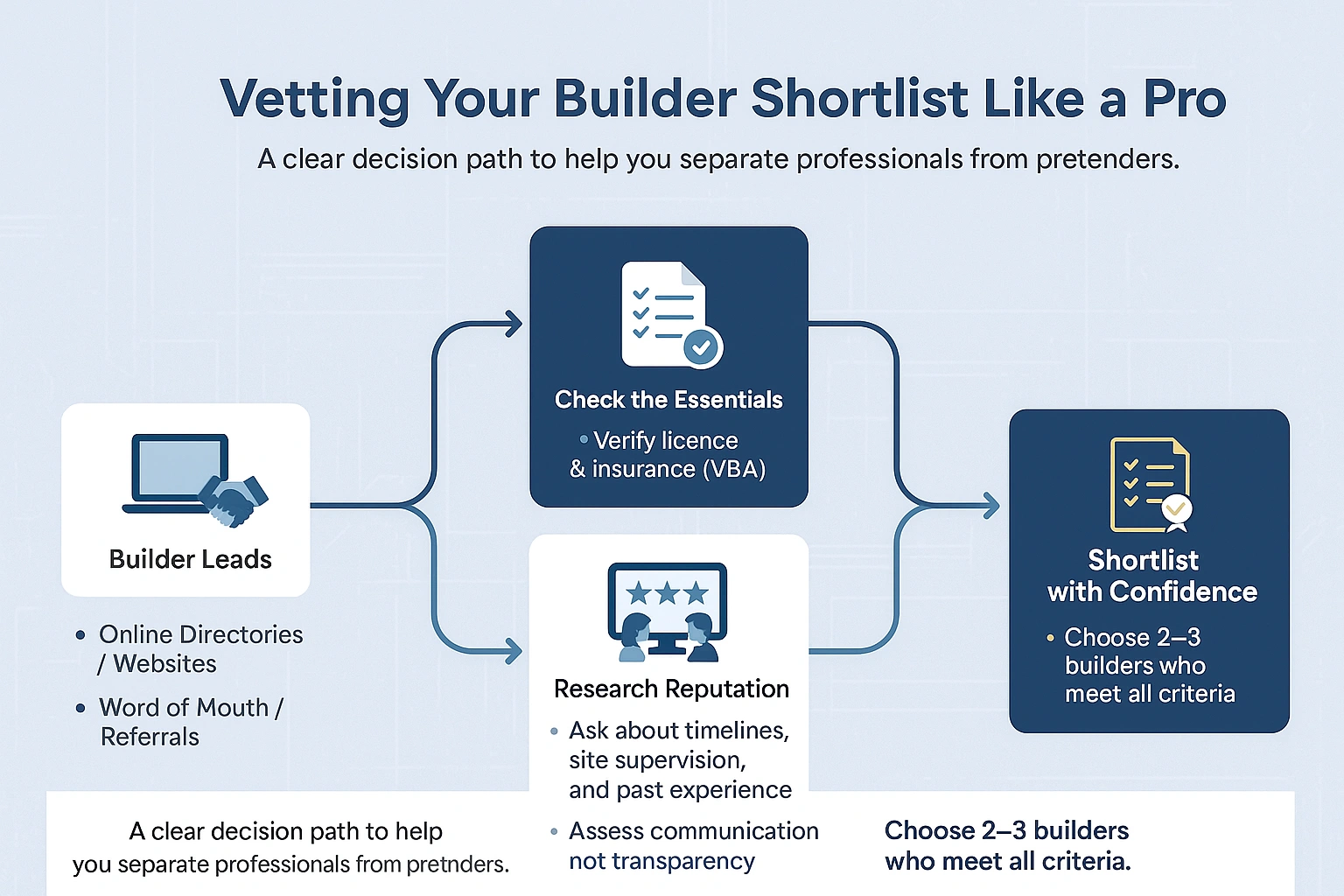
The main takeaway here is that both roads, personal recommendations and online searches, must lead to the same destination. A thorough vetting process before you even think about signing a contract.
Checking the Essentials First
Before you waste time on a phone call, run a few quick but non-negotiable background checks. In Victoria, this is incredibly easy and will weed out any unregistered operators straight away.
Your first port of call should always be the Victorian Building Authority (VBA) website.
Here, a quick practitioner search will confirm two vital details:
- Registration: Is the builder a legitimate Registered Building Practitioner? This is a legal requirement for most domestic building work in the state.
- Insurance: Do they hold current and valid domestic building insurance (DBI)? This is your safety net, protecting you if the builder dies, disappears, or goes insolvent.
If a builder doesn't show up in the search or their details are off, they're out. No second chances, no excuses. This simple five-minute check can save you from a world of financial pain and heartache.
Talking to Past Clients
A builder’s portfolio shows you the finished product. Speaking to their past clients tells you about the journey. A reputable builder will be more than happy to put you in touch with a few recent clients.
When you make that call, don't just ask, "Were you happy?" You need to dig deeper to get the real story.
"A builder’s true character isn't revealed when things are going perfectly; it’s shown in how they handle the unexpected challenges that inevitably arise during a renovation."
To get genuinely useful feedback, try asking more open-ended questions like these:
- "How was the communication during the project? Did you always feel like you knew what was going on?"
- "Can you tell me about a problem that popped up and how the builder handled it?"
- "Did the project stick to the timeline? If there were delays, how were they explained to you?"
- "How did they handle the budget? Were there any surprise costs, and how were they managed?"
- "On a day-to-day basis, what was the worksite like? Were they clean and organised?"
These questions get to the heart of their professionalism, problem-solving skills, and communication style, things that are just as crucial as the quality of the final build. For more great questions and tips, check out our other articles on hiring builders.
Watching for Red Flags
Your initial chats and meetings with potential house renovation builders are also part of the vetting process. Pay close attention to your gut feeling and how they conduct themselves. Some warning signs are subtle, but others are bright red flags waving right in your face.
Be cautious of any builder who:
- Puts the pressure on. A true professional will give you the time and space you need to make a considered decision.
- Gives you a ridiculously low quote. If a price seems too good to be true, it almost certainly is. It could mean they're cutting corners on materials or plan to sting you with "variations" later on.
- Gets cagey about their licence, insurance, or references. Transparency is everything. If they're hiding something now, what will they hide during the build?
- Suggests a "cash deal" to avoid GST. This is a massive red flag. It’s illegal and leaves you with absolutely no paper trail or legal recourse if things go wrong.
It also helps to have some industry context. The Australian Bureau of Statistics recently reported that there were 223,922 total dwellings under construction in a single quarter. This points to a very busy, and often stretched, industry. Good builders are in high demand. Delays can happen, but a professional will be upfront about their schedule and communicate openly about any challenges. You can explore more data on Australian building activity on the ABS website.
Builder Vetting Checklist
To keep everything organised, it helps to use a consistent checklist for every builder you're seriously considering. This ensures you don't miss a critical step in the heat of the moment.
| Check | Verification Method | What to Look For |
|---|---|---|
| VBA Registration | Search the VBA's online practitioner register. | Confirms they are a legally Registered Building Practitioner. |
| Domestic Building Insurance (DBI) | Check their registration details on the VBA site. | Confirms they hold the required insurance for your protection. |
| Client References (x3) | Phone calls with past clients provided by the builder. | Ask about communication, problem-solving, budget, and timeline. |
| Portfolio Review | Look through their website, social media, and any physical lookbooks. | Do they have experience with projects similar in scope and style to yours? |
| Initial Communication | Your own experience during initial calls and meetings. | Are they professional, transparent, and good communicators? |
| Red Flag Assessment | Review your interactions and their proposals. | Are there any pressure tactics, low-ball quotes, or evasiveness? |
Using a structured approach like this ensures that by the time you're ready to request formal quotes, your shortlist will consist only of qualified, reliable, and professional builders you can genuinely trust.
Comparing Quotes and Understanding Contracts

This is the moment things start to feel real. The quotes from your shortlisted builders have arrived, and it's tempting to jump straight to the final price. But hold on. The lowest price is very rarely the best value, and a vague, single-page quote is often a massive red flag.
A professional, detailed quote is a direct reflection of the quality and thoroughness you can expect from the house renovation builders themselves. So, before you get too excited, lay the quotes out side-by-side and get ready to compare them line by line. Your goal here is to make sure you're comparing apples with apples.
A quality quote should be a multi-page document, not a quick email paragraph. It needs to break down every single part of the job, from demolition and materials to labour and the final finishes. If one quote is dramatically cheaper than the others, it’s almost always because something important has been left out.
Decoding the Details in Each Quote
To properly weigh up each offer, you need to know exactly what you're looking for. A professional quote should give you a crystal-clear picture of the entire project scope and costs, leaving no room for nasty surprises down the track.
Here's what every solid quote must include:
- A Detailed Scope of Work: This should spell out precisely what’s included and, just as importantly, what’s excluded.
- Breakdown of Costs: A full rundown of labour, materials, permits, and any fees for subcontractors like plumbers or electricians.
- Prime Cost Items (PCs): These are allowances for specific fixtures and fittings, like your oven or tapware. If you choose an item that costs more than the allowance, you simply pay the difference.
- Provisional Sums: These are educated estimates for work where the final cost can't be pinned down upfront, like excavation where unexpected rock removal might be needed.
- A Proposed Timeline: This gives you a realistic idea of the project's duration from start to finish.
The most common cause of budget blowouts is a lack of detail in the initial quote. If an item isn't explicitly listed as 'included,' assume it's not. Getting this clarity now is vital for a smooth process later on.
Once you’re comfortable that you understand the costs and what’s involved, you can make an informed choice and move on to the final legal step.
Navigating Your Building Contract
After you’ve selected your builder, the next step is the domestic building contract. This isn't just a formality; it's your single most important piece of protection. In Victoria, any renovation project over $10,000 legally requires a major domestic building contract.
Take your time and read every single word before you sign.
A standard Victorian building contract will specify all the crucial details. Pay close attention to the payment schedule, which dictates when payments are due at each stage of the build. It will also define the process for handling variations (any changes to the original plan) and outline a clear dispute resolution process, just in case disagreements arise. This contract is what formalises your relationship with your builder and sets the legal groundwork for a successful project.
A Few Common Questions When Hiring Builders
Even with a rock-solid plan, you're bound to have a few lingering questions when hiring house renovation builders. That's completely normal. Getting clear answers now gives you the confidence to move forward, knowing you’ve ticked every box. Let's run through some of the most common things homeowners get stuck on.
Quote vs. Estimate: What's the Difference?
One of the first bits of jargon you'll encounter is "estimate" and "quote." It's easy to think they're the same, but they have very different meanings and legal implications, especially for your budget.
An estimate is really just a ballpark figure. It's a rough, non-binding guess at the cost, usually given early on to see if a project is in the right financial ballpark. Think of it as a starting point for a conversation.
A quote, on the other hand, is a formal, fixed-price offer for a very specific scope of work. Once you sign on the dotted line, it becomes a legally binding part of your contract. This is your protection against unexpected price jumps on the work you've both agreed to.
Handling Disagreements and Responsibilities
Let's be realistic: no renovation is perfectly smooth from start to finish. Knowing how to handle the small bumps in the road and understanding who's responsible for what is the secret to a stress-free project. Your contract is your best mate here.
If a disagreement pops up, the first thing to do is calmly pull out your signed contract and review the terms. Next, have a direct chat with your builder. It’s always a smart move to follow up with a quick email summarising what you discussed and agreed on – this creates a handy written record.
If you really can’t find a solution, Domestic Building Dispute Resolution Victoria (DBDRV) offers official mediation services to help homeowners and builders sort things out.
What about council permits? This is another common point of confusion.
While your builder will almost always handle the permit applications, they know the process inside and out, the ultimate legal responsibility falls on you as the homeowner. Make sure your contract clearly states who is managing this to avoid any mix-ups.
The Non-Negotiable Legal and Safety Stuff
When it comes to the legal side of things in Melbourne, there are a couple of absolute must-haves. Checking a builder's credentials isn't just a good idea; it's a critical step that protects you from huge financial and legal headaches.
So, does your builder need to be registered and insured? Absolutely, yes.
- Registration: For any domestic building work valued over $10,000, Victorian law demands your builder is a Registered Building Practitioner with the Victorian Building Authority (VBA).
- Insurance: For any project costing more than $16,000, the builder is also legally required to give you domestic building insurance (DBI) before you pay a cent of the deposit or any work kicks off.
Never, ever hire house renovation builders who can't show you proof of these. This isn't just red tape; it's the system designed to protect your investment and guarantee a baseline of quality and accountability for your reno.
Ready to start your renovation with a team you can trust? The experienced team at Smarter Home Renovations offers transparent, end-to-end service for projects of all sizes across Melbourne.