Planning a renovation? Understand the bathroom remodel electrical cost with our complete guide to pricing and hidden factors to save money.
Thinking about your bathroom renovation electrical cost? It's one of those line items that can really catch people by surprise. For most Melbourne bathroom renovations, the electrical work will likely land somewhere between $1,500 and $4,500.
Of course, this can swing quite a bit depending on how ambitious your plans are and the age of your home.
Understanding Your Bathroom Remodel Electrical Cost
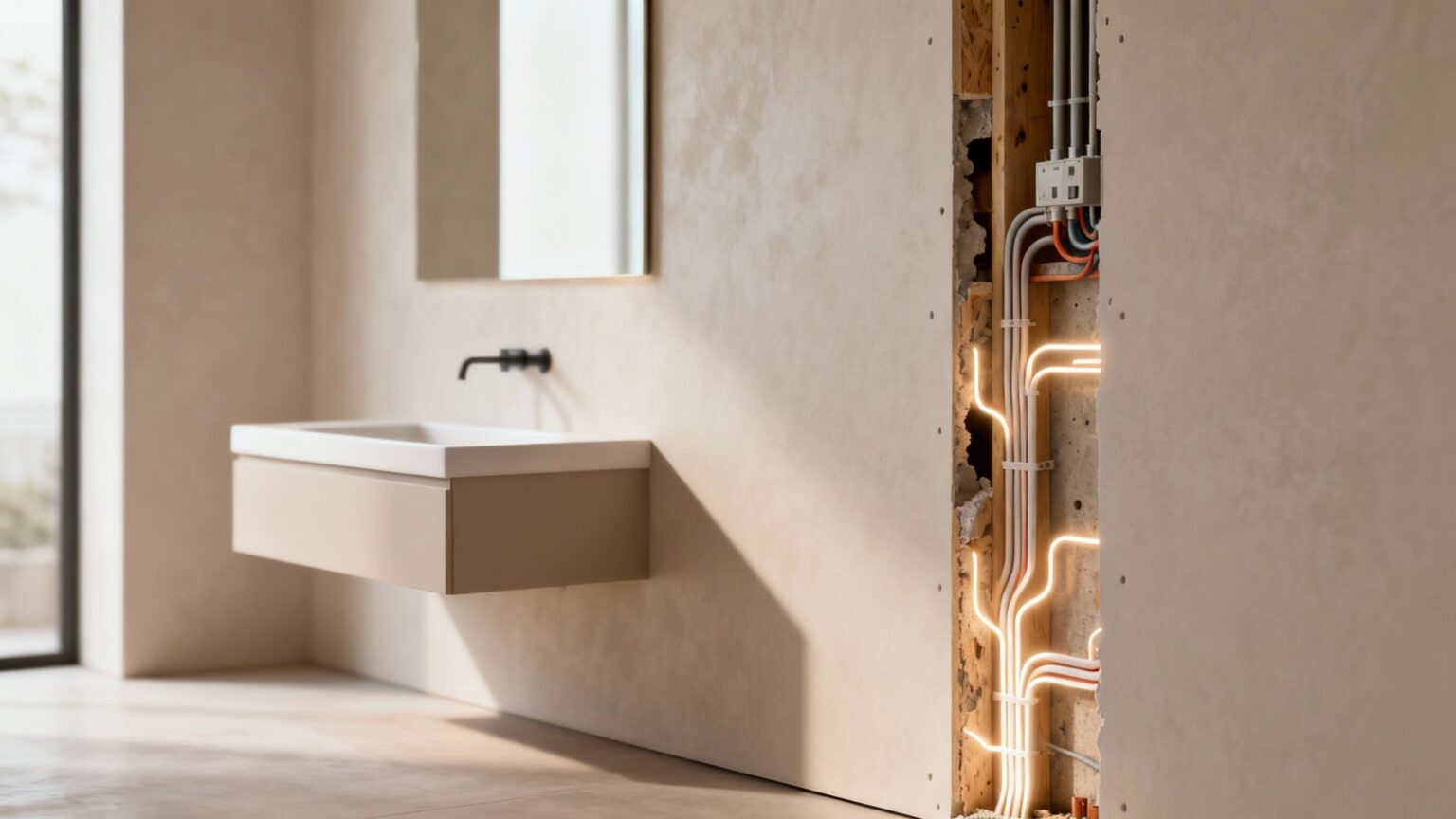
It’s helpful to think of your home's wiring as its central nervous system. Most of the time, it’s completely hidden from view, quietly powering every modern comfort you rely on.
A bathroom renovation is one of the rare times this system gets exposed, giving you a golden opportunity to make upgrades that boost both safety and everyday luxury.
Underestimating the electrical component of your budget is a classic pitfall that can throw your whole project off course.
This isn't just about picking out stylish light fixtures or adding an extra power point. It’s about making sure the hidden network of wires can safely handle everything from a high-powered hairdryer to that underfloor heating you’ve been dreaming of.
A Quick Guide to Average Electrical Task Costs in a Bathroom Renovation
To give you a clearer idea of where the money goes, here's a quick look at some common electrical tasks you might encounter during a bathroom renovation in Melbourne. Keep in mind these are just ballpark figures; your final costs will depend on your specific project and the electrician you hire.
| Electrical Task | Estimated Cost Range (Including Labour) |
|---|---|
| Install a Single Power Point | $150 – $250 |
| Install a New Light Fixture | $100 – $200 per fixture |
| Install a Heated Towel Rail | $300 – $500 |
| Install an Exhaust Fan / 3-in-1 Unit | $250 – $600 |
| Rewire a Small Bathroom Circuit | $800 – $1,500+ |
As you can see, individual jobs add up quickly, which is why it's so important to have a handle on these numbers from the get-go.
Why This Cost Matters in the Bigger Picture
The average full bathroom renovation in Australia hovers around $26,000, and skilled labour is a huge chunk of that. Electrician rates in Melbourne typically fall between $80 to $130 per hour, a price that reflects the high level of skill, licensing, and compliance needed to do the job right.
Planning your electrical layout from the very beginning is one of the most effective ways to control costs. Last-minute changes after the walls are closed up are not just inconvenient, they are seriously expensive.
Getting the electrical budget wrong can force you into compromises you really don't want to make later, like skimping on your tiles or settling for a less functional vanity.
By understanding these costs upfront, you can build a realistic and solid plan.
For a broader look at financial planning, our complete guide on understanding bathroom renovation costs in Melbourne is a great place to start. A little preparation here ensures your project runs smoothly, safely, and gives you that beautiful, functional space you've been imagining.
A Detailed Breakdown of Common Electrical Expenses
When an electrician hands you a quote, it can feel like you’re just looking at one big number. But it’s better to think of it like a restaurant bill.
The final total is just a sum of all the individual items you’ve ordered. Getting your head around these line items is the secret to keeping your bathroom electrical costs in check.
It lets you see exactly where the money is going, from those fancy vanity lights down to the must-have exhaust fan.
So, let's pull apart the common electrical jobs you'll likely see on that quote. For pretty much every task, the cost is split into two parts: the materials (the light fixture, the power point, etc.) and the labour (the sparky’s time and know-how to get it all installed safely).
Lighting Your New Space
Lighting is usually the most fun part of the electrical plan. Get it right, and you completely change the mood and usability of the room. But remember, different lights come with very different price tags for installation.
Vanity Lights: These are non-negotiable for things like shaving or putting on makeup. You can expect installation to cost between $150 and $300 per light, and that’s assuming the wiring is already close by. The lights themselves can be anything from a $100 simple bar light to a $500+ designer feature.
LED Downlights: For overall room lighting, you can’t go past modern LEDs. They're bright, clean, and energy-efficient. Getting a set of four installed will likely cost between $400 and $700 for the labour, on top of the cost of the downlights themselves, which are usually around $25 to $60 each.
Feature Lighting: Thinking about a pendant light or something a bit more decorative? This is where you can add a real touch of luxury. Installation costs are similar to vanity lights, but if the electrician has to run a whole new wire to a different spot in the ceiling, you’ll be looking at the upper end of that $150-$300 range.
The biggest variable here is how tricky the installation is. If your electrician has to cut through tough materials or run new circuits all the way from your switchboard, the labour cost is going to climb.
Power Points for Modern Needs
These days, one lonely power point in the bathroom just doesn’t cut it. We’ve all got electric toothbrushes, shavers, hairdryers, and straighteners that need a home.
Adding a new standard double power point will typically set you back $150 to $250. This covers running the new cable from an existing circuit, fitting the outlet, and making sure it’s all up to Australian safety standards. This includes being a safe distance from any water source.
One of the most common regrets we hear is not putting enough power points near the vanity. Trying to add one after the walls are tiled is a much bigger, messier, and more expensive job than planning for it from day one.
Ventilation and Heating Elements
Good ventilation is an absolute must-have in any Melbourne bathroom to stop mould and moisture from taking over. Heating, on the other hand, is all about adding that extra bit of comfort that makes a chilly winter morning so much more bearable.
Exhaust Fans and 3-in-1 Units
A straightforward exhaust fan installation might be in the $250 to $400 range. But lots of people are now going for the all-in-one 3-in-1 units that combine an exhaust fan, heater, and light. They're a bit more complex to wire up, which pushes the installation cost closer to $450 to $600. That price usually includes hooking up separate switches for each function.
Heated Towel Rails
Let’s be honest, there's nothing better than a warm towel when you step out of the shower. A hardwired heated towel rail needs its own dedicated circuit and switch.
The labour for this usually falls between $300 and $500. The rails themselves have a huge price range, from $200 for a basic model to well over $1,000 for a high-end designer one.
Seeing your quote broken down like this changes everything. It’s no longer just a confusing number; it’s a clear plan. You can see how choosing that premium towel rail or adding a couple of extra downlights directly affects the final cost.
This puts you in the driver's seat, allowing you to have a proper chat with your electrician and make smart choices that match both your dream bathroom and your budget.
Key Factors That Drive Your Electrical Costs Up or Down
Ever wondered why one electrician's quote for your bathroom renovation seems worlds apart from another? The final bathroom renovation electrical cost is rarely just about the fancy new fixtures you've picked out. A few key variables, often hidden behind the walls, can dramatically shift the price.

It’s a bit like taking your car in for a service. What you thought was a simple brake pad replacement can sometimes uncover a bigger problem once the mechanic gets under the bonnet. The same thing can happen with your home’s wiring, especially in older Melbourne properties where the rules and materials have changed a lot over the years.
The Age and Condition of Your Existing Wiring
One of the biggest unknowns is the state of the wiring hiding in your walls. If you're in an older home, your electrician might pull back a tile and find wiring that's outdated or simply doesn't meet current Australian safety standards.
What started as a simple job to add a new power point can suddenly turn into a mandatory rewiring of the entire bathroom circuit. This isn't an upsell; it's a critical safety upgrade. No professional electrician can legally or ethically connect shiny new fittings to an old, unsafe circuit.
Wall Structure and Accessibility
How easily can the electrician actually get to the wires? The answer to this question has a massive impact on the labour time and, as a result, your final bill.
- Plasterboard Walls: These are fairly straightforward. An electrician can cut access holes to run new cables and they can be patched up with minimal fuss.
- Brick or Tiled Walls: This is where things get tricky. Chasing new channels through solid brick or existing tiles takes more time, specialised tools, and a lot more effort, all of which pushes up the labour cost.
Similarly, trying to work in a cramped roof space or a tight underfloor area adds hours to the job. It's the same story for plumbers during the first stage of a reno; as our guide on plumbing rough-ins in Melbourne explains, difficult access always means higher labour costs for any trade.
Unexpected discoveries during demolition are part of the renovation game. Labour is a huge slice of the budget, with Aussie electricians charging anywhere between $70 and $130 per hour. This is exactly why building a 10-20% contingency fund into your budget is so important for covering surprises like an essential wiring upgrade.
The Complexity of Your Electrical Plan
Your electrical ambitions are a major cost driver. A simple layout with just the basics will always be kinder on the wallet than a feature-packed smart bathroom.
Just think about the difference between these two scenarios:
- Simple Layout: A single light over the vanity, one power point, and a standard exhaust fan.
- Complex Layout: Multiple zones of dimmable LED downlights, power points inside your vanity drawers, a hardwired smart mirror with a demister, and underfloor heating.
Every extra feature requires more materials, more time to wire up, and often its own dedicated circuit running back to your switchboard. To get a better feel for how contractors come up with the final price, it's useful to know about the tools they use for precise project pricing, like specialised electrical bidding software. The more intricate your design, the more detailed and costly the quote will be.
How Your Location in Australia Affects Pricing
It’s no secret that the cost of a flat white in Sydney is different from one in regional Queensland. The same logic holds true for the electrical work in your bathroom renovation.
Where you live plays a huge part in what you’ll end up paying for a skilled electrician, and understanding these regional differences is the key to setting a budget that’s realistic for your local area, not just some generic national average.
The main driver behind these price gaps is simple economics.
In major capital cities like Melbourne and Sydney, the higher cost of living means electricians need to charge more to cover their own overheads. On top of that, the constant demand for qualified tradies in densely populated areas can push labour rates even higher. Your postcode directly influences the hourly rate you can expect to pay.
City Versus Country Costs
While city-based sparkies often have higher hourly rates, homeowners in rural or regional areas face a different set of cost challenges.
If you’re living a fair way from the nearest major town, you might need to factor in a few extra costs:
- Travel Costs: Electricians will often charge for the time and fuel it takes to get to your property, which can add a noticeable amount to the final bill.
- Sourcing Materials: Your access to a wide range of fixtures and fittings might be limited, potentially leading to higher shipping costs to get specific items delivered.
- Fewer Quotes: With fewer local electricians to choose from, there’s less competitive pressure on pricing, which can sometimes mean you’ll see higher quotes.
This metro vs. regional difference really highlights why getting local quotes is so important. For example, New South Wales typically sits at the higher end of the price spectrum, with some electricians charging up to $120 per hour.
This variation is a crucial piece of the puzzle when you're planning your project budget.
You can find some great insights on how these costs play out in different parts of the country in this breakdown of Australian bathroom renovation costs by ANE Constructions.
Comparison of Average Electrician Hourly Rates Across Australian States
To give you a clearer picture of what to expect, it’s helpful to see how the average hourly rates for licensed electricians vary across different Australian states. These figures are just a guide, of course, as the final price will always depend on the sparky’s experience and how complex your job is.
| State/Territory | Average Hourly Rate Range |
|---|---|
| Victoria (VIC) | $90 – $120 |
| New South Wales (NSW) | $95 – $130 |
| Queensland (QLD) | $85 – $110 |
| South Australia (SA) | $80 – $105 |
| Western Australia (WA) | $90 – $115 |
Just remember, the hourly rate is only one part of the story. A highly experienced electrician might charge a higher rate but could finish the job faster and safer than a cheaper, less experienced alternative, potentially saving you money and a lot of headaches in the long run.
Ultimately, while national averages are a decent starting point, the final electrical cost for your bathroom renovation will be firmly tied to your local market. The best way to build a budget that won’t spring any nasty surprises is to research the typical rates in your state and get at least three quotes from local, qualified professionals.
Navigating Electrical Safety and Australian Standards
In a bathroom, water and electricity are dangerously close neighbours. That’s why safety isn't just a priority; it's a non-negotiable legal requirement.
When it comes to the electrical side of your reno, cutting corners is a massive gamble with your family’s wellbeing. Understanding the rules helps you see why certain costs are simply part of doing the job right.
The entire framework for electrical safety in Australian homes, especially in wet areas, is laid out in a document called the AS/NZS 3000 Wiring Rules.
Think of this as the definitive rulebook that every licensed electrician in Melbourne must follow to the letter. These aren’t just suggestions; they’re mandatory practices designed to prevent electrocution and fires.
Understanding Bathroom Zones and IP Ratings
To manage the obvious risks, the Wiring Rules divide your bathroom into specific safety "zones".
Each zone has its own strict set of rules about what kind of electrical fittings can be installed there.
- Zone 0: This is right inside your bathtub or at the base of your shower. For obvious reasons, no electrical equipment is allowed here. Period.
- Zone 1: This covers the area directly above your bath or shower. Any light fittings here must have a very high level of water protection.
- Zone 2: This area extends outwards from the bath and shower. Fittings here still need to be properly protected against water splashes.
This is where you'll hear your electrician talk about IP ratings (which stands for Ingress Protection).
An IP rating is a simple two-digit number that tells you how well-sealed a fixture is against solids (like dust) and liquids (like water). The higher the numbers, the better the protection. A light fitting in Zone 1, for example, will need a much higher IP rating than one safely away from any water source.
The Critical Role of Safety Switches
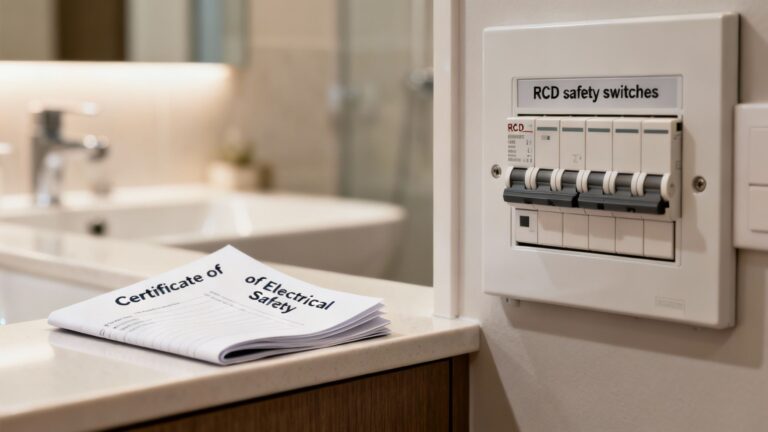
One of the most important safety devices in any modern home is the Residual Current Device (RCD), which you probably know as a safety switch. This little device is a literal life-saver. It's mandatory on all new power and lighting circuits in a bathroom renovation.
An RCD works by constantly monitoring the flow of electricity. If it detects even a tiny imbalance, like electricity flowing through a person instead of back through the wiring, it shuts the power off in milliseconds. That's fast enough to prevent a fatal electric shock.
Your electrician is legally required to install RCD protection on any new or altered circuits in your bathroom. This is a non-negotiable part of your bathroom remodel electrical cost and provides essential peace of mind.
Your Proof of Compliance: The CES
Once all the electrical work is done and dusted, your licensed electrician has to provide you with a Certificate of Electrical Safety (CES).
This document is your official guarantee that all the work was completed by a qualified professional and complies with all Australian standards.
This certificate is more than just a piece of paper. It’s a vital record for your home insurance, for any future property sales, and most importantly, for your own assurance that the job was done safely and correctly.
Never consider the job finished or make the final payment until you have this certificate in your hands.
Smart Ways to Save on Your Bathroom Electrical Cost
Keeping your bathroom remodel electrical cost under control doesn’t have to mean cutting corners on safety or the final look.
With a few clever decisions made early in the game, you can get a high-end finish without the premium price tag. The secret is to work smarter, not cheaper.
One of the biggest money-savers is finalising your entire electrical plan before a single wall is touched. Think of your electrician's time as a valuable resource.
Changing your mind about where a power point goes or deciding to add another light after the walls are plastered and waterproofed is a surefire way to send your labour costs soaring.

Plan and Bundle Your Tasks
A well-organised project is almost always a more affordable one. When an electrician can knock out all their tasks in one or two efficient visits, you save money compared to having them come back for multiple, disjointed call-outs.
- Finalise the Layout: Lock in the exact location for every single switch, outlet, and light fixture before the demolition even starts.
- Bundle the Work: Get your electrician in to do all the "rough-in" wiring at once. Then, have them return for a single "fit-off" visit to install all the fixtures after the tiling and painting are complete.
This streamlined approach cuts down on travel and setup time for your tradie, and those savings get passed straight on to you. For more tips on keeping your renovation on track financially, check out these ideas for affordable bathroom renovations on a tight budget.
Planning is your most powerful cost-saving tool. A detailed electrical plan prevents expensive on-the-fly changes, which can quickly add hundreds of dollars in extra labour to your final invoice.
Invest in Long-Term Efficiency
Another smart play is to look beyond the initial installation cost and think about the long-term running expenses. Choosing energy-efficient components is a fantastic way to keep saving money for years to come.
Take LED downlights, for example. They might have a slightly higher upfront cost than old-school halogen bulbs, but the long-term benefits are huge. LEDs use up to 85% less energy and can last for over a decade. This means big savings on both your power bills and the cost of buying replacement bulbs.
To significantly reduce long-term operating costs, consider researching various energy efficient lighting options for your new bathroom setup.
Similarly, adding a timer to your heated towel rail is a small investment that pays off big time. Instead of running it 24/7, you can program it to switch on just before you wake up.
Giving you that little touch of luxury without the wasted electricity. It’s these small, thoughtful choices that prove managing your electrical budget is about being a savvy renovator, not a corner-cutter.
Frequently Asked Questions About Bathroom Electrical Costs
Working out the money side of a bathroom renovation can throw up a lot of questions, especially when you get to the electricals. To help you plan with a bit more clarity, we’ve pulled together some straightforward answers to the queries we hear most often from Melbourne homeowners about their bathroom renovation electrical cost.
Getting your head around these details early on means no nasty surprises down the track. It's all about making smart, informed decisions from day one.
How Much of My Total Renovation Budget Should Go to Electrical?
A good rule of thumb is to set aside between 5% and 10% of your total renovation budget just for electrical work. So, for a pretty standard $25,000 bathroom reno in Melbourne, you’d be looking at putting $1,250 to $2,500 towards your sparky.
Keep in mind, though, that this number can definitely creep up if you're planning something more complex.
If your dream bathroom includes underfloor heating, fancy lighting zones, smart fixtures, or moving everything around, you’ll naturally need to bump up that part of the budget. It always pays to get a proper quote based on your specific plans.
Can I Save Money by Doing Some Electrical Work Myself?
In a word: no. It’s not just a bad idea; in Australia, it's completely illegal for anyone but a licensed electrician to touch any wiring or installations. The risks of fire, electrocution, or even just voiding your home insurance policy are far too great.
You can absolutely save a few dollars by tackling non-electrical jobs like painting or demolition yourself. But when it comes to wiring, installing lights and fitting power points. That has to be handled by a qualified pro. They’re also the only ones who can give you the legally required Certificate of Electrical Safety (CES) when the job is done.
Trying to DIY your electrical work isn't just dangerous. It often ends up costing you more in the long run when a professional has to be called in to fix the mistakes and make sure everything is safe and up to Australian Standards.
What Is the Most Common Unexpected Electrical Cost?
The surprise cost we see most often is finding old, dodgy, or non-compliant wiring hiding in the walls. This is especially common in older Melbourne homes.
An electrician might open up a wall to pop in a new light switch and discover ancient wiring that just doesn't meet today's safety standards.
What starts as a simple job can quickly turn into a much bigger. A more expensive task like upgrading a circuit or even rewiring a section of the house.
This is exactly why it’s so important to build a contingency fund of 10-20% into your overall renovation budget. That little buffer is a lifesaver for these kinds of unavoidable, safety-critical upgrades.
Planning a bathroom renovation can feel like a huge task, but you don't have to figure it all out on your own. The team at Smarter Home Renovations has been managing every detail for over 20 years.
From design and permits to coordinating all the trades, including our trusted licensed electricians. We provide clear, all-inclusive quotes to make sure your project stays on track and on budget.