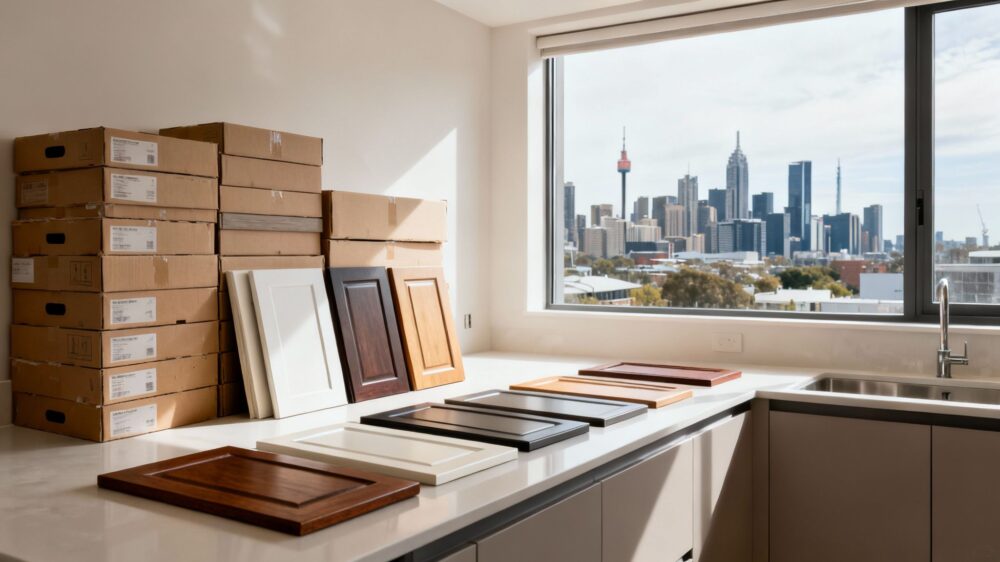
Explore the best flat pack kitchens Melbourne with affordable, stylish options and expert tips to upgrade your space.
Finding the best flat pack kitchen in Melbourne is all about striking that perfect balance between affordability, design flexibility, and durability. While the big-box retailers offer convenient, off-the-shelf options, many local Melbourne suppliers can provide superior materials and semi-custom sizes. This gets you that high-end, bespoke look without the eye-watering price tag of a fully custom job.
Your Guide to Melbourne’s Best Flat Pack Kitchens

Kicking off a kitchen renovation in Melbourne can feel a bit daunting, especially when you're trying to marry your design dreams with a real-world budget. This guide is here to demystify one of the smartest and most popular solutions on the market: the flat pack kitchen. They've quickly become the go-to choice for savvy homeowners who want to save big on costs without skimping on modern style or everyday function.
And it’s not just a passing trend. The Australian modular kitchens market was valued at around USD 1.09 billion and is expected to climb to USD 1.76 billion by 2033. This boom shows a clear demand for clever, space-efficient solutions, particularly in cities like Melbourne where apartment living and smart design go hand-in-hand. You can dive deeper into the numbers with the latest industry analysis from IMARC Group.
We’re going to get past the basics and jump straight into detailed supplier comparisons, a transparent look at the real costs, and practical advice on installation.
What This Guide Covers
Our aim is to arm you with the knowledge to navigate the Melbourne market confidently. We'll show you how to get that premium finish without the custom price, pointing you toward the best flat pack kitchens Melbourne has to offer.
Here’s what we’ll get into:
- Modern Materials: We'll break down the real differences between laminate, 2-pack polyurethane, and vinyl wrap so you know exactly what you’re buying.
- Supplier Showdown: A head-to-head comparison of the major retailers versus specialist local manufacturers.
- Cost vs. Value: A no-nonsense look at what you actually get for your money with flat pack versus custom-built kitchens.
- Installation Options: Helping you decide between the hands-on DIY route and bringing in a professional to manage the project.
Think of this as your go-to playbook for choosing, planning, and bringing a beautiful and functional flat pack kitchen to life.
| Feature | Flat Pack Kitchen | Custom-Built Kitchen |
|---|---|---|
| Typical Cost | Lower (40-50% less on cabinetry) | Higher (Premium pricing for bespoke work) |
| Lead Time | Shorter (Days to a few weeks) | Longer (6-12+ weeks for design & build) |
| Customisation | Limited to standard sizes & finishes | Unlimited (Any size, material, or colour) |
| Ideal For | Budget-conscious renovators, DIYers | Unique spaces, heritage homes, specific designs |
What to Expect from a Modern Flat Pack Kitchen
Let's be honest, the term "flat pack kitchen" can still conjure up images of wobbly, questionable furniture from a student share house. But the reality of today's flat pack kitchens has moved light years beyond those humble beginnings. They've become a sophisticated and impressively durable option, perfectly suited to the diverse styles we see across Melbourne homes.
These days, a flat pack kitchen is a precision-engineered system. When you open the boxes, you’re not just looking at a pile of boards and screws. You're unpacking a complete set of components, all designed to fit together seamlessly. This includes everything from the cabinet carcasses and doors to the end panels, kickboards, and all the essential hardware like soft-close hinges and drawer runners.
The best flat pack kitchens available from Melbourne suppliers are genuinely built to handle the chaos of daily life. The secret to their longevity isn't what you see on the outside, but the quality of the materials used for the unseen structure.
The Foundation of Quality Cabinetry
The cabinet carcass is the unsung hero of your kitchen, it's the structural box that forms the entire skeleton. Here in Australia, the non-negotiable industry standard for wet areas like kitchens is High Moisture-Resistant (HMR) particleboard. This material is specifically engineered to resist swelling and breaking down in the humidity common to kitchens and laundries, making sure your investment stands the test of time.
You might find cheaper alternatives out there, but they almost always use standard, non-HMR board. While it might save a few dollars initially, it’s highly prone to moisture damage and can compromise your entire kitchen structure down the track. Always, always confirm your supplier uses HMR as standard.
Key Takeaway: The true quality of a flat pack kitchen lies in its core components, not just the glossy finishes. Insisting on HMR carcasses is the single most important choice you can make to ensure long-term durability, especially in Melbourne's variable climate.
Finishes That Define Your Style
While the carcass provides the strength, it’s the doors and panels that bring your kitchen’s personality to life. Melbourne suppliers generally offer a fantastic range of finishes, each with its own look, feel, and level of resilience.
Here’s a quick rundown of the most popular options you’ll come across:
- Laminate: This is the go-to for a budget-friendly and hard-wearing kitchen. It’s made by pressing layers of paper and resin together, and modern laminates are incredible. They come in a huge array of colours and realistic timber-look textures, are a breeze to clean, and are highly scratch-resistant, making them perfect for busy family homes or investment properties.
- Vinyl Wrap (Thermo-laminated): A thin vinyl foil is heat-sealed over a profiled MDF door, creating a smooth, seamless finish with no visible edge lines. This technique is what allows for those detailed profiles you see in classic Shaker or Hamptons-style kitchens. It's a great mid-range choice but be mindful of heat, it can be susceptible to damage if placed too close to an oven or kettle.
- 2-Pack Polyurethane: Think of this as the premium, automotive-paint finish for your kitchen. It delivers a flawless, high-end look and can be mixed to literally any colour you can imagine, in finishes from dead-matte to a mirror-like high gloss. While stunning, it is typically the most expensive option and can be more prone to chipping than its counterparts.
Getting The Benchtop Right
Of course, the cabinetry is only half the story; your benchtop choice is just as critical. Many suppliers will package their kitchens with laminate or engineered stone, but it’s worth exploring other advanced materials. For instance, you might look into options like durable sintered stone benchtops, which offer incredible longevity and a sleek aesthetic. Getting the height and material right is fundamental, and understanding the principles of a perfect standard benchtop height will ensure your new kitchen is as comfortable to use as it is beautiful.
Flat Pack Kitchens vs Custom Design for Melbourne Homes
Deciding between a flat pack and a custom-built kitchen is one of the biggest calls you'll make when renovating your Melbourne home. It’s a choice that dictates more than just the final bill; it shapes your project timeline, design potential, and the overall feel of your new space. This isn't just about comparing the cost of one cabinet to another.
Think of a flat pack kitchen as a system-based approach. All the parts are pre-made to standard sizes, giving you a predictable and budget-friendly option. A custom kitchen, on the other hand, is a one-off creation, built from scratch by a cabinet maker to fit your room and your vision like a glove. Both can look fantastic, but they solve very different problems.
The key is to understand the trade-offs. Flat pack kitchens are brilliant for their speed and affordability. But for Melbourne’s unique homes, from quirky inner-city terraces to grand old houses with walls that are anything but straight, the total flexibility of custom joinery is often a necessity.
Comparing Key Renovation Factors
To make the right call, you need to weigh up the differences across the factors that really matter. Cost, timing, and customisation are the big three, but it's also worth thinking about material quality and the kitchen's long-term value. Each option has its own clear advantages, depending on what you're trying to achieve.
Here’s a practical look at how flat pack and custom kitchens really stack up for a typical Melbourne reno.
Comparing Flat Pack and Custom Kitchens
This table breaks down the core differences, giving you a clear picture of what to expect from each option when renovating in Melbourne.
| Factor | Flat Pack Kitchen | Custom-Built Kitchen |
|---|---|---|
| Budget | Significant Cost Savings: Expect to pay 40-50% less on cabinetry, freeing up funds for high-end appliances or benchtops. | Premium Investment: Costs are considerably higher due to skilled labour, design consultation, and bespoke manufacturing. |
| Timeline | Fast Turnaround: Components are often in-stock or have short lead times (1-4 weeks), speeding up the entire renovation process. | Extended Lead Time: The design, build, and installation process is meticulous and can take 6-12+ weeks from start to finish. |
| Customisation | Limited Flexibility: You are restricted to standard cabinet sizes, colours, and finishes offered by the supplier. | Complete Design Freedom: Every element can be tailored to your exact measurements, material choice, colour, and functional needs. |
| Ideal Scenario | An investment property in a suburb like Footscray, or a modern apartment in Southbank where standard sizes fit well. | A heritage-listed Victorian home in Carlton with uneven walls, or a unique architectural space requiring a highly specific layout. |
By seeing the pros and cons side-by-side, it becomes easier to align one of these paths with your specific project goals and constraints.
When a Hybrid Approach Makes Sense
It doesn't always have to be a straight choice between off-the-shelf and fully bespoke. In fact, some of the savviest Melbourne renovators are taking a "hybrid" approach, creating a brilliant middle ground that blends the best of both.
The idea is simple: use a high-quality flat pack system for the basic structure and then splash out on custom touches to elevate the look. You get the cost-efficiency of standard carcasses but invest your money where it has the most impact. This could mean adding a custom-made island bench, unique open shelving, or fitting bespoke door fronts from a specialist company.
By pairing standard flat pack cabinets with a premium engineered stone benchtop, a custom splashback, and architectural handles, you can achieve a finish that looks and feels bespoke for a fraction of the price. It's about smart allocation of your budget.
This strategy lets you put a personal stamp on your kitchen without the full expense or long wait time of a completely custom build. It’s the perfect solution for homeowners who want something unique but still need to watch their bottom line.
Choosing your finishes often boils down to balancing your budget with the aesthetic you're after. This decision tree shows the common fork in the road between affordable laminate and high-end 2-Pack finishes.

As the flowchart shows, a more generous budget opens the door to premium options like 2-Pack, while laminate remains the go-to for projects where value is the primary driver.
The Deciding Factor: Professional Installation
No matter which path you take, flat pack, custom, or a clever hybrid, the quality of the installation is what truly defines the final result. A flawlessly assembled flat pack kitchen will always look and perform better than a custom one that’s been poorly installed.
This is where professional installers, like our team at Smarter Home Renovations, make all the difference. We turn boxes of components into a beautiful, functional kitchen. Our job is to ensure every cabinet is dead level, every door hangs perfectly, and all the plumbing and electrical work is integrated without a hitch. It's this obsessive attention to detail that transforms a good kitchen into one of the best flat pack kitchens Melbourne has to offer, delivering a high-end finish that will last for years.
Comparing Melbourne's Top Flat Pack Kitchen Suppliers
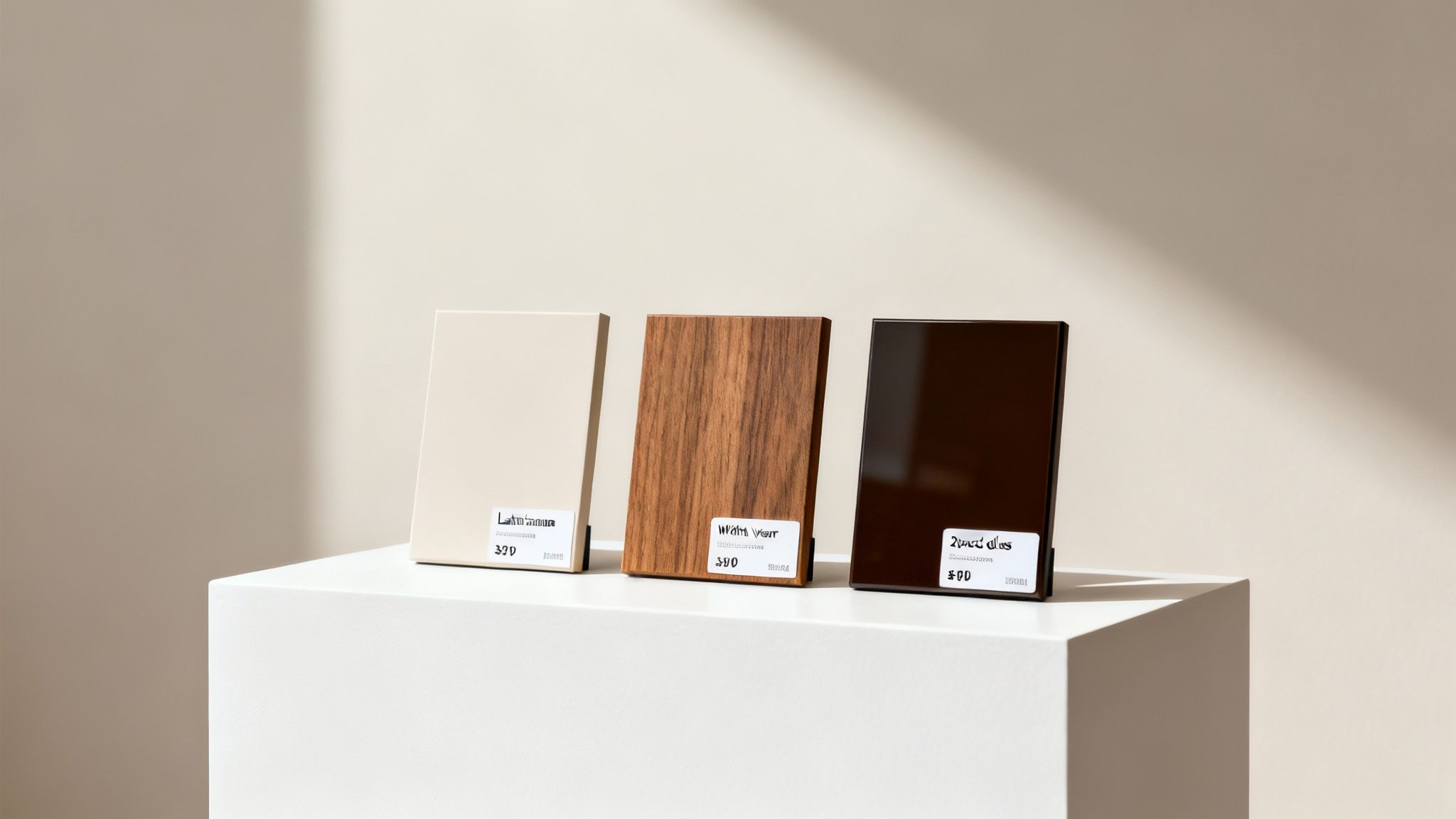
When you start looking for a flat-pack kitchen in Melbourne, you’ll quickly find yourself at a crossroads. Do you go with a massive national retailer or a specialist local manufacturer? Each path offers a very different experience, and the right choice really boils down to your specific project, your budget, your timeline, and just how much you want to personalise the space.
On one side, you have the big-box players like Bunnings (with its hugely popular Kaboodle range) and IKEA. They're known for convenience and sharp pricing. On the other, local Melbourne joiners bring a level of quality and flexibility that can make all the difference, especially in challenging renovations.
Let’s break them down based on what truly matters to a homeowner.
IKEA: Flat Pack Kitchens - The Global Standard for System-Based Design
IKEA kitchens have a global reputation for a reason. Their sleek, European styling and modular METOD system offer a brilliantly cohesive look. The whole philosophy is built around a standardised platform, which allows for an incredible amount of internal customisation with drawers and organisers, all at a price that’s hard to beat.
Best Suited For: Renovators tackling modern Melbourne apartments or homes with pretty standard room dimensions. It’s perfect if you appreciate a complete, system-based design where everything, including the appliances, just works together. It’s also a fantastic option for anyone on a strict budget who needs an off-the-shelf solution without long waits.
Key Differentiator: IKEA’s real magic is its ecosystem. You can design your entire kitchen, appliances, lighting, drawer inserts, the lot, in one place. This integration takes the guesswork out of the equation and ensures a seamless fit. They back it all up with an impressive 25-year guarantee on their kitchen system, which gives you serious peace of mind.
IKEA’s METOD system is an all-in-one solution. The cabinets, fronts, benchtops, and appliances are literally designed to work together perfectly. You’re not left trying to coordinate components from different suppliers.
The only real catch? The rigid cabinet sizing can be a headache in older Melbourne homes with quirky dimensions. You’ll often find yourself relying on filler panels to plug awkward gaps.
Bunnings Kaboodle: The DIY Favourite
Kaboodle, found only at Bunnings Warehouse, is without a doubt Australia's most accessible flat-pack kitchen brand. Its massive appeal comes from its off-the-shelf availability and a design that’s genuinely friendly for DIY assembly. You can literally walk into a store and leave with most of your kitchen components that very same day.
Best Suited For: Hands-on DIYers doing a straightforward renovation, landlords giving a rental property a facelift, or anyone needing a quick, cost-effective kitchen refresh. Its modular nature also makes it a go-to for smaller projects like laundries or garage storage setups.
Key Differentiator: Nothing beats Kaboodle for sheer accessibility and immediacy. Their online design tool is easy to get the hang of, and being able to see and touch the products in your local Bunnings provides a lot of confidence before you buy. While the standard range is huge, they also offer a premium, customisable colour range for doors and panels if you don't mind waiting a few weeks.
Local Melbourne Manufacturers: The Quality Alternative
Looking beyond the retail giants, Melbourne is home to a fantastic network of specialist flat-pack manufacturers and joinery suppliers. These businesses, which often supply to the building trade, produce a superior product made from higher-grade materials. They offer a level of customisation that nicely bridges the gap between a standard flat-pack and a fully bespoke kitchen.
Best Suited For: Homeowners with a sharp eye for quality, people renovating period homes with unique layouts, or anyone chasing a specific look you just can’t find in the standard catalogues. If your walls aren't perfectly square or you need a cabinet made to the millimetre, a local supplier is the only way to go.
Key Differentiator: The ability to order custom-sized cabinets is the single biggest advantage. Local manufacturers can build carcasses to your exact measurements, eliminating those ugly filler panels and making sure you use every last inch of storage space. They also tend to use premium, Australian-made HMR board and offer a much wider choice of high-quality hardware and finishes, including an unlimited palette of 2-pack colours.
There’s no denying that price competition from imported flat-pack systems has changed the game in Australia. Industry analysis of the Australian furniture market shows that overseas exporters have offered ready-to-assemble ranges for about 15–20% less than local equivalents. At the same time, digital retail has grown to make up around 18% of national furniture sales. This environment favours the big players, but local makers compete by delivering far better customisation and one-on-one service.
Direct Supplier Comparison
This table cuts to the chase, highlighting the practical differences you'll face when choosing between Melbourne's main flat-pack kitchen options.
| Criteria | IKEA | Bunnings (Kaboodle) | Local Melbourne Supplier |
|---|---|---|---|
| Best For | Integrated design, modern apartments | DIY projects, rental properties | Period homes, custom layouts |
| Customisation | Low (Fixed cabinet sizes) | Medium (Custom colours available) | High (Custom sizes and finishes) |
| Lead Time | Immediate (In-stock items) | Immediate (Standard range) | 2–6 Weeks (Made to order) |
| Material Quality | Good (European standard) | Good (HMR standard) | Excellent (Premium local HMR) |
| Support | In-store & online planners | In-store specialists, DIY guides | Direct expert consultation |
Ultimately, finding the best flat pack kitchens Melbourne renovators can get their hands on is about matching the supplier’s strengths to your project’s goals. For a predictable, all-in-one system, IKEA is a solid choice. For pure convenience and a DIY-friendly approach, Kaboodle is a winner. But for a truly tailored fit and a premium finish, talking to a local manufacturer is an investment that will pay off for years to come.
Choosing Between DIY and Professional Installation
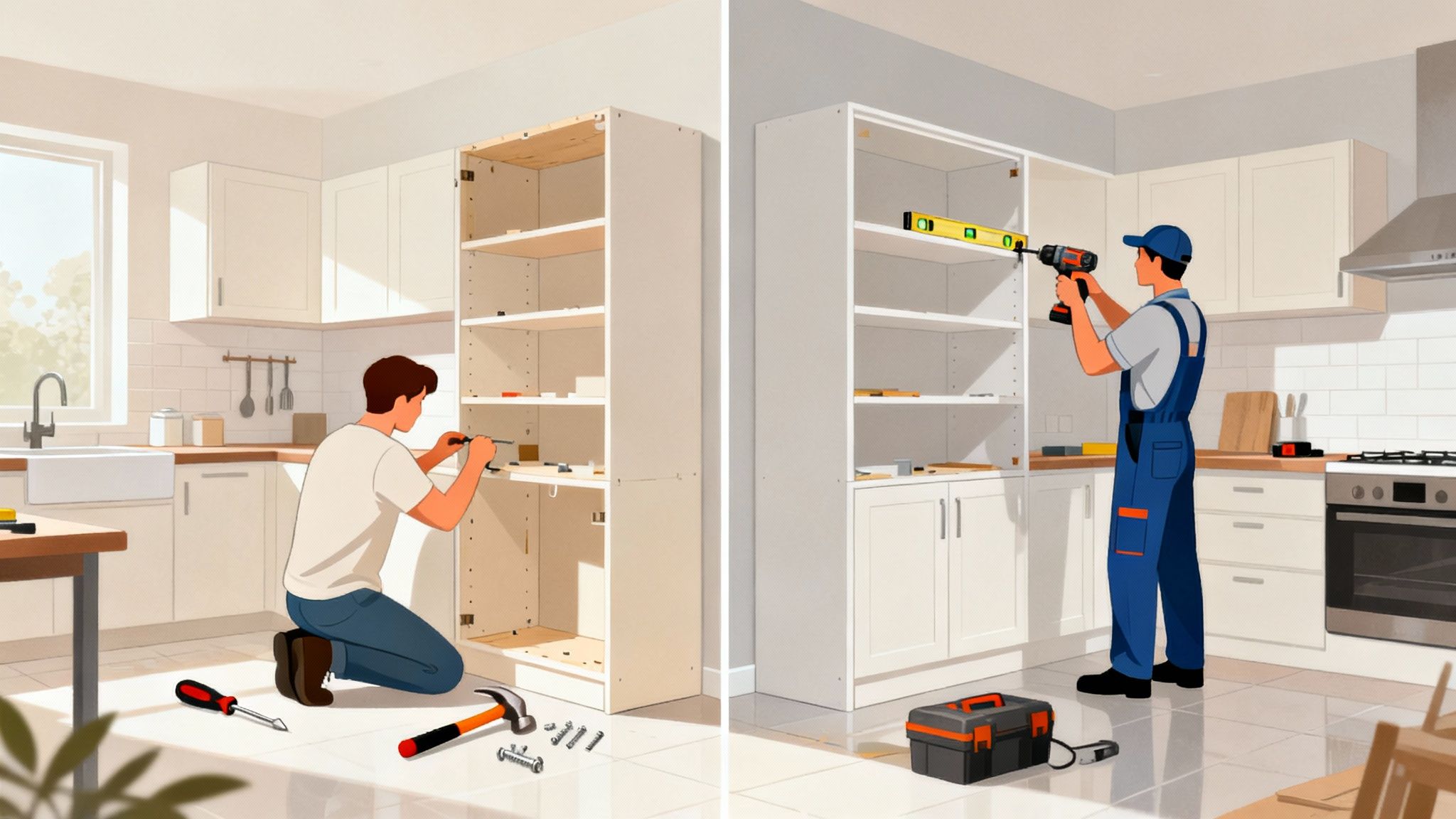
Once you’ve settled on the perfect flat-pack system, you’re faced with the next big decision: how do you get it from a stack of boxes into a beautiful, functional kitchen? You can either roll up your sleeves and go the DIY route or bring in a professional installer. This choice will have a massive impact on your project's timeline, the final quality, and your overall stress levels.
The appeal of DIY is strong. It promises big savings on labour costs and gives you the satisfaction of building something with your own two hands. But it’s a path that demands a specific skill set, the right tools, and a serious time commitment. On the other hand, professional installation adds to the budget but brings efficiency, precision, and the peace of mind that comes with a warranty. For many Melbourne homeowners, it's a smart investment in their home's long-term value.
The Realities of a DIY Installation
Taking on a flat-pack kitchen installation yourself can be incredibly rewarding, but you need to be brutally honest about what it actually involves. This is a world away from assembling a simple bookcase; it demands precision, patience, and a solid grasp of basic construction.
To pull it off, you'll need more than just a screwdriver and a can-do attitude. A quality DIY job relies on having the right gear and a bit of practical experience under your belt.
Essential DIY Requirements:
- Tools: You'll need a good quality drill with various bits, a spirit level, multiple clamps, a stud finder, a set square, and a reliable tape measure. A circular saw or jigsaw is almost always needed for trimming filler panels and kickboards to size.
- Skills: You have to be comfortable measuring and marking accurately, ensuring every cabinet is perfectly level and plumb. You'll also need to scribe panels to fit uneven walls, a very common challenge in older Melbourne homes.
- Time: Don’t underestimate the hours this will soak up. For a first-timer, assembling and installing even a small kitchen can easily chew up several full weekends. Rushing is how mistakes happen.
The biggest hurdle for DIYers isn’t putting the boxes together; it’s getting them installed perfectly. Making sure every cabinet is level, plumb, and securely fastened to the wall is what separates a homemade look from a professional finish.
Why Professional Installation Is a Smart Investment
If you're aiming for one of the best flat-pack kitchens Melbourne has to offer, professional installation is the most reliable way to protect that investment and get a high-end result. An experienced installer does more than just assemble cabinets. They manage a complex process, making sure every component fits perfectly and integrates seamlessly with your home.
This is especially critical when it comes to coordinating the other trades. A kitchen renovation isn't just about the cabinetry; it involves plumbers, electricians, and tilers. A professional installer or project manager handles this tricky scheduling, preventing costly delays and ensuring all work is compliant. For example, getting the plumbing rough-ins for your new kitchen sorted out is a crucial step that must happen before cabinets go in, and it requires expert coordination.
The Value of Professional Project Management
Ultimately, the installer's job is to deliver a flawless finish. They have the expertise to solve the unexpected problems that always crop up, like dealing with out-of-square walls or floors that aren't quite level. They make sure door gaps are perfectly even, benchtops are joined seamlessly, and all your appliances fit just right.
In Melbourne, professional installation for a standard flat-pack kitchen typically costs between $2,000 and $5,000, depending on the size and complexity. While it’s an upfront cost, it buys you a warranty on the workmanship and saves you from expensive mistakes or future repairs.
The flat-pack trend isn't new. A 2017 industry study estimated that imported flat-pack joinery made up at least 14.7% of all joinery installed in Australian homes the previous year, showing just how many renovators are facing this exact decision. You can read the full findings in this detailed market analysis of flat-pack joinery. Choosing an expert installer is the best way to ensure your project is a success story.
Your Essential Flat Pack Kitchen Checklist
Alright, you’ve done your research and you're getting close to choosing a flat pack kitchen for your Melbourne home. Now it's time to get into the nitty-gritty. Turning that research into a sharp set of questions is the best way to make sure you've covered all your bases before you commit.
Think of this as your final due diligence checklist. It's designed to help you see past the glossy brochures and get down to the practical details that make or break a reno, from getting your measurements spot-on to understanding exactly what the warranty covers.
Pre-Purchase Planning and Measurement
Before you even think about getting a quote, you need to know your space inside and out. Seriously. Inaccurate measurements are the number one reason for installation headaches, leading to frustrating delays and costs you didn't see coming.
- Have I double-checked my measurements? Measure everything twice. Then maybe a third time for good measure. Pinpoint the exact locations of every window, doorway, power point, and plumbing outlet.
- Are my walls and floors level? Many older Melbourne homes have their own unique character, which often includes uneven surfaces. Grab a long spirit level to check for any slopes or bows in the walls that will throw your cabinet installation out of whack.
- Do I have a detailed floor plan? Even a simple, to-scale sketch on graph paper is a game-changer. It's vital for figuring out appliance placement and making sure you have enough room to actually work in your new kitchen.
Supplier and Product Verification
Got your plan sorted? Great. Now it's time to put your potential suppliers under the microscope. Getting absolute clarity at this stage is non-negotiable and will save you from a world of disappointment later on.
The real quality of a kitchen isn’t just about the materials you can see. It’s about the supplier's transparency and how complete their offer is. Make sure every single hinge, screw, and panel is accounted for in writing before a dollar changes hands.
- Is every single component itemised on the quote? Check that it lists everything: cabinets, doors, handles, hinges, legs, kickboards, and filler panels. If it’s not on the list, assume it’s not included.
- What is the warranty on hardware and cabinetry? Ask for specifics. You want to know the warranty period for things like hinges and drawer runners (Blum, for example, often offers a lifetime warranty) and for the structural integrity of the carcasses themselves.
- What are the exact materials used? You need to confirm that the cabinet carcasses are made from 16mm or 18mm High Moisture-Resistant (HMR) particleboard at a minimum. Don't settle for less.
As you map out the project, don't forget you'll need to clear out the old kitchen. To keep everything safe and out of the dust, looking into professional Melbourne storage solutions can be a lifesaver while the work is being done.
Budget and Installation Logistics
Finally, you need a crystal-clear picture of the total cost and what the installation will actually involve. For a more detailed guide on what to expect, our breakdown of the typical kitchen renovation cost in Melbourne can help you budget for every last detail.
The "best" flat pack kitchen is simply the one that fits your home, your budget, and your lifestyle perfectly. While this checklist gives you a solid framework, bringing in a professional project manager from Smarter Home Renovations is still the surest way to handle all these moving parts for a high-quality result without the stress.
Got Questions? We've Got Answers
Thinking about a flat-pack kitchen for your Melbourne home? You're not alone. It’s a popular choice, but it naturally comes with a few questions. Here are some of the most common things we get asked by homeowners just like you.
How Much Can I Really Save with a Flat-Pack Kitchen in Melbourne?
When you look at the cabinetry alone, the savings are significant. You can realistically expect to save 40-50% compared to a completely custom-built kitchen. For a typical Melbourne reno, that could easily mean an extra $5,000 to $15,000 back in your pocket.
Just remember, that figure is purely for the joinery. Your total project cost will still need to cover benchtops, splashbacks, appliances, and installation labour. These costs vary wildly depending on what you choose and whether you tackle the build yourself or bring in the pros.
Are Flat-Pack Kitchens Strong Enough for a Busy Family?
Absolutely. But there’s a catch: you need to choose a quality supplier and know what to look for. The durability of a great flat-pack kitchen isn’t just about the fancy finish you see on the outside; it’s all about what’s underneath.
Make sure the cabinet carcasses are made from High Moisture-Resistant (HMR) particleboard – this is the Australian standard for good reason. Then, check the hardware. Good suppliers use reputable brands like Blum, which often come with lifetime warranties on hinges and drawer runners. That's your peace of mind for years of heavy use.
A professional assembly is the final piece of the puzzle. When an expert builds and installs your cabinets, they make sure everything is perfectly square, level, and securely fastened. This single step can dramatically extend the life of your kitchen.
What's a Realistic Timeline for a Flat-Pack Kitchen Installation?
This really depends on two things: where you buy it from and who builds it.
Off-the-shelf kitchens from big retailers can often be picked up the same day. If you go for a semi-custom option from a local Melbourne maker, you'll need to factor in a lead time of anywhere from two to six weeks.
If you're a confident DIYer, plan for it to take a few weekends to get it right. On the other hand, a professional team can often have all the cabinetry assembled and installed in just two to four days. The full renovation, from demolition to final touches, usually wraps up within one to three weeks.
Can a Flat-Pack Kitchen Actually Look High-End?
It certainly can. The secret to getting that polished, designer look is to be strategic with your budget. You don't need to splurge on everything.
Focus your spending on the elements that deliver the most visual punch. Think quality benchtops (like engineered stone), a statement splashback, and premium handles. Adding features like soft-close drawers and well-designed internal storage also elevates the experience, making it feel much more luxurious. And of course, a professional installer who ensures every gap is perfect and every door is aligned is crucial for that seamless, high-end finish.
Ready to get a premium finish without the stress? The team at Smarter Home Renovations are the flat-pack installation experts. We manage everything from the assembly to coordinating all the trades, so you can just enjoy the result.