What Melbourne homeowners can and can’t do. Find out more about DIY vs professional renovations. Costs, permits, risks, and hiring a pro.
For many Melbourne homeowners, the idea of a renovation brings up a big question: should you do it yourself or hire a professional? While the enthusiasm of a weekend warrior is perfect for cosmetic updates like a fresh coat of paint, Melbourne's strict building codes are non-negotiable.
When it comes to structural, electrical, and plumbing work, these jobs are strictly for licensed professionals. Getting this balance right is the secret to a successful, compliant, and valuable home renovation.
The Great Melbourne Renovation Debate: DIY or Go Pro?
Starting a renovation in Melbourne means making a choice: roll up your sleeves and DIY, or hand the keys to a professional builder. The temptation to save money with DIY is huge, especially with so many tutorials online. But the reality of what you can and can’t do is about more than just your skill level.
Local regulations, safety standards, and the unique challenges of Melbourne’s period homes create very clear boundaries. A poorly handled DIY job can quickly turn into costly defects, voided insurance, and even legal headaches with council compliance. This is especially true for critical tasks where a licensed professional is required by law.
Comparing The Core Approaches
Deciding which way to go means taking a hard look at what each path involves. It’s really a trade-off between hands-on control and expert-led efficiency.
-
The DIY Approach: You become the project manager, labourer, and procurement officer all in one. This gives you maximum control and can save a lot on labour costs. The catch? You also take on 100% of the risk, from budget blowouts to building mistakes.
-
The Professional Approach: You hire a dedicated team, like Smarter Home Renovations, to manage the entire project from the first sketch to the final handover. This gives you access to expertise, trusted trades, and the peace of mind that comes with warranties and insurance. While it's a bigger financial investment upfront, it saves you time and dodges major risks.
A professional builder’s value isn’t just in the work they do. It’s in their ability to foresee problems, manage complex schedules, and ensure every part of the job meets Victoria's stringent building codes.
This guide will help you navigate the DIY vs. professional debate. We'll lay out what Melbourne homeowners can and can’t tackle themselves to help you make a smart decision. It’s also important to know which projects give you the best return. For more on that, check out our guide on the home renovation projects that add the most value.
What You Can Realistically DIY in Melbourne
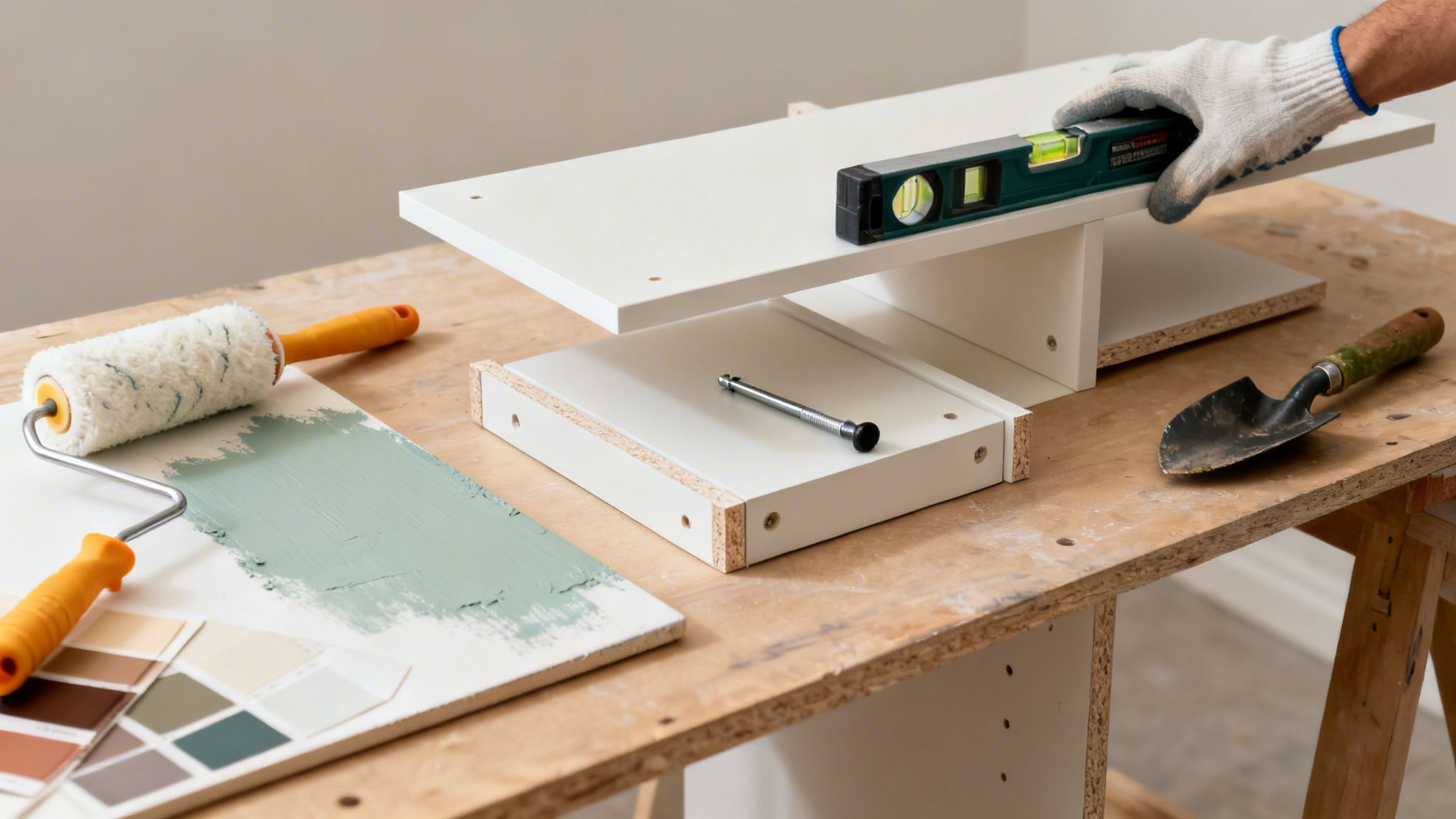
The pull of a DIY renovation is undeniable. It promises big savings and that incredible sense of satisfaction from doing it yourself. For many Melbourne homeowners, a lot of cosmetic updates are genuinely within reach if you have the skills and patience.
But let's be honest. Success hinges on a realistic look at your abilities, your free time, and your tolerance for frustration. A weekend project can quickly turn into a month-long saga if you misjudge what's involved.
The secret is to stick to low-risk, cosmetic jobs. Here’s a reality check on some of the most popular DIY tasks, outlining what you can take on and the common traps to avoid.
Interior Painting
Painting is the classic DIY project, but getting that crisp, professional finish involves more than just a roller and a tin of paint. The real job is all in the prep.
-
Skill Level: Beginner to intermediate. Anyone can slap on some paint, but achieving those sharp edges and a smooth, even coat really does take practice.
-
Reality Check: The vast majority of your time is spent on preparation. This often means 75% of the total effort is cleaning walls, filling cracks, sanding surfaces, and meticulously taping edges. Rushing this stage is the number one mistake and it always shows in the final result.
-
Time Commitment: A single room can easily eat up a full weekend once you account for two coats and proper drying time. Painting your entire home’s interior? You're looking at several weekends of work.
Assembling Flat-Pack Cabinetry
Flat-pack kitchens and wardrobes are a fantastic, affordable way to modernise your home. Putting the cabinets together is a manageable job for a handy person, but you need to know where the DIY work stops.
-
Skill Level: Intermediate. You need to be comfortable following complex diagrams, using a drill confidently, and getting everything perfectly level and square.
-
Reality Check: Your role here is assembly only. Any plumbing, gas, or electrical work is strictly off-limits for DIY. In Victoria, you cannot connect a sink, install a gas cooktop, or wire in under-cabinet lighting yourself. These jobs demand a licensed professional, no exceptions.
-
Common Mistake: A huge safety risk is failing to anchor cabinets to the wall properly. Always find the wall studs and use the right fasteners to make sure your installation is secure and can handle the weight of fully loaded cupboards.
While you can build the boxes, the integration of services is where professional help becomes essential. Attempting DIY plumbing or electrical work is illegal, unsafe, and can void your home insurance.
Minor Landscaping and Gardening
Giving your outdoor space a makeover is another incredibly rewarding DIY venture. Simple jobs like building raised garden beds, laying new turf, or creating a gravel path can make a huge difference to your home's kerb appeal.
-
Skill Level: Beginner to intermediate. Most of these tasks rely on a bit of muscle and basic tool skills rather than specialised technical knowledge.
-
Reality Check: Pay close attention to your property’s drainage. If you change ground levels or add large paved areas without thinking it through, you could end up with water pooling against your house foundations. For bigger projects like decks, retaining walls over one metre high, or major earthworks, you'll almost certainly need a building permit and professional input.
When you're weighing up what to DIY in Melbourne, jobs like painting or installing a new tap are great starting points. You might also want to look into the pros and cons of more involved tasks, like the DIY vs professional installation of feature wall tiles, to get a better sense of the skill and finish quality involved. The best DIY projects are always the ones you can finish safely and be proud to show off.
When to Call a Professional: The Non-Negotiable List
While rolling up your sleeves for a DIY project brings a huge sense of accomplishment, some renovation tasks are simply off-limits in Melbourne. These are the jobs where trying to save a few dollars can lead to dangerous outcomes, voided insurance policies, and serious legal headaches.
These rules, set by governing bodies like the Victorian Building Authority (VBA), exist for one simple reason: to protect you, your family, and your biggest investment. Hiring a licensed professional for these jobs isn't an optional extra. It's a mandatory requirement for safety, compliance, and the long-term value of your home.
All Electrical Work
When it comes to electricity, there is absolutely zero room for error. The risk of fire, electrocution, and catastrophic property damage is just too high, which is why Victorian law is crystal clear on this.
- What It Covers: This applies to everything. Installing a new power point, running new circuits, replacing a dodgy switchboard, or even just wiring in a new oven.
- The Law: Under Victorian regulations, only a Licensed Electrician is legally allowed to perform any electrical installation work in your home. No exceptions.
- Compliance: Once the job is done, the electrician must issue a Certificate of Electrical Safety (CES). This document is your non-negotiable proof that the work is safe, compliant, and correctly installed. Without it, you could face hefty fines, and your home insurance will likely be voided if an electrical fault or fire occurs.
Plumbing and Gas Fitting
Much like electrical work, plumbing and gas fitting involve high-risk systems that can cause devastating damage if they aren’t handled by an expert. A tiny, slow leak can lead to catastrophic water damage, while a gas leak is a life-threatening emergency.
- Plumbing Work: Any job involving drinking water, sewerage, or drainage systems must be done by a licensed and registered plumber. This includes moving pipes for a new vanity, installing a new toilet, or connecting a dishwasher. For any plumbing work valued at over $750, the plumber is required to issue a compliance certificate.
- Gas Fitting Work: All work on gas appliances or pipes demands a licensed gas fitter. This includes installing a new gas cooktop or moving a gas heating connection. This is one of the most dangerous jobs to attempt yourself, with severe risks of fire, explosion, and carbon monoxide poisoning.
Forgetting to engage a professional for these tasks is one of the most common and costly mistakes in a DIY renovation. The cost of a professional plumber is minor compared to the expense of repairing widespread water damage from a failed DIY connection.
Waterproofing for Wet Areas
Waterproofing is the silent hero of every bathroom, laundry, and wet area. When it’s done right, you’ll never even know it’s there. When it fails, the consequences are disastrous, leading to rotting structural timbers, rampant mould growth, and expensive, invasive repairs.
- Why It's Non-Negotiable: In Victoria, waterproofing is a classified building activity that must be carried out by a licensed and qualified professional.
- Certification Required: The tradesperson must provide a compliance certificate confirming the work meets Australian Standard AS 3740-2010. This certificate is essential for your home insurance and any future sale of your property.
- Common DIY Failure Point: Improper application, using the wrong products, or failing to prepare the surface correctly are classic DIY mistakes. These almost guarantee failure down the line. It's a risk that is never worth taking.
Structural Alterations
Changing your home's layout by moving or removing walls is one of the most exciting parts of a renovation. It's also one of the most dangerous if you don't know exactly what you're doing.
- Load-Bearing Walls: Mistakenly taking out a load-bearing wall without proper engineering and support can compromise your entire house. Only a professional can reliably identify which walls are structural.
- Roofline Changes: Any work that alters your roofline requires a registered builder and almost always a building permit. This includes adding a dormer window or changing the pitch. This ensures the new structure is stable and completely weatherproof. To learn more about how experienced builders manage these complex projects, you can explore the services offered by dedicated house renovation builders in Melbourne.
Asbestos Removal
Many Melbourne homes built before 1990 contain asbestos. This hazardous material can be lurking in old wall sheeting, "batt" insulation, vinyl floor tiles, and eaves.
- Health Risk: When disturbed, asbestos fibres become airborne. If you inhale them, they can cause aggressive, life-threatening diseases years later.
- Legal Requirements: A homeowner can legally remove up to 10 square metres of non-friable (bonded) asbestos, but it is strongly advised against. The risks are high, and there are strict disposal procedures. For any amount larger than that, or for any friable (easily crumbled) asbestos, you must hire a Class A or Class B licensed removalist.
Decoding Melbourne's Renovation Permits and Regulations
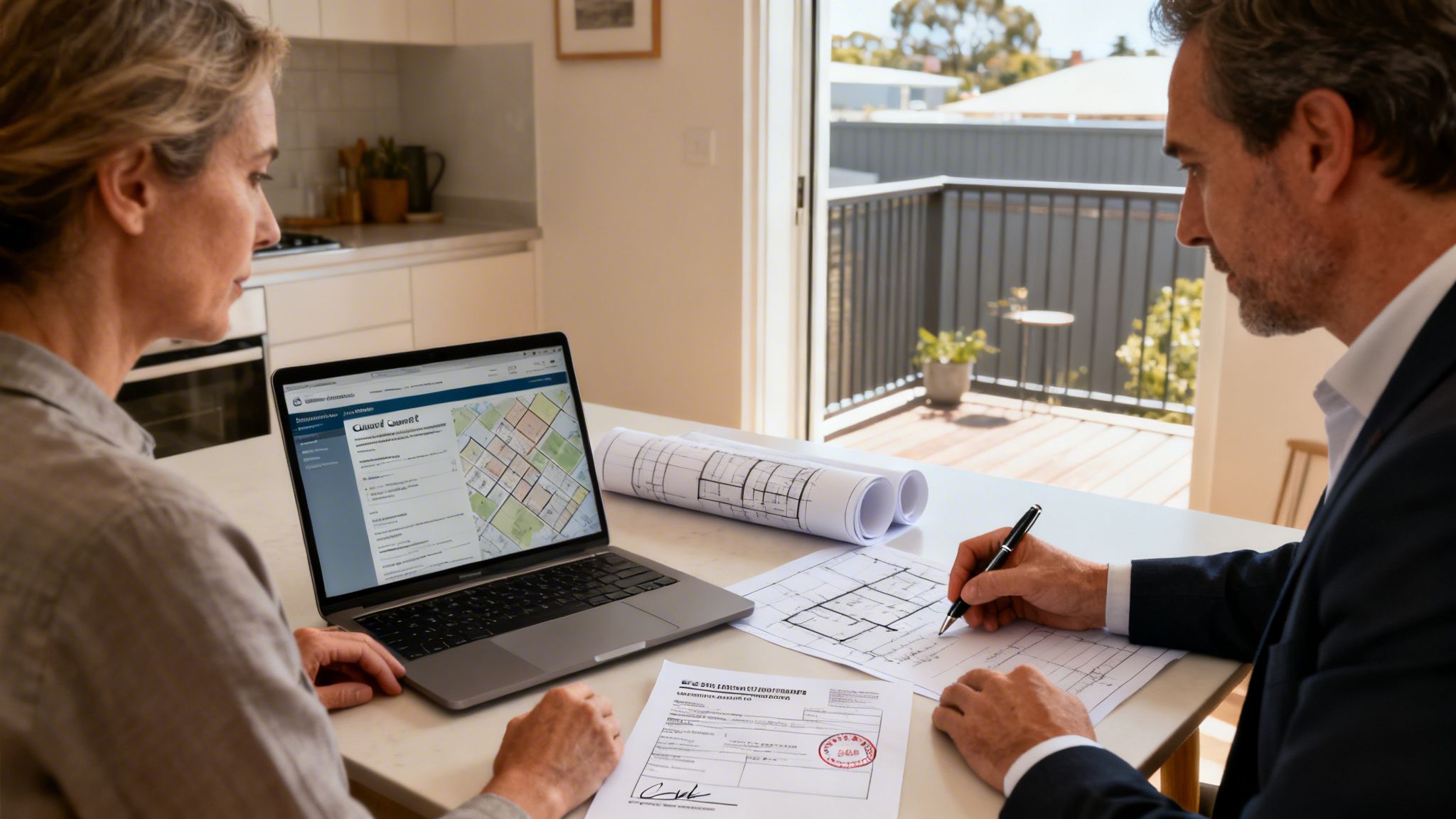
Let’s be honest, wading through Melbourne’s council permits and building regulations can feel intimidating. It’s a complex world, and it’s tempting to just get on with the job and hope for the best.
But taking that shortcut is a huge gamble. It can lead to hefty fines, an order to tear down your hard work, and major headaches when you sell. These rules aren't just red tape. They exist to make sure your home is structurally sound, safe for your family, and compliant with Victorian building standards.
When Do You Need a Building Permit in Melbourne?
A building permit is the official green light from a registered building surveyor, authorising specific construction work. While you won’t need one for simple cosmetic jobs like painting, most significant changes absolutely do.
Here are a few common renovation projects that almost always require a permit:
- Structural Work: Anything that touches your home's core structure, like taking out a load-bearing wall, altering the roofline, or adding another level.
- Extensions and Additions: Building a new room, extending an existing one, or even putting up a carport.
- Decks and Verandahs: Most will need a permit, especially if they are raised off the ground or have a roof.
- Fences and Retaining Walls: A fence over 2 metres high or a retaining wall over 1 metre high will typically need approval.
The specific rules can change from one council to the next. What flies in Boroondara might face different hurdles in Maribyrnong. This is why having local experience on your side is so valuable.
A professional builder takes this entire headache off your hands. They coordinate with a surveyor to get the plans right, lodge all the paperwork, and manage any back-and-forth with the council. If you want to get a clearer picture of the steps involved, check out our guide on council approval for renovations.
Renovation Regulations FAQs for Melbourne Homeowners
To break it down further, here are answers to some of the questions we hear most often from Melbourne homeowners.
Question: Do I need a permit for a new deck?
Answer: Chances are, yes. A permit is usually required if your deck is more than 800mm off the ground, includes a roof, or is attached to the house. A surveyor will need to sign off on its structural design and safety elements like balustrades.
Question: How does a heritage overlay affect my plans?
Answer: A heritage overlay adds another serious layer of control, mainly to protect the home’s external appearance. You'll need a planning permit from your council before you can even think about applying for a building permit. Renovating a period home in a suburb like Hawthorn demands specialist knowledge to navigate these strict rules.
Question: What if I’m just renovating a bathroom?
Answer: If you're just swapping out old tiles for new ones, you're probably in the clear. But if you’re moving walls, rejigging the layout, or altering plumbing, a permit is typically required. Plus, any work involving licensed trades like waterproofing must be certified, even if a full permit isn't needed.
Question: Can I just skip the permit to save time and money?
Answer: This is a truly bad idea. If the council discovers the unapproved work, they can issue a 'Stop Work' notice and a 'Building Order' forcing you to demolish it. You could be facing fines of up to $96,000, and your home insurance might be voided. For specific jobs, like installing a gas cooktop, the rules are non-negotiable and demand licensed professionals to ensure everything is done safely.
Recent data shows Melbourne homeowners are getting smarter with their renovation choices. In fact, 78% of homeowners now prioritise sustainability, focusing on upgrades that boost energy efficiency and long-term value. The best projects find the right balance between your vision and professional oversight to handle the complex rules and protect your investment. You can discover more about these Melbourne renovation trends and their investment returns to see how smart upgrades are paying off.
The True Cost of a Renovation DIY Savings vs Professional Value
The biggest draw for any DIY renovation is the promise of saving a bucketload of cash. If you cut out labour costs, surely you’ll come out ahead, right? That logic often overlooks the hidden expenses that can quickly turn a budget-friendly project into a financial headache.
A realistic cost analysis goes far beyond the price of tiles and tapware. You need to factor in tool purchases, material wastage, the cost of fixing errors, and the very real value of your own time. When you compare a DIY vs professional renovation in Melbourne, the numbers tell a more nuanced story.
Understanding the Hidden Costs of DIY
The initial appeal of DIY savings can be powerful, but it's crucial to look at the complete financial picture. A weekend project can quickly spiral when you account for all the necessary but often forgotten expenses.
Here are some of the most common hidden costs that catch Melbourne homeowners by surprise:
- Tool and Equipment Purchases: You might own a drill, but do you have a wet tile saw, a demolition hammer, or a commercial-grade floor sander? These specialised tools are expensive to buy and can add thousands to your budget.
- Material Wastage: Professionals know exactly how much material to order with a small allowance for cuts. Inexperienced DIYers often make cutting errors, leading to significant wastage. Ordering 10-15% extra is standard, but a few simple mistakes can mean multiple expensive trips back to the supplier.
- The Cost of Rectification: What happens when your DIY waterproofing fails, or your freshly laid floor isn't level? Fixing mistakes is almost always more expensive than getting it right the first time. It can involve demolishing new work and calling in a professional to fix the issue anyway.
- Your Time Is a Cost: Your weekends and evenings have value. A bathroom renovation that a professional team can complete in three weeks could easily take a DIYer several months of working nights and weekends. Calculating your "hourly rate" often reveals you aren't saving as much as you think.
The most significant financial risk in a DIY renovation is the unknown. Unexpected structural issues, hidden rot, or faulty wiring can completely blow your budget. A professional builder anticipates these risks, protecting you from costly surprises.
The Financial Value of a Professional Renovation
Hiring a professional might seem like the more expensive option upfront, but it’s an investment in certainty and risk management. A fixed-price contract from a reputable builder provides budget security that is almost impossible to achieve when you go it alone.
Budget overruns are a huge problem for DIY projects. Over 60% of Australian renovators spend 20-30% more than they planned. This often happens from underestimating costs for trades, permits, and surprise repairs. Given that kitchen renovations average $27,500 and bathrooms $19,000, professional planning is key to preventing these blowouts. You can read more about these compelling Australian home renovation statistics and cost insights to get a better handle on the financial landscape.
A Melbourne Bathroom Renovation Cost Comparison
Let’s get practical and compare the estimated costs for a standard bathroom renovation in Melbourne. This breakdown shows how hidden DIY costs can quickly erode your savings.
Cost Comparison: DIY vs. Professional (Estimate)
DIY Approach
- Project Management: Your time (unpaid, approx. 40-80 hours).
- Licensed Plumber: $2,000 - $3,500.
- Licensed Electrician: $1,000 - $2,000.
- Waterproofing (Certified): $800 - $1,500.
- Tiling Labour: Your time (or $2,500 - $4,500 if subcontracted).
- Fixtures & Materials: $6,000 - $10,000 (at retail prices).
- Tool Purchase/Rental: $1,000 - $2,500+.
- Waste Removal: $400 - $800 (skip bin hire).
- Insurance: Your homeowner’s policy (may not cover renovation work).
- Contingency (Mistakes): $2,000 - $5,000+ (common for errors).
- Total Estimated Cost: $13,200 - $27,800+
Professional Service (Smarter Home Renovations)
- Project Management: Included in fixed price.
- Licensed Plumber: Included.
- Licensed Electrician: Included.
- Waterproofing (Certified): Included.
- Tiling Labour: Included.
- Fixtures & Materials: $6,000 - $10,000 (with access to trade discounts).
- Tool Purchase/Rental: Included (no cost to you).
- Waste Removal: Included.
- Insurance: Builder’s Warranty & Public Liability Insurance.
- Contingency (Mistakes): $0 (covered by fixed-price contract).
- Total Estimated Cost: $19,000 - $30,000 (Fixed Price)
As you can see, the "savings" from a DIY job can disappear quickly once you account for specialist tools, potential mistakes, and the cost of licensed trades you legally must hire. A professional service provides a clear, all-inclusive price that protects you from budget blowouts.
The DIY Approach
- Key benefit: You save on direct labour costs, which can be 40-60% of a professional quote.
- Limitation: You absorb all financial risks, including mistakes, delays, and budget overruns. You are also responsible for purchasing or renting all tools and managing every single trade.
- Best use case: Genuinely suitable for someone with significant, hands-on trade experience, a lot of free time, and a very high tolerance for risk and stress.
The Professional Approach (Smarter Home Renovations)
- Key benefit: You get a fixed-price contract, giving you absolute budget certainty. Professionals also provide access to trade discounts on materials and fixtures, which partially offsets their management fee.
- Limitation: The initial quote is higher because it transparently includes project management, licensed trades, insurance, and the builder’s margin.
- Best use case: Ideal for homeowners who value their time, want a predictable and stress-free process, and need the financial protection that comes with professional warranties and insurance.
Planning Your Smart Melbourne Renovation
Deciding between a DIY or professional renovation in Melbourne really comes down to an honest look at your project's scope, your actual skills, and your budget. After figuring out what you can and can’t legally do, the next step is to make a solid plan that protects your investment and gets you the home you've been dreaming of.
This isn't an all-or-nothing choice. The smartest renovations often blend a homeowner's passion with professional expertise. Australia's home improvement market is valued at a huge AUD 25.52 billion, with a lot of that growth coming from DIY projects.
While over 5.8 million homeowners are happy to tackle minor repairs, the most successful results in Melbourne’s competitive property market usually come from a hybrid approach. This means you handle the cosmetic jobs you enjoy, while a professional manages the critical stages to sidestep expensive mistakes. You can dig deeper into how this trend is shaping Australia's home improvement market with expert research to see the bigger picture.
To help you make the right call for your situation, this decision tree breaks down the key cost considerations.
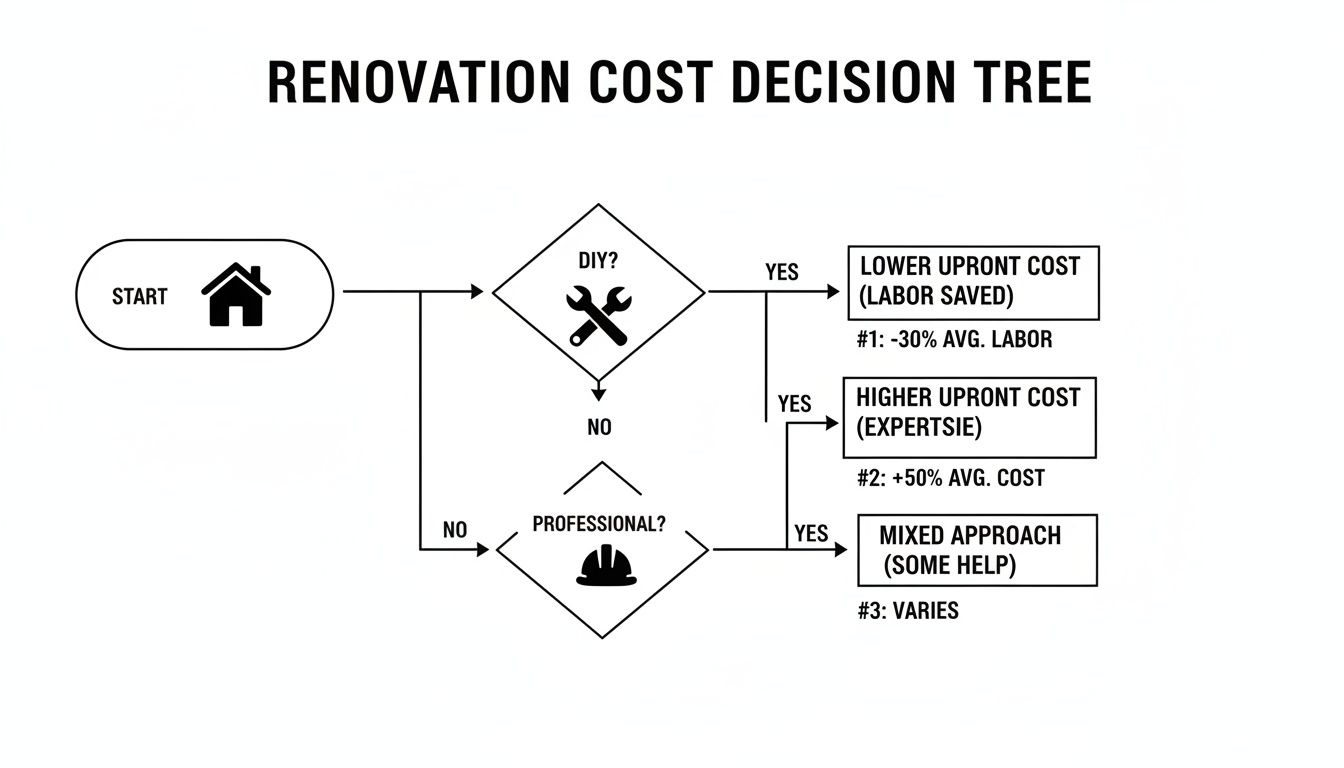
As the flowchart shows, bringing in a professional helps manage the financial risks that come with permits, compliance, and those dreaded unforeseen structural issues that can blow a DIY budget out of the water.
Your Decision Checklist
Before you pick up a single tool, run through this final checklist. Your honest answers will point you in the right direction.
- Project Complexity: Does my project involve licensed trades like electrical or plumbing, structural changes, or waterproofing? If yes, you absolutely need professional management.
- Skill Assessment: Do I have genuine experience and the right tools for the jobs I plan to DIY? A professional finish takes more than just weekend enthusiasm.
- Time Commitment: Can I realistically block out the hours needed, potentially over several months, without it affecting my family or work life?
- Budget Reality: Does my budget cover tool purchases, the cost of fixing potential mistakes, and hiring licensed trades for the work I can't legally touch?
The goal of a smart renovation isn't just to save a bit of cash. It's to add real, lasting value. An expert consultation gives you the clarity to get an on-time, on-budget result with transparent pricing and end-to-end service.
If your checklist has shown you some gaps in your skill, time, or risk management, the next logical step is to get some expert advice. A no-obligation consultation can deliver a plan tailored to your home and your goals, turning the challenges of a Melbourne renovation into a clear, manageable process.
Your Melbourne Renovation Questions Answered
When you're thinking about renovating, it’s natural to have a lot of questions. We get asked about everything from timelines to council rules. Here are some clear, straightforward answers to the most common queries we hear from Melbourne homeowners.
How Long Does a Typical Kitchen or Bathroom Renovation Take?
Working with a professional team is all about creating a smooth, predictable timeline. We know you want your home back as quickly as possible.
- Bathroom Renovation: A standard bathroom job, from demolition to handover, usually takes our team 3 to 4 weeks. This includes coordinating all trades, managing inspections, and getting the finishing touches just right.
- Kitchen Renovation: A full kitchen overhaul typically needs 4 to 6 weeks. This timeframe allows for custom cabinetry production, installation, and the careful scheduling of plumbers, electricians, and tilers.
- DIY Timeline: If you’re going it alone, be prepared for a much longer journey. DIY projects can easily drag on for months as you try to fit them around a full-time job, learn new skills, and find reliable tradespeople.
Can I Do Some Work Myself to Save Money?
Absolutely. A combined approach can be a great way to manage your budget while still getting a high-quality result. We regularly work with clients who enjoy getting their hands dirty.
You could tackle jobs like the initial demolition (once we’ve confirmed it’s structurally safe) or the final coat of paint. This lets you put in some sweat equity and save on the labour costs for those tasks.
At the same time, we'll handle the critical, licensed work that comes with the biggest risks. This means all waterproofing, plumbing, and electrical work is done by certified pros, ensuring your renovation is compliant, insured, and built to last.
This collaborative model gives you the best of both worlds. You get the satisfaction of being part of your own renovation while having the peace of mind that all the high-risk work is handled by experts.
What Is the Biggest Risk of a DIY Bathroom Renovation?
Without question, the biggest and most costly mistake you can make is failed waterproofing. Getting this wrong can lead to catastrophic damage that costs tens of thousands of dollars to fix.
- Legal Requirement: In Victoria, waterproofing is a prescribed building activity that must be performed by a licensed professional. It’s not an optional step.
- Certification: Once the work is done, the tradesperson must issue a Waterproofing Compliance Certificate that proves it meets Australian Standard AS 3740.
- Insurance Risk: If your DIY waterproofing fails, any resulting water damage is almost certainly not covered by your home insurance policy. The fee for a certified waterproofer is a small price for protecting your entire home from structural rot and mould.
Can I Still Renovate My House If It Has a Heritage Overlay?
Yes, you definitely can. Having a heritage overlay doesn’t stop you from renovating. It just means the project needs to be planned with care to preserve the home’s unique character. These rules mainly focus on the building's external appearance and street-facing elements.
It's vital to work with a builder who has experience with period homes. We know how to navigate the local council requirements and can help you blend modern comforts and functionality with the timeless charm that makes your Melbourne home so special.
Planning a renovation is a big undertaking, but you don't have to figure it all out on your own. If you're weighing up the options for your home, kitchen, or bathroom project, the team at Smarter Home Renovations is here to help. Contact us for expert advice and a clear plan to bring your vision to life.