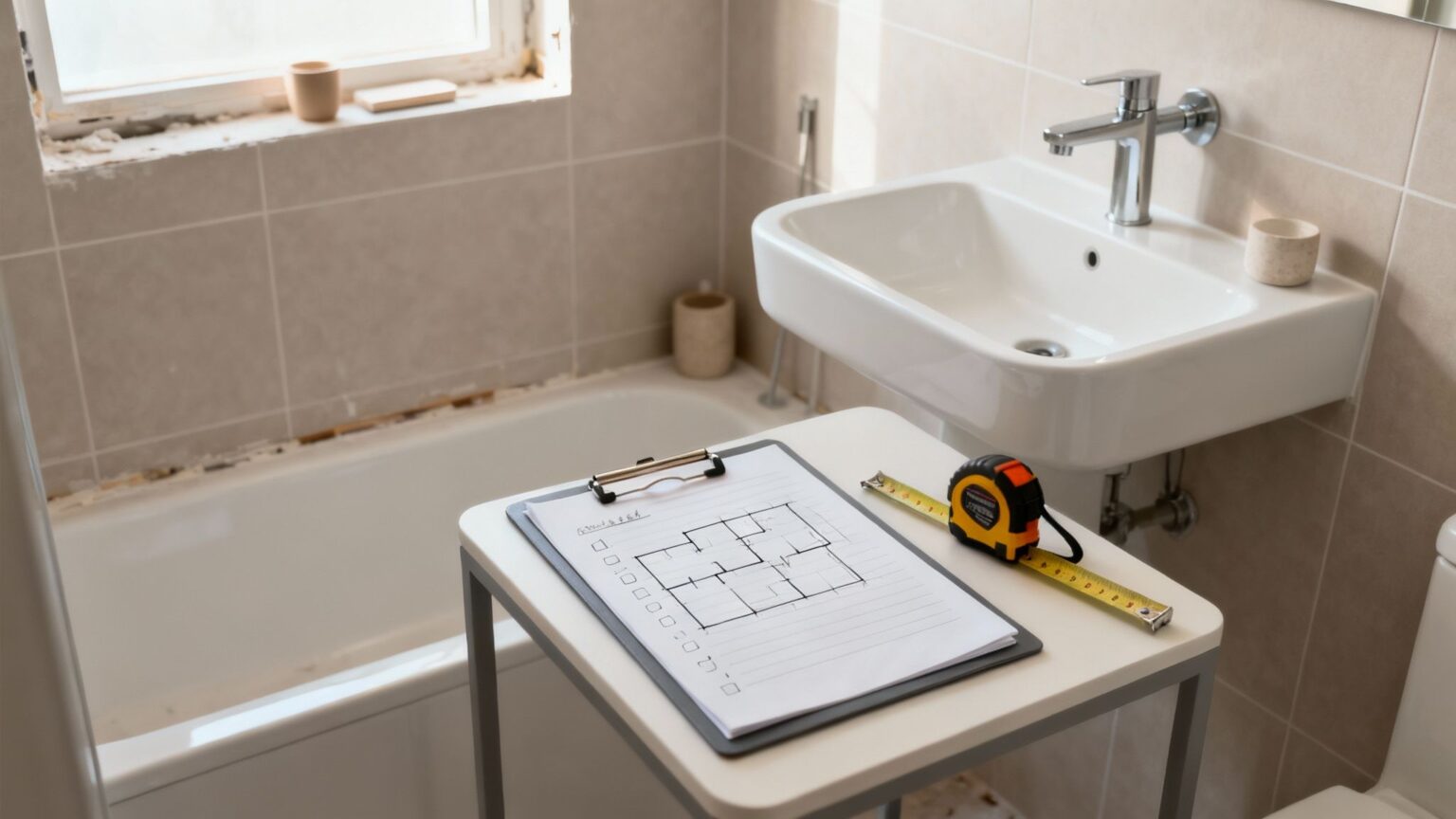
Learn how to renovate a bathroom with our complete guide. From budgeting and design ideas to hiring the right pros for a stunning renovation.
A successful bathroom renovation isn’t about picking out tiles first. It starts with a solid plan that maps out what you want to achieve and what you're willing to spend. From there, you can dive into the fun stuff like design and materials, handle the necessary permits, and find the right crew for the job. Only then does the real work of demolition, construction, and final fit-out begin when you Renovate a Bathroom.
Starting Your Bathroom Renovation Without the Overwhelm

Jumping into a bathroom reno can feel like a massive undertaking, but good planning is the key to turning that stress into an exciting home upgrade. The very first thing to do, before you Renovate a Bathroom even glance at a tapware catalogue, is to get crystal clear on your vision and goals. What are you actually trying to fix or improve?
Defining Your Project Scope
First up, you need to decide if this is a simple cosmetic update or a full-blown structural overhaul. Getting this right is crucial because it sets the direction for your budget, timeline, and the tradies you'll need on your team when you Renovate a Bathroom.
A cosmetic refresh is the lighter touch. Think things like:
- A fresh coat of paint on the walls and ceiling.
- Swapping out the old vanity, mirror, and light fittings.
- Upgrading taps and showerheads for a modern look.
- Reglazing a tired bathtub or old tiles.
On the other hand, a structural renovation is much more involved. This is where you might be:
- Knocking down walls to change the bathroom’s footprint.
- Relocating plumbing for the toilet, shower, or basin.
- Adding a new window or a skylight for more natural light.
- Taking the entire room back to the studs for a complete rebuild.
Be really honest with yourself about your needs versus your wants. A family with young kids will probably prioritise a durable, easy-to-clean bathtub. A couple in a modern Melbourne apartment, however, might dream of a luxe walk-in shower. Let your lifestyle guide these big-picture decisions.
Building a Realistic Budget
With a clear scope in mind, it's time to talk money. One of the biggest mistakes we see is people only budgeting for the shiny, visible items like tiles and toilets. A proper budget is the foundation of every successful attempt to Renovate a Bathroom. Labour, building materials, permits, and, most importantly, a contingency fund for those inevitable surprises.
As a rule of thumb, always set aside 15-20% of your total budget for unexpected costs. Once you start pulling things apart, you can uncover anything from hidden water damage to dodgy old wiring or even termites. That buffer is what keeps your project from going off the rails.
For most homeowners, the real challenge is making their reno dreams fit their financial reality. Recent data shows that while more people want to renovate their bathrooms, economic pressures are forcing many to rethink their plans. One survey found that while a huge 43% of Australians plan to renovate their bathroom in 2025, nearly half have had to delay projects because of rising costs.
This tells us that people are choosing to wait and do it right, rather than cutting corners. You can discover more insights about these bathroom renovation trends from domain.com.au. It just highlights how critical a well-planned budget is for achieving a result you'll love for years to come.
Evaluating Your Current Layout
Before you fall in love with Pinterest layouts, think practically. Keeping plumbing where it is can save thousands when you Renovate a Bathroom. Figure out where the existing plumbing is, especially the "wet wall" that houses the pipes for your sink, shower, and toilet.
Moving plumbing is one of the biggest cost drivers in any bathroom renovation. If you're working with a tight budget, your best bet is to keep the new fixtures in roughly the same location as the old ones.
Think about the flow of the room. Does the door swing open and smack into the vanity? Is the toilet the very first thing you see when you walk in?
Sometimes, simple tweaks can make a world of difference. Switching the door swing or choosing a wall-hung vanity to open up the floor space can dramatically improve the room's feel without touching the expensive plumbing.
And a quick tip for Melburnians. If you're in a heritage building or an apartment, there might be specific council or owners' corporation rules about what you can change. I
t’s always smart to check this out early in the process to avoid headaches later on.
Budgeting for Your Melbourne Bathroom Transformation
Let’s be honest, the word ‘budget’ can take the shine off a renovation dream. But getting your finances sorted from the get-go is the single most important step you can take to ensure your project is exciting, not stressful.
A solid financial plan isn’t just about a final number; it’s about knowing exactly where every dollar is going, which prevents any nasty surprises when the invoices start rolling in.
The final cost of a bathroom renovation in Melbourne can swing wildly depending on what you’ve got in mind.
A simple cosmetic facelift is a completely different beast to a full-gut renovation where we’re moving walls and re-routing plumbing. It's crucial to understand what's possible at different price points to align your vision with reality.
Recent figures show that a bathroom renovation is a significant investment.
As of 2025, the national average cost is hovering around AUD 26,747, pushed up by rising material and labour costs. While that's a good ballpark, here in Melbourne, most mid-range projects we see land somewhere between AUD 15,000 and AUD 40,000.
What to Expect at Different Budget Levels
To make this more concrete, let's break down what your investment can realistically get you for a standard-sized bathroom in Melbourne.
- The Cosmetic Refresh (Under $15,000): This is all about high-impact, low-cost changes. Think a fresh coat of paint, swapping out the old vanity and tapware for new off-the-shelf models, and updating the mirror and light fixtures. You might even look at reglazing tired tiles or a dated bathtub. The key here is that the layout and all the plumbing stay exactly where they are.
- The Mid-Range Makeover ($15,000 - $40,000): This is where most homeowners land. You get everything from the budget-friendly tier, plus a whole lot more. We're talking brand new floor and wall tiles, a new toilet, a modern frameless shower screen, and, most importantly, professional waterproofing. You’ll have the budget for better quality fixtures and perhaps a semi-custom vanity to perfectly fit your space.
- The Luxury Overhaul (Over $40,000): Now we’re talking about a complete transformation. This budget allows for structural changes like moving walls or relocating plumbing to create a totally new layout. It opens the door to high-end materials like natural stone tiles, a stunning freestanding bathtub, fully custom joinery, and luxury features like underfloor heating or smart home tech.
Expert Tip: The biggest budget killer we see is dealing with the unexpected. Always, always set aside a contingency fund of 10-15% of your total budget. This is your safety net for things you can't see until demolition starts, like hidden water damage, old wiring that's not up to code, or even termite trouble.
Where Your Money Really Goes
It’s easy to focus on the pretty things like tiles and taps, but a huge chunk of your budget is actually spent on the skilled labour and structural work that you don't see. Getting a handle on this breakdown is vital for realistic planning.
Here’s a sample budget allocation for a typical mid-range renovation. It helps to see where the costs are concentrated.
Estimated Cost Breakdown for a Mid-Range Bathroom Renovation in Melbourne
| Expense Category | Percentage of Total Budget | Estimated Cost Range (AUD) |
|---|---|---|
| Labour & Project Management | 20% - 30% | $4,000 - $12,000 |
| Tiling & Waterproofing | 15% - 25% | $3,000 - $10,000 |
| Fixtures & Fittings | 15% - 20% | $3,000 - $8,000 |
| Vanity & Cabinetry | 10% - 15% | $2,000 - $6,000 |
| Demolition & Structural Prep | 5% - 10% | $1,000 - $4,000 |
As you can see, the costs add up quickly before you've even picked a paint colour. A seemingly simple decision, like moving a toilet just one metre, can add thousands in plumbing costs.
Likewise, falling in love with imported designer tiles can easily double your materials budget compared to quality porcelain options.
For a more detailed look at local pricing, have a read through our guide on understanding bathroom renovation costs in Melbourne. Being transparent about costs from the start helps you build a solid financial plan you can stick to.
Choosing Your Layout, Design, and Materials
This is where the fun really begins. Once you’ve pinned down your scope and budget, you get to move on to the tangible, creative part of the project.
Choosing the right materials and fixtures can completely transform how you Renovate a Bathroom and how long it lasts. It’s all about creating a space that not only looks incredible but also makes your daily routine feel effortless.
These are long-term decisions, so it’s worth taking your time to get them right. A bathroom that looks amazing but is a nightmare to use will lose its appeal fast. On the flip side, a well-planned space is a source of daily joy.
Optimising Your Bathroom Layout
Before you start falling in love with tiles and tapware, you need to lock in your layout. The flow and function of the room are absolutely critical. I’ve seen it time and time again: homeowners prioritise aesthetics over practicality, only to end up with a bathroom that looks great on social media but is a pain to live with.
Think about these common layouts and how they might work in your home:
- Galley Layout: A classic for a reason. This setup places all your fixtures along two parallel walls, which is super-efficient for rectangular rooms. Just be careful it doesn’t end up feeling too narrow.
- Three-in-a-Row: This is the go-to for smaller or narrow Melbourne bathrooms. It lines up the sink, toilet, and shower along one "wet wall," which is often the most budget-friendly option because it keeps all the plumbing consolidated.
- Wet Room: A fantastic, contemporary choice for making a small space feel massive. A wet room has an open, fully tiled shower area that flows into the rest of the bathroom. It's brilliant for accessibility but requires an expert waterproofer, this is not an area to cut corners.
Your layout should solve problems, not create new ones. What drives you crazy about your current bathroom? Is the door always banging into the vanity? Is there nowhere to stand and dry off? Start by fixing those functional flaws.
For a family with young kids, for example, a layout that keeps the bathtub separate from the main traffic path might be ideal. Or, for a couple who gets ready at the same time, a double vanity in a galley layout could be a marriage-saver.
Select Durable and Stylish Materials When You Renovate A Bathroom
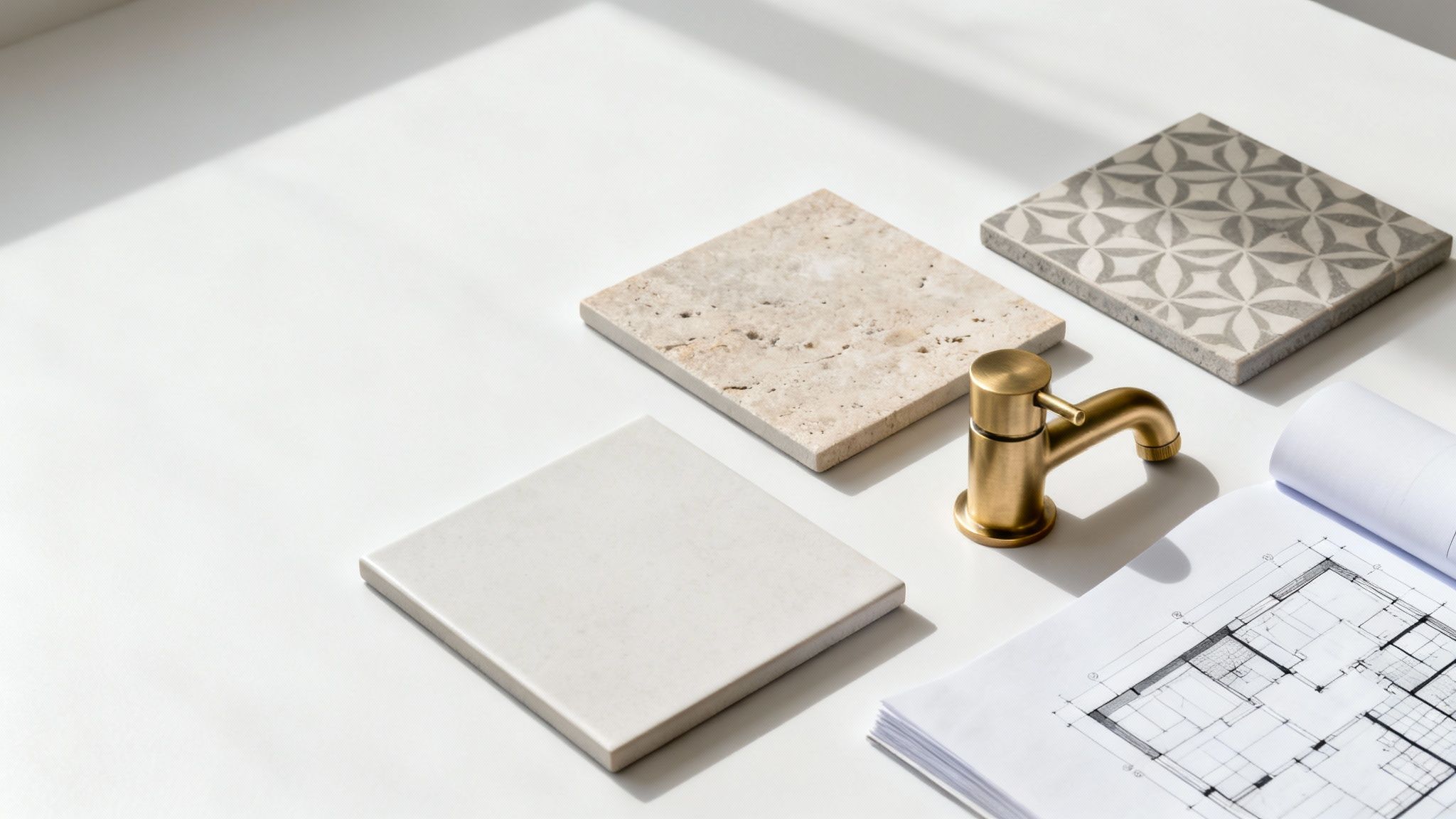
Your materials should perform as well as they look. Porcelain, ceramic, and natural stone each have different benefits when you renovate a bathroom. Durability and waterproofing are key.
Start with the biggest surfaces: your floors and walls. Tiles are the industry standard for a reason, they’re waterproof, tough, and the design options are virtually endless. But not all tiles are created equal.
- Porcelain Tiles: These are dense, incredibly hard-wearing, and less porous than ceramic tiles. This makes them a brilliant choice for both floors and walls, and their durability is a smart long-term investment.
- Ceramic Tiles: Usually a bit easier on the wallet than porcelain, ceramic tiles are a great fit for walls. They come in a massive range of colours and patterns and are generally easier for tilers to cut and work with.
- Natural Stone: There's no denying the luxurious, unique beauty of materials like marble, travertine, or slate. Just be aware that they demand a bit more love, requiring regular sealing to protect them from stains and water damage.
When you’re looking at materials, especially for a wet area, it pays to check out some of the newer, innovative options on the market. For instance, some clever designs now use high-quality interior films certified for no growth of fungus and bacteria on vanity fronts or feature walls for a hygienic and seamless look.
If you want to do a deeper dive, our guide on how to choose bathroom tiles is packed with practical advice to help you find the perfect fit.
Choosing Your Fixtures and Fittings
Think of your fixtures as the jewellery of the bathroom. This includes your taps, showerhead, toilet, and basin, and it's one area where quality really shines through.
That cheap tapware might look good for a few months, but it can corrode or fail internally, leading to leaks and expensive repairs down the track.
When picking your fixtures, try to find that sweet spot between style and practicality.
A big, luxurious rain shower head feels amazing, but many people find they miss the flexibility of an adjustable handheld shower wand for day-to-day cleaning and rinsing. Likewise, a vessel sink can make a stunning statement, but it might not be the best choice for a busy family bathroom where splashes are inevitable.
Always look for the WELS (Water Efficiency Labelling and Standards) rating on taps, toilets, and showerheads.
A high rating doesn’t just help the planet; it can make a real difference to your water bills over the years, a clear win-win for any Melbourne homeowner.
To Renovate A Bathroom Select A Dream Team
Your choice of tiles and taps is important, but the real success of your bathroom renovation hinges on the people you hire.
A skilled crew will help you renovate a bathroom smoothly, efficiently, and to code. The wrong one? Well, that’s how you end up with budget blowouts, endless delays, and a finished product that just doesn't hit the mark.
Knowing who you need on your side and how to properly vet them is probably the most critical part of your entire renovation journey.
For most Melbourne bathroom projects, you’ll be dealing with a core team of trades. They all have a specific job to do, and they need to work together like a well-oiled machine.
Key Players in Your Bathroom Renovation
Builders, plumbers, electricians, waterproofers, and tilers each play crucial roles when you Renovate a Bathroom in Melbourne. Every trade ensures the result is functional, safe, and visually stunning.
- Registered Builder or Project Manager: If you’re making structural changes, a builder is essential. They’re the captain of the ship, coordinating all the other trades, managing the schedule, and making sure everything is up to code. For projects that don't involve moving walls, a specialist company like Smarter Home Renovations can manage this whole process for you.
- Plumber: A licensed plumber is responsible for everything from disconnecting the old loo and basin to running brand new water and waste lines for your beautiful new layout. It’s highly skilled work that has to meet strict Australian standards.
- Electrician: Need to move a power point? Want that gorgeous backlit mirror or a heated towel rail? You'll need a licensed electrician.
- Waterproofer: This is arguably one of the most vital roles. A certified waterproofer is the one who applies the waterproof membrane that protects your home’s structure from leaks and long-term moisture damage. Get this wrong, and you're in for a world of pain down the track.
- Tiler: A great tiler is an artist. They take your design vision and lay it out, tile by tile, ensuring a flawless finish that brings the whole room to life.
Expert Tip: Don't underestimate the power of a dedicated bathroom designer. While they're not essential for every single project, a good designer can be a lifesaver for tricky layouts or if you’re struggling to pull all your ideas together. They often save you from making expensive mistakes you’ll regret later.
Vetting Your Tradespeople Like a Pro
Finding good tradespeople in Melbourne right now can feel like a mission. The Australian renovation sector is absolutely booming, making up nearly 30% of all residential construction activity. This massive demand, plus ongoing labour shortages, means you need to be diligent.
Before you even pick up the phone, do your homework.
- Check Their Licence: This is non-negotiable. In Victoria, builders, plumbers, and electricians must be registered or licensed with the Victorian Building Authority (VBA). You can and absolutely should, look them up on the VBA's public register to confirm they are legit.
- Verify Their Insurance: Any trade professional who sets foot on your property must have Public Liability Insurance. Ask to see their certificate of currency. It’s a completely standard request, and any pro worth their salt will have it ready to go.
- Review Their Recent Work: Ask to see photos of recent projects that are similar to yours. Even better, ask if you can have a quick chat with one or two of their recent clients. A confident contractor will be more than happy to connect you with happy customers.
The Right Questions to Ask
Once you have a shortlist, it's time for a proper chat. You’re not just checking their technical skills here; you’re getting a feel for their communication style and how they manage a project.
Here are a few essential questions to get the ball rolling:
- How do you like to keep clients in the loop during a project? Daily check-ins? Weekly summaries?
- Who will be my main point of contact on-site each day?
- How do you handle surprises or changes to the plan?
- Can you provide me with a detailed, itemised quote and a projected timeline?
- What’s included in your quote, and what are some common things that might be excluded?
And finally, never, ever move forward without a detailed, written contract. It needs to clearly spell out the full scope of work, a payment schedule, the project timeline, and all the specific materials and fixtures you've agreed on. A solid contract protects both you and your renovation team, making sure everyone is on the same page from day one.
To Renovate A Bathroom You Must Navigate Permits, Waterproofing, and Timelines
Once you’ve settled on the beautiful tiles and shiny new tapware, it’s time to dive into the technical core of your bathroom renovation. This is where the project’s long-term success and safety are really decided.
Getting the permits, waterproofing, and timeline right isn't just a box-ticking exercise. It's the absolute foundation of a successful, stress-free build that protects your home for years to come.
Lots of homeowners are surprised to hear that not every bathroom renovation in Victoria needs a building permit. But if your project involves changing the structure of your home, like moving a wall, altering a window, or making any adjustments to the supporting frame, then a permit is absolutely mandatory.
This isn’t just about ticking a box for the council. A building permit means a registered building surveyor will pop in to conduct inspections at critical stages. It’s an independent check on the quality of the work, giving you peace of mind that everything is up to scratch.
The Make-or-Break Role of Waterproofing
If there’s one part of a bathroom reno you absolutely cannot get wrong, it’s the waterproofing. I can’t stress this enough.
A failed waterproof membrane is one of the most destructive and expensive problems you can face. It often leads to hidden structural rot, mould, and eye-watering repair bills that spread far beyond the bathroom itself.
In Australia, all waterproofing work must comply with the strict national standard, AS 3740 – Waterproofing of domestic wet areas. This isn’t just a friendly guideline; it’s a legal requirement.
The standard is very specific about how and where the waterproof membrane must be applied:
- The entire shower floor needs to be fully waterproofed.
- Shower walls must be waterproofed up to a height of at least 1800mm.
- The whole bathroom floor must be waterproofed if it’s a timber structure or on a second storey.
- A waterproof barrier has to extend over the hob or step-down into the shower recess.
Your licensed waterproofer is required to issue a Certificate of Compliance when they’re finished. This is your official guarantee that the job meets Australian Standards. Whatever you do, don't let a single tile go on the wall until you have this certificate in your hand.
If you’re keen to get into the nitty-gritty of different methods and materials, our detailed guide on the best waterproofing for bathrooms is a great place to start.
Understanding the Renovation Timeline
Knowing the sequence of events helps you prepare for the disruption and manage your expectations. While every project is a little different, a standard mid-range bathroom renovation in Melbourne usually follows a pretty predictable flow.
This quick visual shows the general process your build will follow.
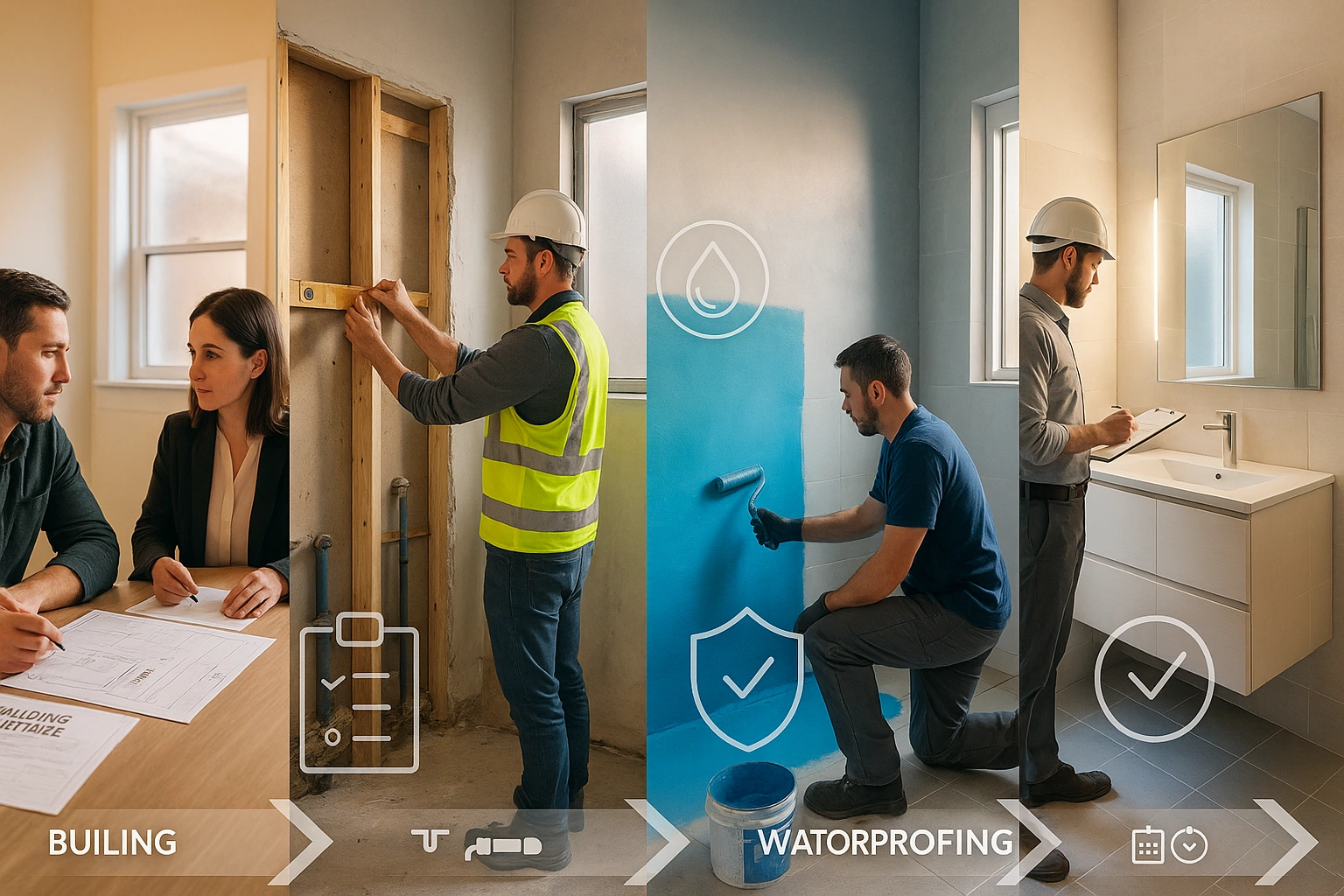
As you can see, a quality renovation isn’t just about the tools. It’s a methodical sequence of vetting, contracting, and building to make sure every stage is properly planned and executed.
Here’s how a typical project breaks down:
- Demolition and Prep (2-4 days): We strip out the old bathroom completely, taking the space right back to the structural frame.
- Rough-In (2-3 days): This is where the plumbers and sparkies run all the new pipes and wiring through the walls and floor before any sheeting goes up.
- Sheeting and Plastering (3-5 days): New moisture-resistant plasterboard is installed, and the joints are stopped up and sanded smooth, ready for waterproofing.
- Waterproofing (2-3 days): The all-important membrane is applied. This involves multiple coats and specific drying times, so it’s a stage that can never be rushed.
- Tiling (3-5 days): Your chosen tiles are laid and grouted. This is where the visual transformation really starts to happen!
- Fit-Off and Finishing Touches (3-4 days): The final straight. We install the vanity, toilet, shower screen, taps, and mirror, followed by painting and the final electrical fit-off.
All up, you should realistically plan for your bathroom to be out of action for three to four weeks for a standard job. Trying to rush things, especially during the waterproofing and tiling stages, almost always leads to a result nobody is happy with.
Your Top Bathroom Renovation Questions Answered
Even with the best-laid plans, it's natural to have a few questions pop up as you get closer to starting your bathroom renovation. Getting straight answers is the key to feeling confident and ready to go. Here are some of the most common things we get asked by Melbourne homeowners.
Think of this as your go-to guide for those tricky "what-if" moments. We'll cover everything from how long it all takes to the day-to-day logistics of living through a reno.
How long does it take to Renovate a Bathroom?
This is easily the number one question, and the honest answer is: it really depends. A simple cosmetic update, think new paint and tapware, might only take a week. But for a full, strip-out-and-start-again renovation, you need to realistically plan for the bathroom to be out of action for three to four weeks.
That timeframe isn't just about getting the work done; it's about getting it done right. Rushing certain stages is a recipe for disaster down the track.
There are a couple of key phases with non-negotiable drying times:
- Waterproofing: This is a multi-coat process. Each layer of the waterproof membrane has to cure properly before a single tile can be laid. Cutting corners here is one of the biggest mistakes you can make.
- Tiling: Once the tiles are down, the adhesive needs to set before grouting can happen. The grout then needs its own time to cure before we can fit off the final fixtures like your vanity and toilet.
Trying to squeeze this schedule almost always means compromising the quality and longevity of your new bathroom.
Can We Live in the House During the Renovation?
Absolutely, and most of our clients do! The main requirement is that you have another bathroom to use while the work is underway. That said, you do need to be prepared for a bit of disruption. There will be noise, some dust, and a regular flow of tradies in and out of your home.
We're very conscious that we're working in your personal space, so we take a lot of care to minimise the impact on your daily life.
That means we'll always:
- Lay down protective sheeting on floors in hallways and other high-traffic areas.
- Use dust extraction systems wherever possible to keep the air clean.
- Do a thorough clean-up of the work area at the end of every single day.
A good renovation team knows they're guests in your home and acts like it. We also find that clear communication about daily start and finish times helps make the whole process feel much smoother for everyone involved.
What Are Some Smart Ways to Save Money?
Everyone wants to find savings, but it's crucial that "saving money" doesn't mean "cutting corners." Skimping on waterproofing or hiring unlicensed tradies will end up costing you a fortune in the long run when things go wrong. The smart way to save is by making savvy choices that don't compromise the bones of the bathroom.
Pro Tip: Never choose your tapware based on price alone. Cheap taps are a classic rookie error. They might look the part initially, but the poor-quality internal components are prone to failing, which can lead to leaks and thousands of dollars in water damage repairs.
Here are a few practical areas where you can genuinely save:
- Keep the Layout: As we've mentioned before, moving plumbing is a huge cost. Keeping your toilet, shower, and vanity in their current spots will save you thousands in plumbing labour.
- Choose Standard-Sized Fixtures: Off-the-shelf vanities and standard-sized shower screens are worlds cheaper than custom-made pieces, and the quality available these days is excellent.
- Be Smart with Tile Selection: You can get a seriously high-end look without the price tag. For example, use a beautiful but affordable subway tile for most of the walls, then splurge on a small amount of a more expensive feature tile for the shower niche or as a splashback behind the vanity.
A well-planned renovation is all about investing in the important stuff, the things that ensure durability and function, while making clever, stylish compromises elsewhere.
Ready to stop wondering and start planning?
The team at Smarter Home Renovations has been helping Melbourne homeowners Renovate a Bathroom beautifully for over 20 years..
For a transparent quote and expert advice, get in touch with Tony and the team today.