Understand the real bathroom renovation cost in Melbourne with our detailed guide on materials, labour, and smart ways to save money.
So, how much does a bathroom renovation in Melbourne actually cost? The short answer is it can range anywhere from $8,000 for a simple cosmetic update to well over $35,000 for a high-end, custom job. The final number on your quote really boils down to three things: the size of your bathroom, the quality of the finishes you pick, and how much complex work is involved.
Your Guide to Melbourne Bathroom Renovation Costs
Trying to budget for a bathroom reno can feel a bit like planning a holiday without knowing the local currency. You know you need to set aside some cash, but the figures can feel abstract and a little intimidating. My goal here is to give you a clear financial map, breaking down exactly what drives costs for a bathroom project here in Melbourne.
A good way to think about it is in three tiers: budget, mid-range, and premium. Each level comes with a different scope of work and quality of materials, which directly impacts the price tag. A simple refresh is always going to be lighter on the wallet than a full-gut renovation that involves moving plumbing and knocking down walls.

Understanding the Renovation Tiers
To give you a clearer picture, let’s break down what you can realistically expect to get for your money in each bracket. Having these numbers in mind helps set realistic expectations before you start chasing quotes.
- Budget Renovation ($8,000 - $15,000): This is your classic "spruce-up." Think of it as a paint-and-polish job. You're keeping the layout as is, but maybe adding a fresh coat of paint, swapping out the old tapware, and putting in a new off-the-shelf vanity and toilet. It’s a great option for a quick update or getting a rental property ready for tenants.
- Mid-Range Renovation ($15,000 - $35,000): This is the sweet spot for most Melbourne homeowners. In this range, you can afford better quality tiles, a semi-custom vanity, a sleek frameless shower screen, and maybe even shift a plumbing point or two. You’re getting a serious upgrade in both looks and function without stepping into full luxury territory.
- Premium Renovation ($35,000+): Welcome to the complete transformation. This is where you'll find high-end materials like natural stone, fully custom cabinetry, stunning freestanding baths, and major structural changes. These projects almost always include architectural design and dedicated project management to bring it all together.
To help you visualise this, here’s a quick summary table:
Estimated Bathroom Renovation Costs in Melbourne by Tier
| Renovation Tier | Estimated Cost Range (AUD) | Typical Inclusions & Finishes |
|---|---|---|
| Budget | $8,000 - $15,000 | Cosmetic updates, keeping existing layout, new paint, basic fixtures, pre-made vanity. |
| Mid-Range | $15,000 - $35,000 | Better quality tiles, semi-custom vanity, frameless shower screen, minor plumbing changes. |
| Premium | $35,000+ | High-end materials (natural stone), custom cabinetry, freestanding tub, major layout changes, architectural design. |
These cost brackets aren't just guesses; they're backed by industry data. Recent analysis shows that most standard renovations land squarely in that $15,000 to $35,000 window, while luxury projects can easily soar past that.
A well-planned budget is the absolute foundation of a stress-free renovation. It’s not just about the final number; it’s about knowing exactly where every dollar is going and why.
For a broader perspective on how service-based costs are structured, you might find guides on understanding service costs and budgeting useful. Even though the service is different, the core principles of quoting and managing expenses are surprisingly similar.
Ultimately, a detailed plan is your best defence against budget blowouts. Our comprehensive bathroom renovation checklist is the perfect tool to guide you through every single step.
Where Your Melbourne Bathroom Renovation Budget Really Goes
When you get a quote for a Melbourne bathroom renovation, it’s easy to focus on that final number. But understanding the story behind that number is what really matters. A renovation budget is a bit like a recipe; you’ve got your core 'ingredients', the tiles, taps, and vanity, and then you have the 'method', the skilled hands needed to bring it all together.
Both are equally vital, and they make up the lion’s share of your total bathroom renovation cost. Let's be honest, the quality of your ingredients has a huge impact on the final dish. In the same way, your choice of materials will dramatically shape your bathroom's look, feel, and ultimately, its price tag.
The Real Cost of Materials
The fixtures and finishes are where your personal style shines, but they’re also where costs can climb surprisingly fast. The gap between a budget-friendly and a premium bathroom often comes down to these selections.

- Tiles: A simple ceramic tile might only set you back $30 per square metre. But fall in love with a high-end natural stone or a fancy mosaic, and you could be looking at over $150 per square metre. For an average-sized bathroom, that choice alone can swing the cost by thousands.
- Vanity: You can pick up an off-the-shelf vanity from a big-box store for around $500. On the other hand, a custom-built vanity with a stone top and premium joinery can easily run from $2,500 to $5,000, or even more.
- Tapware and Fixtures: The options here are endless. A basic chrome tap set might be $200, while a designer matte black or brushed brass set could be upwards of $800. The same goes for showerheads, towel rails, and toilets.
As you can see, jumping from a budget reno to a premium one involves a big leap in material quality and, of course, cost. And when you're budgeting for new installations, don't forget to factor in items like the typical tankless water heater installation costs, which can vary a lot depending on the model you choose.
The Price of Professional Labour
While materials are the shiny, visible part of your renovation, labour is the invisible engine that makes everything work. It’s often the single biggest expense, and for very good reason. Skilled tradespeople ensure your bathroom isn’t just beautiful but also safe, compliant, and built to last.
Labour isn't just an expense; it's an investment in quality and peace of mind. Getting it wrong can lead to leaks, electrical faults, and structural issues that cost far more to fix down the line.
The numbers back this up. With the average Aussie bathroom renovation sitting around $26,000, labour can easily eat up to 50% of that total. Getting the right people on board is non-negotiable.
Here’s a quick look at what you can expect to pay for the key trades in Melbourne.
Typical Labour Costs for Melbourne Bathroom Trades
| Trade | Typical Cost Structure | Estimated Rate (AUD) |
|---|---|---|
| Plumber | Hourly Rate | $90 - $150+ per hour |
| Electrician | Hourly Rate | $80 - $130+ per hour |
| Tiler | Per Square Metre (m²) | $50 - $120+ per m² |
| Waterproofer | Per Job / Per m² | $400 - $800+ for a standard shower |
| Carpenter | Hourly Rate | $70 - $110+ per hour |
| Painter | Hourly / Per Job | $50 - $80+ per hour |
These rates are a guide, but they show why labour is such a significant part of the budget, these are highly specialised skills.
A proper Melbourne bathroom reno is a team effort, and it has to happen in the right order. You'll need:
- Demolition Crew: To safely and cleanly strip out the old bathroom.
- Carpenter: For any structural changes, framing, or fitting new cabinetry.
- Plumber: This is a huge one. They handle everything from moving pipes for a new layout to installing your toilet, vanity, and shower. The initial stage is critical, as we explain in our guide to understanding plumbing rough-ins.
- Electrician: To install new lighting, power points, exhaust fans, and heated towel rails, all while meeting strict Aussie safety standards.
- Waterproofer: They apply the waterproof membrane to the floor and walls, a step you absolutely cannot skip if you want to prevent future water damage.
- Tiler: To lay your chosen floor and wall tiles with absolute precision.
- Painter: For those finishing touches with moisture-resistant paint.
Every single trade has a vital role. Trying to cut corners on one can jeopardise the entire project, which is why professional project management is so important to keep everything on track and completed to a high standard.
How Project Scope Influences Your Final Quote
When you start adding up the numbers for your bathroom renovation, one factor stands above all others in determining the final cost: the scope of the project.
It’s a bit like deciding what to do with your car. Are you giving it a quick wash and wax, or are you pulling the engine apart and rebuilding it from scratch? Both improve the car, but the time, skill, and money involved are worlds apart. It's the same with a bathroom, a simple cosmetic refresh is a completely different beast to a full-scale structural overhaul. Figuring out where your project lands on this spectrum is the first step to a realistic budget.
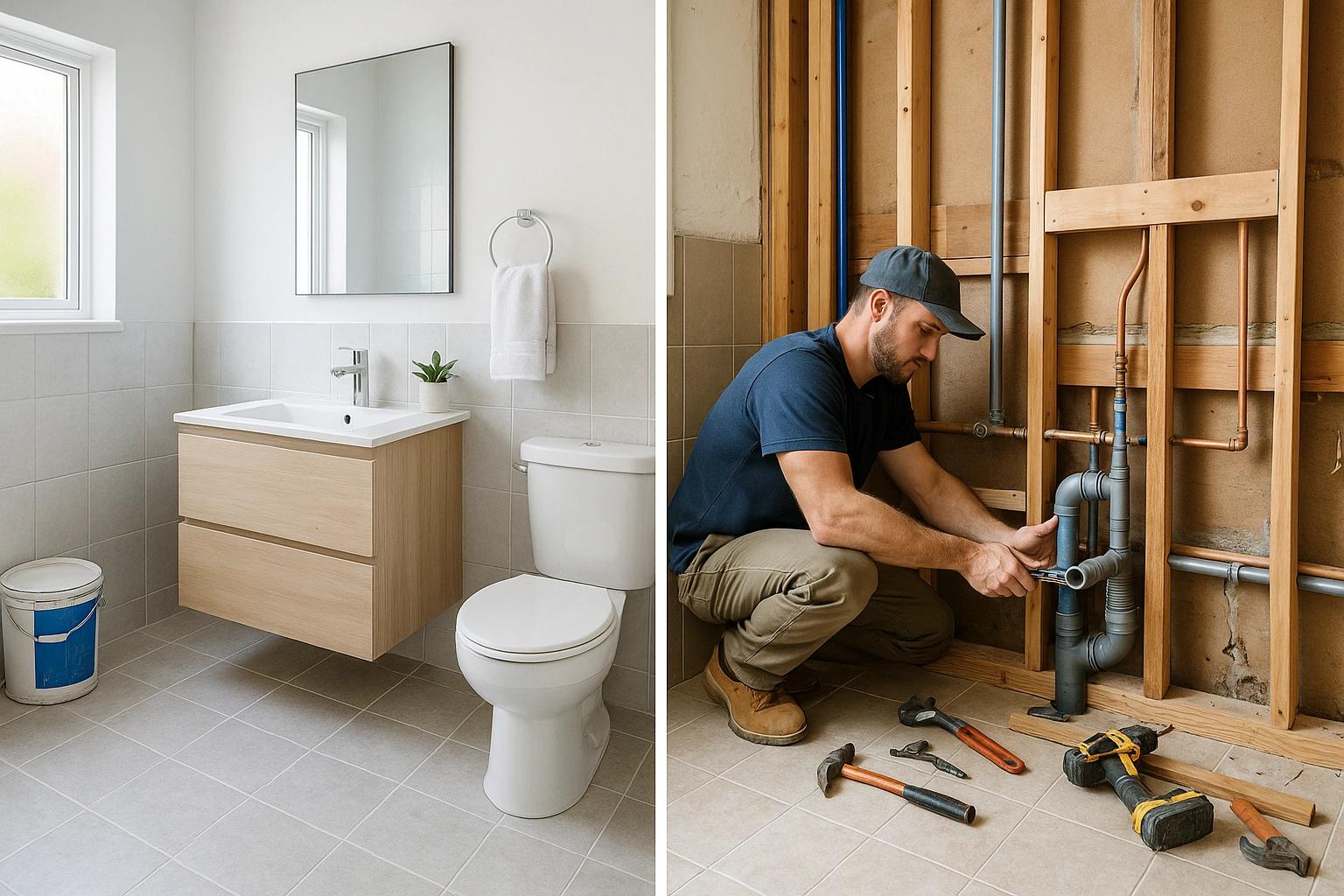
Cosmetic Refresh vs. Structural Overhaul
A cosmetic refresh is the renovation equivalent of a 'paint and polish'. You're updating all the surfaces and fixtures you can see, but you're not messing with the fundamental layout of the room. This approach is much quicker, less disruptive, and far friendlier on the wallet.
On the other hand, a structural overhaul means you're changing the bathroom's very bones. This is where you start moving walls, relocating plumbing, and completely reconfiguring the space to create a better flow or add new features. The results can be spectacular, but this level of complexity adds significant cost and time to the project.
Here’s a simple breakdown of what each typically involves:
Cosmetic Refresh (Lower Scope):
- Keeping the toilet, shower, and vanity in their original spots.
- Swapping out old tapware and showerheads for modern fixtures.
- Installing a new pre-made vanity right where the old one was.
- Retiling the floors and walls.
- A fresh coat of paint.
Structural Overhaul (Higher Scope):
- Moving plumbing lines to relocate a toilet or shower.
- Knocking down a non-load-bearing wall to make the space bigger.
- Converting a bathtub into a spacious walk-in shower.
- Adding or enlarging a window for more natural light.
- Running new electrical wiring for extra lighting or power points.
Deciding to keep your existing plumbing layout is one of the single most effective ways to control your budget. The moment you decide to move a fixture, you bring in plumbers and carpenters for extensive work, which instantly sends your labour costs climbing.
Calculating Costs Per Square Metre
To give you a more tangible way to budget, builders often talk in terms of cost per square metre. It’s a handy metric that helps translate the size and complexity of your job into a reliable cost estimate. The rate will vary depending on the level of finishes you choose, basic, mid-range, or luxury.
This gives you a great benchmark for planning. A basic, no-frills renovation usually lands between $2,000 to $3,000 per square metre. A solid mid-range project is typically in the $3,000 and $4,500 per square metre bracket. For those premium, high-end renovations, you could be looking at $4,500 to $6,000 or more per square metre.
So, as a quick example, a 5-square-metre bathroom getting a mid-range makeover would likely cost somewhere between $15,000 and $22,500. We'll dive deeper into what defines these different renovation tiers and how various factors can impact your final cost.
Real-World Melbourne Scenarios
Let's bring this all back down to earth and look at three common bathroom types found in Melbourne homes. Seeing how the scope affects the cost in different-sized spaces really shows how quickly the final quote can shift based on your ambition.
Scenario 1: The Compact Powder Room (Approx. 2-3 m²)
- Cosmetic Refresh: You keep the small vanity and toilet right where they are. You just replace the fixtures, hang a new mirror, and retile the floor. It's a quick, high-impact update that won't break the bank.
- Structural Overhaul: Even a tiny change, like moving the toilet to the opposite wall, requires a plumber to run new pipes through the floor and walls. That instantly ramps up the project's complexity and cost.
Scenario 2: The Standard Family Bathroom (Approx. 5-8 m²)
- Cosmetic Refresh: You swap the old shower-over-bath combo with a new one in the exact same spot. You install a new vanity, update all the tiles and tapware, but the layout stays completely untouched.
- Structural Overhaul: You decide to ditch the bathtub entirely to create a huge, luxurious walk-in shower. This means re-waterproofing a much larger area and moving the shower drain and taps, adding thousands to your labour bill.
Scenario 3: The Spacious Ensuite (Approx. 9+ m²)
- Cosmetic Refresh: Your ensuite has a double vanity, a shower, and a toilet. You simply replace all the fixtures and tiles but leave everything where it is. It's a straightforward update that still feels brand new.
- Structural Overhaul: You've always dreamed of a freestanding bathtub. To make that happen, you'll need to run new plumbing lines for hot and cold water and a new waste pipe, turning what could have been a simple update into a major construction project.
Ultimately, the scope you choose has the final say on your bathroom renovation cost. Having a clear vision of whether you need a simple refresh or a complete reimagining is crucial before you even start talking to builders.
Planning For Hidden Costs and Unexpected Issues
No matter how carefully you map out your bathroom renovation, there’s always a chance of hitting a few surprise detours. Think of your initial quote as the perfect itinerary for a road trip, it covers all the known stops and planned expenses. But what about that unexpected flat tyre or the must-see scenic route that wasn't on the map?
Planning for these hidden costs isn’t a sign that your budget is flawed; it’s the mark of a smart, experienced renovator who knows what to expect.
These surprises almost always lurk behind the walls or under the floorboards, completely out of sight until the demolition crew gets to work. A tiny, slow leak that’s gone unnoticed for years could have caused serious water damage to the timber frame. Or, pulling up those old tiles might reveal a subfloor that's literally crumbling away. These are the kinds of show-stopping problems that have to be fixed before anything new can be built, which inevitably adds to your overall bathroom renovation cost.
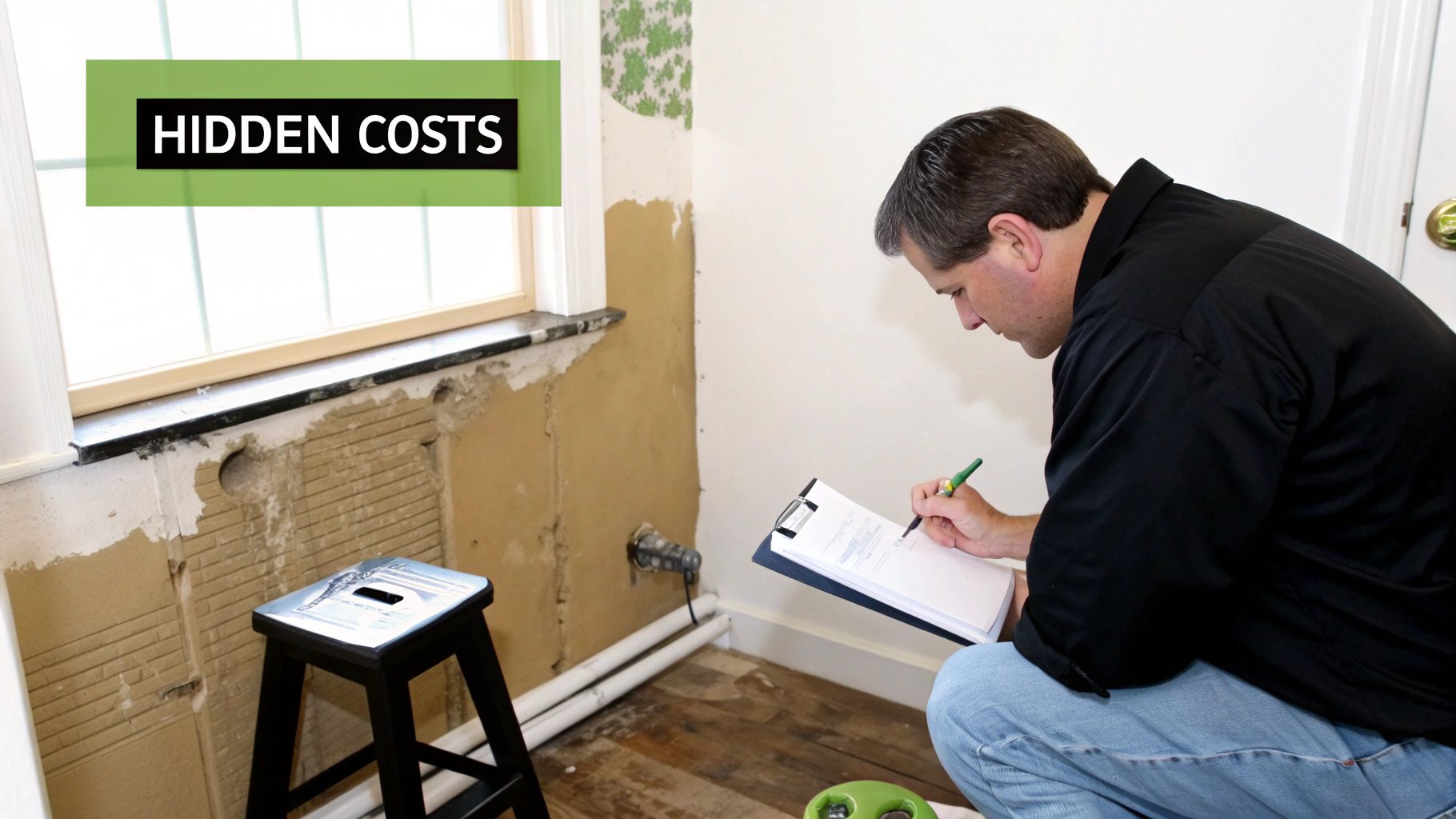
Common Unforeseen Expenses
Every project has its own quirks, but in our experience, especially with older Melbourne homes, certain hidden costs tend to pop up more often than others. Knowing what these potential budget-busters are from the get-go helps you prepare for them, both financially and mentally.
Here are some of the usual suspects we come across:
- Water Damage Repairs: This is the number one culprit, hands down. Years of a slow-leaking pipe or a failing shower seal can lead to rotted floor joists and wall studs. This isn't just a small fix; it often involves structural repairs before any waterproofing or tiling can even be considered.
- Asbestos Removal: If your home was built or touched up before the 1990s, there’s a real chance asbestos is hiding in the wall sheeting, old vinyl flooring, or even insulation. Safe, professional removal by a licensed expert is a legal must, and a non-negotiable extra expense.
- Outdated Plumbing or Wiring: Once the walls are open, a plumber or electrician might find old, non-compliant systems that simply aren't safe by today's Australian standards. Bringing everything up to code is essential for your family's safety.
- Council Permits and Fees: A simple cosmetic facelift probably won't need one. But if you’re moving walls or changing the plumbing layout significantly, you'll likely need a building permit from your local Melbourne council, which comes with its own fees and potential delays.
- Waste Disposal: Getting rid of all that old tile, plaster, and timber isn't free. Hiring a skip bin and paying for tip fees can easily add several hundred dollars to the final invoice.
The Importance of a Contingency Fund
This is where a contingency fund becomes the MVP of your entire project. It’s not just "extra" money you might spend; it’s a dedicated slice of your budget set aside specifically for these kinds of unforeseen issues. Think of it as your renovation insurance policy, it provides peace of mind and keeps a small problem from turning into a full-blown crisis.
As a rule of thumb, a contingency fund of 10-20% of your total project cost is the industry standard. For a $25,000 renovation, this means having an extra $2,500 to $5,000 ready to go. It’s the buffer that turns a potential disaster into a manageable bump in the road.
Having this fund means that when a problem does pop up, you can deal with it properly without having to cut corners on the beautiful tiles or tapware you had your heart set on. Instead of a stressful scramble for cash, you can simply approve the necessary fix and keep the project moving forward. And if you’re one of the lucky ones who doesn't need to dip into it? Well, you’ve just got a nice little surplus at the end of the job.
Smart Ways to Reduce Your Melbourne Bathroom Renovation Bill
A tight budget doesn't mean you have to give up on your dream bathroom. The secret to managing your bathroom renovation cost isn't about cutting essential corners; it's about making clever choices that deliver a high-end look without the eye-watering price tag.
Thinking strategically about where you spend and where you save is the key. It's a balancing act between immediate savings and smart, long-term investments. Get it right, and you’ll create a stunning, functional space that not only looks great today but also adds lasting value to your Melbourne home.

Embrace Smart Swaps for Materials
One of the most effective ways to get your budget under control is by making "smart swaps" with your materials. This simply means finding high-quality alternatives that mimic the appearance of luxury finishes for a fraction of the cost. You can absolutely achieve an expensive look without emptying your wallet.
Consider these popular and practical swaps:
- Vanity Tops: Instead of splurging on natural stone like marble or granite, explore the latest premium laminate or engineered stone options. Modern designs offer incredibly realistic stone patterns that are durable and much more affordable.
- Tiles: Porcelain tiles are a fantastic stand-in for natural stone. They can be made to look almost identical to marble or travertine but are often more durable, less porous, and significantly cheaper per square metre.
- Fixtures: You don't always need the top designer brand for your tapware and showerheads. Many reputable mid-range brands offer stylish, high-quality fixtures in modern finishes like matte black or brushed brass that perform just as well.
Keep Your Existing Layout
This is arguably the single biggest money-saver in any bathroom renovation. The moment you decide to move the toilet, shower, or vanity, you introduce a huge amount of complexity and cost.
Relocating these fixtures requires extensive work from plumbers and potentially carpenters to re-route pipes and wastes through your walls and floor. By keeping the plumbing in its current location, you completely eliminate these significant labour costs. You can still achieve a dramatic transformation with new tiles, fixtures, and a modern vanity, all while working with the layout you already have.
A "rip-and-replace" renovation, where you swap old for new in the same spots, can save you thousands in labour costs. It’s the most direct path to a fresh, modern bathroom without the expense of a full structural overhaul.
Invest Where It Matters Most
While it’s tempting to save money everywhere you can, some parts of a bathroom renovation are terrible places to cut corners. Investing wisely in the "unseen" elements of your bathroom is actually a long-term saving strategy, as it prevents catastrophically expensive repairs down the track.
Think of it as building a strong foundation for your home; you wouldn’t use cheap materials there. The same logic applies to your bathroom’s core infrastructure.
Non-Negotiable Investments:
- Waterproofing: Faulty waterproofing is the number one cause of structural damage in bathrooms. Always insist on a professionally applied, compliant waterproof membrane. The cost of fixing a leak that has rotted your home's frame far outweighs the initial investment in getting this step done right.
- Ventilation: Proper ventilation is your best defence against mould and mildew. A high-quality exhaust fan removes moisture from the air, protecting your paint, cabinetry, and health. This small upfront cost prevents recurring maintenance and potential health issues.
For homeowners looking to stretch their funds further, our detailed guide offers more top tips for affordable bathroom renovations on a tight budget, covering everything from sourcing materials to timing your project.
Ultimately, shrinking your renovation bill is all about making informed decisions. By pairing affordable cosmetic upgrades with crucial infrastructure investments, you can create a beautiful, durable, and budget-friendly bathroom that you’ll love for years.
Why Do Renovation Quotes Vary So Much Across Melbourne?
So you’ve got a few quotes for your bathroom project, and the numbers are all over the shop. One quote seems reasonable, the next is miles higher. What gives? How can the exact same renovation cost significantly more in South Yarra than it might out in Werribee?
This isn’t just random pricing, a postcode can have a real, measurable impact on your total bathroom renovation cost. Think of it like a meal at a restaurant: the same steak costs more in a prime CBD location than in a suburban pub because of higher overheads. It’s the same principle.
Understanding these regional factors is the key to making sense of the quotes you receive and setting a truly accurate budget. The simple truth is that where you live directly influences the price of labour, materials, and just getting the job done.
The Inner-City Premium
One of the biggest drivers of this price difference is the cost of skilled labour. Good tradies, your plumbers, electricians, and tilers, often have higher rates for jobs in the inner-city and affluent eastern suburbs.
This premium isn't just because they can. It’s a real reflection of longer travel times battling traffic, much higher demand for their skills in those areas, and the general cost of running their business.
Then there are the logistical headaches. These are the things you might not think about, but they add up quickly.
- Site Access: A narrow, one-way street in Fitzroy with no driveway makes getting materials and a skip bin on-site a nightmare compared to a home in a spacious outer-suburban estate.
- Parking: Trying to find a park for a ute and trailer in Prahran is tough. Limited or paid parking for trades can easily add hundreds of dollars to your labour bill over a multi-week project.
- Apartment Living: Renovating in a high-rise isn't straightforward. It involves navigating tricky body corporate rules, booking and using lifts for all materials and rubbish, and working within restricted hours. All of this adds complexity and time.
Council Fees and Other Local Quirks
On top of labour and logistics, every local council has its own set of rules and fee structures. The cost of a building permit, inspection fees, and even waste disposal can differ from one municipality to another, adding another layer of variation to your final quote.
This isn't just a Melbourne thing, either. Across Australia, major cities and their more desirable postcodes command higher prices for renovations. For example, some Sydney suburbs see higher quotes simply due to the intense competition for good trades in those specific areas. You can explore more about these regional differences in renovation pricing and why they happen.
The quote you receive is a reflection of the total effort required to complete your project. It’s not just about the bathroom itself, but the entire context of where that bathroom is located.
At the end of the day, a higher quote for an inner-city reno isn't about being overcharged. It’s an honest calculation of the increased time, complexity, and operational costs involved. Recognising this helps you compare quotes fairly and understand the genuine value behind the numbers.
Got Questions About Your Bathroom Reno Costs? Let's Clear Them Up.
As you start to nail down your budget, a few key questions always pop up. Getting straight answers to these common queries will give you the confidence to move forward, knowing you've thought of everything for your bathroom renovation cost.
How Long Does a Typical Bathroom Renovation Take?
For a standard, soup-to-nuts bathroom renovation in Melbourne, you should block out two to four weeks on your calendar. This timeframe generally covers everything from the demolition crew arriving to the final wipe-down and polish.
Now, that timeline can definitely stretch. If you've ordered a stunning custom-made vanity or your plans involve moving walls around, you'll need to factor in extra time. It's also not uncommon to uncover a few surprises once the walls are open, think old water damage or plumbing that's seen better days. These things need to be fixed properly, which can add to the schedule.
Do I Need a Council Permit for My Renovation?
This is a big one, and the short answer is: it depends entirely on what you're planning.
Good news for most: you generally do not need a permit for simple cosmetic facelifts. If you're just swapping out old tiles, giving the walls a fresh coat of paint, and replacing fixtures in their original spots, you can usually get started without ringing the council.
However, the moment your project involves changing the building's structure or its core services, a permit is almost certainly required.
This includes work like:
- Moving walls, even if they aren't load-bearing.
- Making significant changes to the plumbing layout (like shifting the toilet to the other side of the room).
- Altering the electrical wiring beyond just swapping a light fitting.
When in doubt, the safest bet is always to have a chat with your builder or your local Melbourne council before any work begins.
Is It Cheaper to Renovate or Build a New Bathroom?
In almost every scenario, renovating your existing bathroom is the more cost-effective way to go. The main reason is simple: you're working with the home's existing bones. All the essential infrastructure, the plumbing, the drainage, the electrical lines, is already right there where you need it.
Building a brand-new bathroom from scratch is a much bigger and more expensive undertaking. It means running all those services to a completely new part of the house, which sends your labour and material costs skyrocketing.
Ready to get a clear, transparent quote for your project? The team at Smarter Home Renovations has been delivering beautiful, on-budget bathrooms across Melbourne for over 20 years.