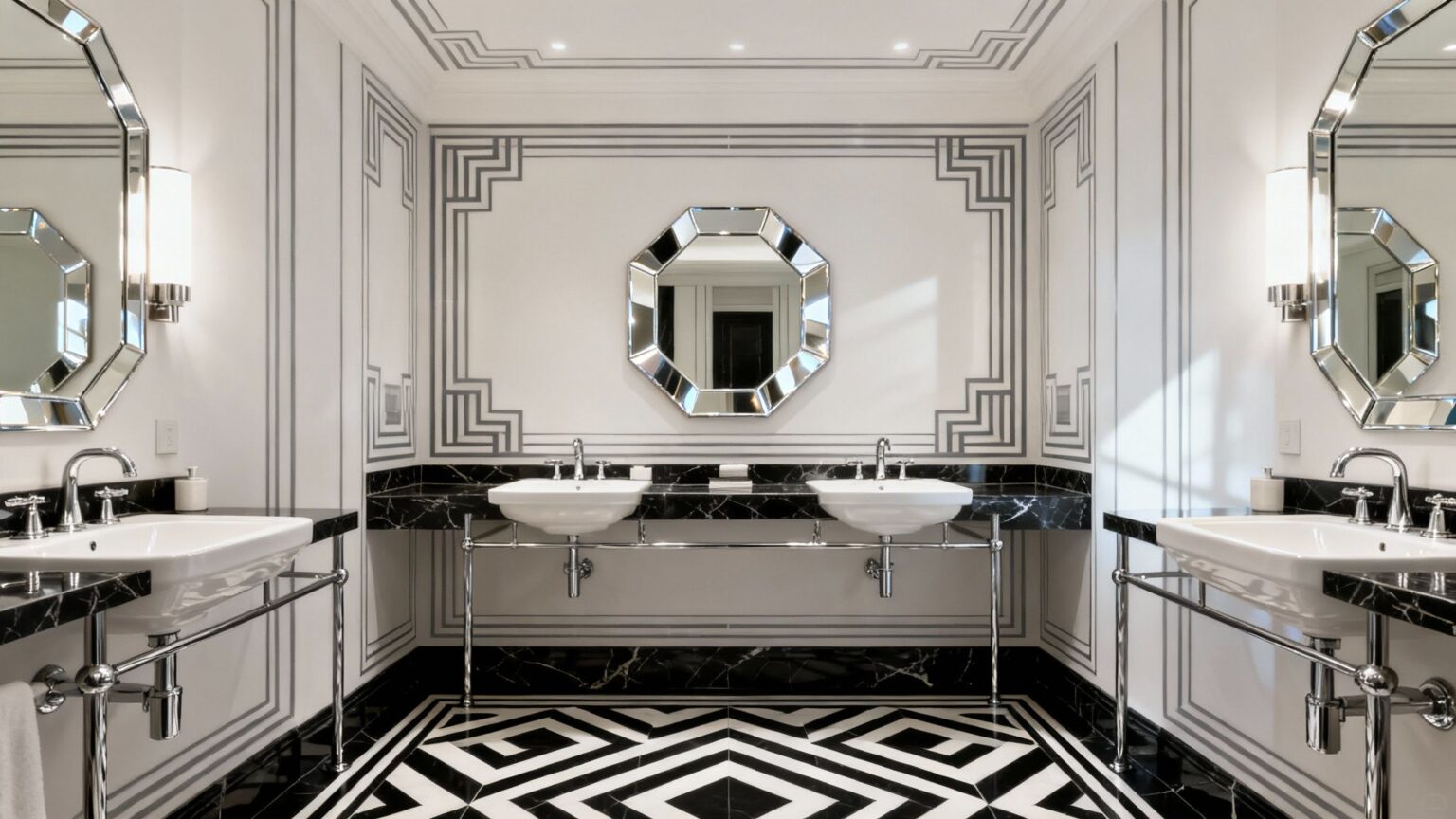
Planning an Art Deco bathroom? Our guide covers materials, iconic fixtures, lighting, and finishing touches for an authentic result.
An Art Deco bathroom is a beautiful contradiction – a space that marries bold, unapologetic glamour with streamlined, modern functionality. It’s all about strong symmetry, striking geometric patterns, and a love for luxurious materials, transforming a purely practical room into a statement of opulence.
Capturing the Spirit of Art Deco in Your Bathroom

Before you even think about picking tiles, it’s crucial to get inside the mindset of the Art Deco era. This isn’t just about slapping on a few bold patterns. It’s about channeling the glamour of the 1920s and ‘30s, a time bursting with optimism and a fascination for sleek, industrial design. Think grand hotels and golden-age Hollywood movie sets, distilled into your own personal sanctuary.
At its core, the style is a celebration of both order and luxury. The whole look is built on a few key principles that work together to create a bathroom that feels both lavish and meticulously planned out.
- Strong Symmetry: Balance is everything. Picture a vanity perfectly centred on a wall, flanked by matching sconces, or a freestanding tub that acts as an undeniable focal point.
- Geometric Precision: Art Deco is famous for its love affair with sharp lines and repeating motifs. Think chevron and fan patterns, stepped forms, and bold, angular shapes.
- Luxurious Materials: This style never shies away from the finer things. Polished marble, gleaming chrome, rich timbers, and high-gloss lacquered finishes are the absolute cornerstones of the look.
If you really want to dive deep into the movement, it’s worth exploring the core principles of the Art Deco interior design style.
An Australian Perspective on Art Deco
Here in Australia, Art Deco really took hold in the interwar years, between 1918 and 1939. It was a period of embracing modernism, and bathrooms started becoming more hygienic and functional. In cities like Melbourne and Sydney, Art Deco homes introduced features we now take for granted, like terrazzo sink benches and built-in cabinetry, blending everyday practicality with the new streamlined aesthetic.
A successful Art Deco bathroom is more than just a collection of period pieces; it’s a cohesive vision. Every single element, from the tapware to the floor tiles, should contribute to a feeling of deliberate, sophisticated glamour.
Getting this foundation right is the first real step towards a successful bathroom renovation. If you’re lucky enough to be working with an original period home, getting some expert advice can make all the difference. Working with a heritage architect in Melbourne can help you honour the soul of the home while seamlessly integrating today’s comforts.
This initial planning stage is where the magic happens, setting you up for a renovation that’s not just stylish, but thoughtfully executed from the ground up.
Building Your Palette with Essential Materials and Colours
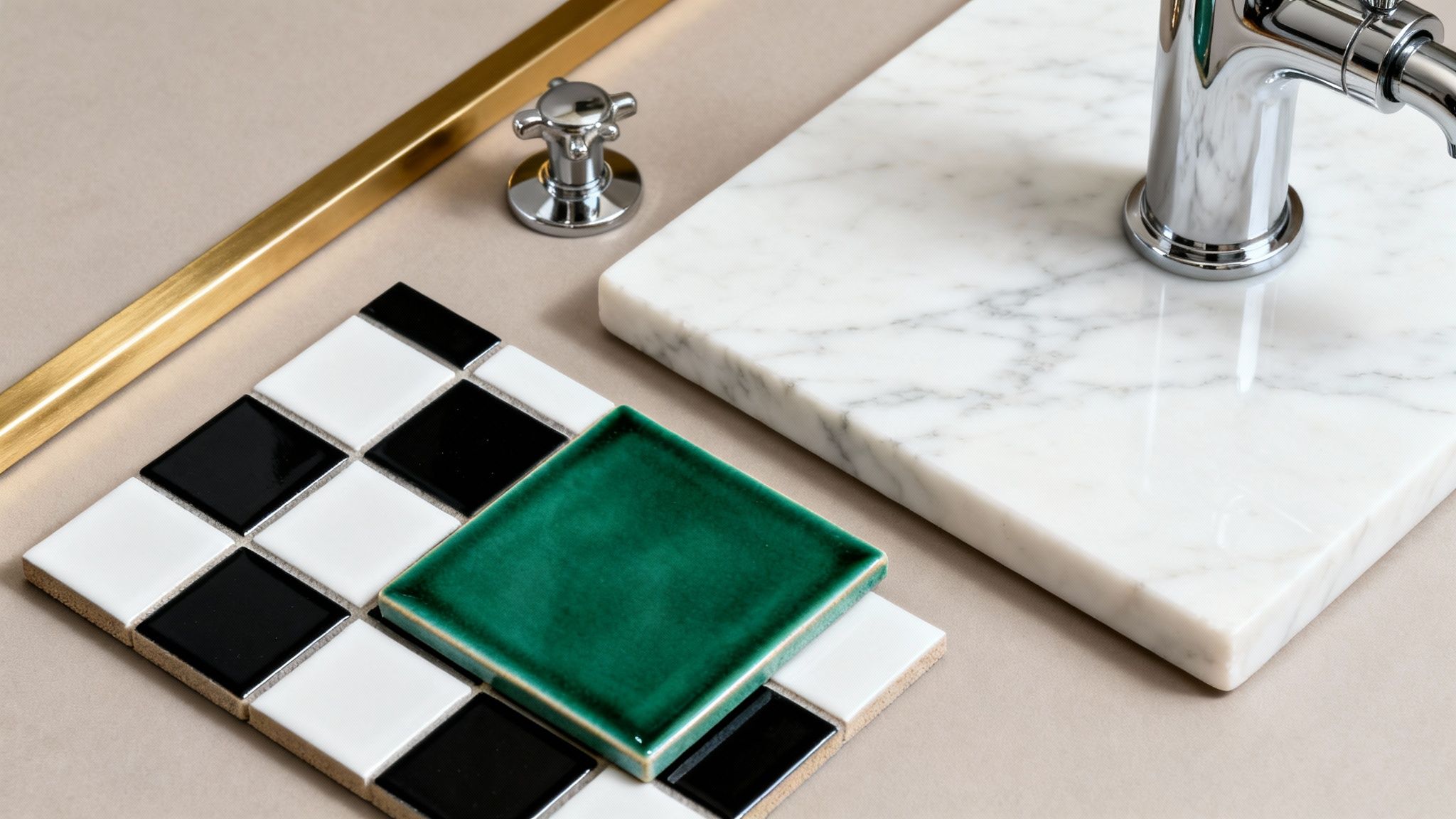
This is where the soul of your Art Deco bathroom really comes to life. Picking out the colours and materials is the moment your vision starts shifting from ideas in your head to the real surfaces that will define the space.
A truly successful palette is all about contrast, texture, and a fearless attitude. It’s a mix of strong monochrome foundations punctuated by glamorous, vibrant accents.
The classic black-and-white pairing is an absolute hallmark of the style.
It gives you a powerful, graphic base that screams sophistication and immediately sets the tone of the era. But don’t just stop at a simple checkerboard floor.
You can use these contrasting tones to create strong borders, intricate mosaic patterns, or even bold vertical stripes to give the room a sense of height and drama. This high-contrast look creates a visual rhythm that is pure Deco.
The Power of Jewel Tones
While a monochrome scheme is a brilliant place to start, authentic Art Deco design was never one to shy away from colour. Rich, saturated jewel tones were a signature move, used to inject personality and a serious dose of opulence. Introducing these colours stops the design from feeling too stark and adds a layer of bespoke luxury.
Think about adding one of these for real impact:
- Emerald Green: Perfect for a feature wall of glazed tiles or as the colour for a lacquered vanity. It looks incredible next to both chrome and gold fixtures.
- Sapphire Blue: A deep, inky blue can create a wonderfully moody and immersive atmosphere, especially effective in a powder room or as a bold accent in a larger bathroom.
- Rich Burgundy or Ruby Red: These warm, dramatic shades can be brought in through textiles like plush towels or a Roman blind, adding a soft yet powerful touch.
These colours provide a fantastic counterpoint to the sharp, clean lines of geometric patterns, creating a space that feels balanced and visually exciting. Don’t be afraid to go bold, a single, well-chosen hue can elevate the entire room.
Selecting Timeless Materials
The feel of an Art Deco bathroom is just as crucial as how it looks.
The style was all about celebrating both natural and man-made materials, prized for their shine, durability, and modern sensibility. Your choices here will have a massive impact on the final atmosphere.
Marble, especially in black or white with dramatic veining, is a go-to material for floors and countertops. It just exudes luxury and provides the perfect canvas for metallic fixtures.
When it comes to tapware and hardware, polished chrome is the most historically accurate choice, reflecting the era's love for anything sleek and industrial.
Polished nickel gives you a slightly warmer alternative, while unlacquered brass can bring in a touch of aged glamour.
The real secret is to layer your textures. Combine the smooth, cool feel of marble with the gleam of polished metal and the glossy finish of ceramic tiles. This interplay between surfaces is what gives the design its depth and character.
Here in Australia, our own take on Art Deco saw a huge focus on wall tiles, which really took off in the late 1920s. Ceramic tiles with bold geometric patterns and vibrant glazes in black, cream, blue, and green became a signature feature. In fact, conservation archives estimate that over 30% of heritage-listed Art Deco buildings in cities like Melbourne and Sydney still have their original tiling, which is a real testament to its lasting quality.
Making the right tile selection is fundamental to the entire project. For a deep dive into navigating the huge variety of options out there, have a look at our complete guide on how to choose bathroom tiles. It'll help you balance the look, durability, and budget to get the perfect result.
Art Deco Material Selection Guide
Choosing the right materials is about balancing the classic Art Deco aesthetic with the practical demands of a modern Australian bathroom. This table breaks down the most common choices to help you decide what's right for your project and budget.
| Material | Typical Use | Aesthetic & Style | Average Cost (AU) |
|---|---|---|---|
| Marble | Floors, Countertops, Wall Cladding | Luxurious, classic, elegant with natural veining | $$ (High-End) |
| Ceramic Tile | Walls, Floors, Splashbacks | Versatile, glossy, available in geometric patterns & colours | $ (Mid-Range) |
| Polished Chrome | Tapware, Hardware, Lighting | Sleek, reflective, modern, quintessentially Art Deco | $ (Mid-Range) |
| Polished Nickel | Tapware, Hardware, Shower Frames | Warmer tone than chrome, sophisticated, classic feel | $$ (High-End) |
| Terrazzo | Floors, Benches, Shower Bases | Composite, speckled appearance, durable and seamless | $$ (High-End) |
Ultimately, this material palette acts as your roadmap. By balancing bold colours with these timeless, durable materials, you can craft a space that feels both historically authentic and perfectly suited for modern life.
Selecting Iconic Fixtures and Fittings
With your colour palette and materials sorted, it’s time to layer in the details that truly bring the Art Deco style to life: the fixtures and fittings. In this era, these elements were never just functional afterthoughts. They were sculptural, deliberate statements that gave the room its personality. Getting the vanity, basin, and tapware right is absolutely crucial for capturing that authentic 1920s and ‘30s spirit.
The vanity or basin area is almost always the room's main focal point, so it deserves some serious thought. You can go down one of two classic paths here. The first is the elegant pedestal sink, which often features strong, octagonal shapes or subtle stepped details at its base. It’s a fantastic space-saving choice that feels light and authentic, perfect for keeping a smaller bathroom feeling open and airy.
Your other option is a more substantial built-in vanity. These pieces are designed to echo the bold, geometric forms of Art Deco furniture, often flaunting stepped silhouettes, sleek waterfall edges, or high-gloss lacquered finishes. This approach also brings valuable storage into the mix, a definite plus for modern living.
Choosing Your Vanity Style
Even though the Great Depression put a damper on some of the style's initial exuberance in Australia, the 1930s still saw innovations like built-in vanities become more common. It’s a testament to their robust construction and timeless appeal that today, restoration trends show 15-25% of homes in heritage suburbs still have original or restored Art Deco bathroom elements.
When you're hunting for the perfect vanity, keep an eye out for:
- Geometric Forms: Look for pieces with clean, angular lines, stepped profiles, or those beautifully curved waterfall edges.
- Luxurious Materials: Think marble or granite tops, high-gloss timber veneers, or lacquered surfaces in black, white, or a deep jewel tone.
- Sleek Hardware: Cabinet handles should be simple and geometric. Long, tubular chrome bars or chunky square knobs are ideal.
Finding the right piece for a compact space can feel like a challenge, but plenty of clever options are out there. To help you narrow down the search, we’ve put together a guide on selecting a small bathroom vanity with a sink that nails the blend of style and function.
Perfecting Tapware and Metal Finishes
The metal finishes you choose are the threads that tie the entire room together. While brass was certainly used, the absolute quintessential Art Deco finish is polished chrome. Its cool, brilliant shine perfectly captured the era's fascination with industrial progress and streamlined design. If you find chrome a bit too stark, polished nickel offers a slightly warmer, softer alternative that works just as well.
The shape of your tapware is just as important as its finish.
Steer clear of soft, rounded, or ornate Victorian-style designs. Instead, you want to look for:
- Angular Spouts: Taps with sharp, geometric spouts feel both authentic and surprisingly modern.
- Cross-Head Handles: You can't go wrong with classic cross-head or simple lever handles, especially those with black or white ceramic details.
- Stepped Detailing: Keep an eye out for subtle stepped patterns on the base of the taps or handles to echo the broader design motifs.
A key takeaway here is consistency. Make sure all your metalwork, from the tapware and shower fittings to the light fixtures and cabinet hardware, is in the same finish. It’s this attention to detail that creates a cohesive and intentionally designed space.
For renovators wanting to create a truly unique centrepiece, a custom vanity is a fantastic project. If you're feeling hands-on and want to personalise your Art Deco space, a guide on how to build a vanity can give you the inspiration and practical steps needed to create a bespoke piece that fits your bathroom perfectly.
Selecting the Right Bathtub
The bathtub is another golden opportunity to make a grand statement. A classic clawfoot tub can work beautifully, but opt for one with simple, clean feet rather than the overly ornate styles from the Victorian era. When positioned in the centre of the room, it becomes an instant focal point that just oozes old-world glamour.
For a look that feels more streamlined and true to the later part of the era, though, a built-in tub is an excellent choice. Imagine a crisp white tub surrounded by bold, contrasting tiles, like a sharp black frame. This creates a strong, graphic look that is pure Art Deco. Plus, this approach gives you practical ledge space for toiletries, blending high style with everyday usability. Whichever you choose, just make sure its lines complement the geometric precision you've established elsewhere in the room.
Designing Your Layout and Lighting Scheme
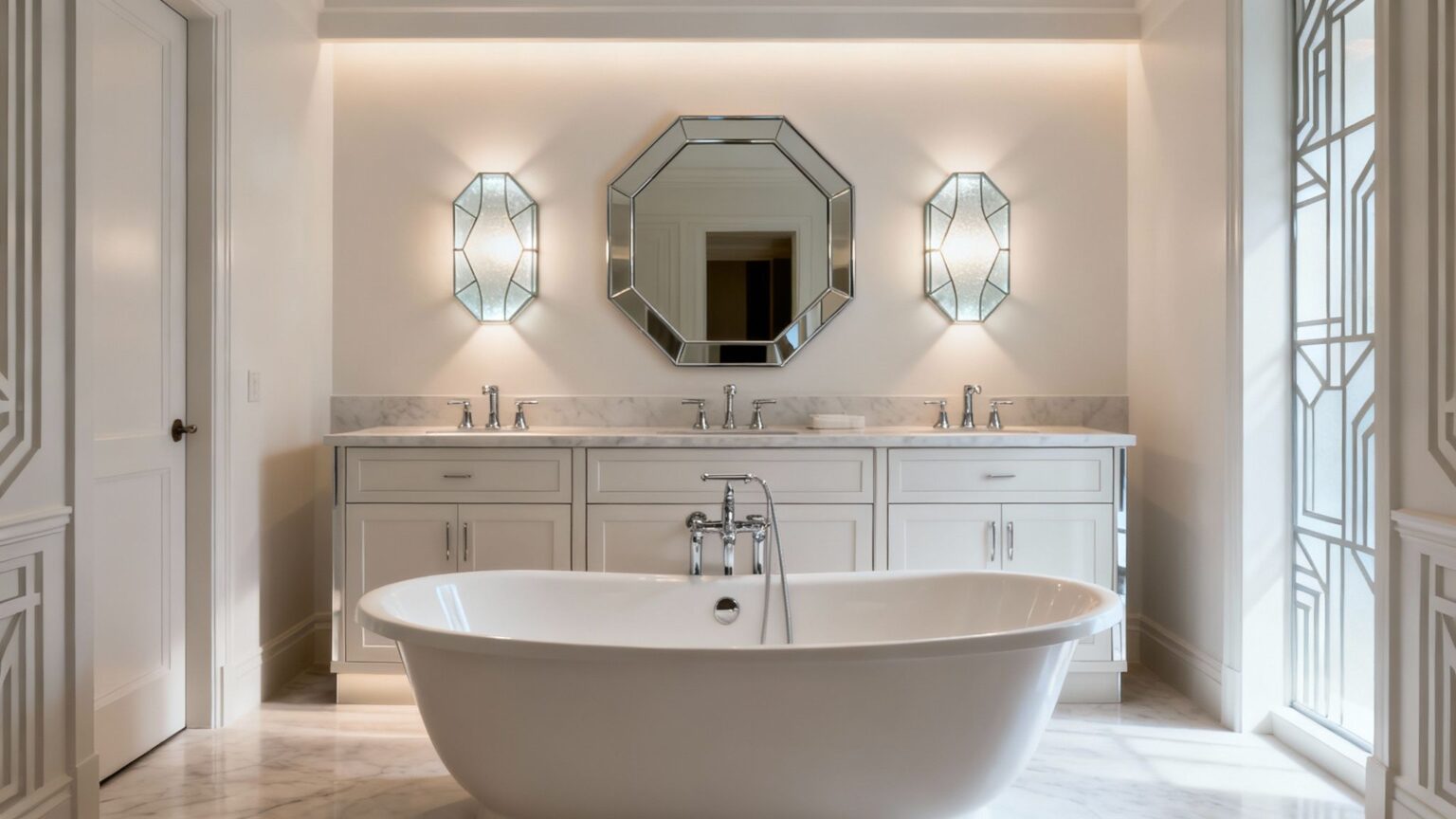
This is where the magic really happens. A thoughtful layout and dramatic lighting are what elevate an Art Deco bathroom from just a collection of nice pieces into a truly immersive experience. It's about creating the underlying structure and atmosphere that defines the whole room. The goal? A space that feels balanced, functional, and undeniably glamorous. Symmetry is your foundation, and light is your final, artistic touch.
The entire layout should hinge on a powerful sense of order. This style absolutely thrives on symmetry to create that feeling of deliberate grandeur. Start by figuring out the room’s main axis and establishing a clear focal point. This is the star of the show, the first thing that catches your eye when you walk in.
For many bathrooms, this will be a stunning vanity and mirror combination, perfectly centred on the main wall. Alternatively, a freestanding bathtub positioned under a window or against a feature wall makes for an incredible centrepiece. Once you have this anchor, you can arrange the other elements, like the toilet and shower, to support this balanced composition instead of competing with it.
Crafting a Symmetrical and Functional Space
Now, symmetry doesn't mean you need a perfect mirror image of every single element. It’s more about achieving a satisfying visual balance. For instance, if your vanity is the focal point, flank it with identical wall sconces. If a built-in tub is the hero, make sure the tilework surrounding it is perfectly symmetrical to frame it beautifully.
This principle goes for the floor plan, too. You’re aiming for clean, uninterrupted lines and logical pathways. Get rid of any awkward angles or crowded corners that disrupt the flow. An Art Deco bathroom should feel organised and intentional, never cluttered.
Here are a few layout strategies I've seen work wonders:
- Vanity as the Centrepiece: Place a striking vanity directly opposite the doorway for immediate impact. Frame it with elegant wall lights and a bold geometric mirror to really solidify its importance.
- Bathtub as a Sanctuary: Position a freestanding tub on a slightly raised plinth or in a recessed alcove. This simple trick gives it a real sense of occasion.
- Zoning with Tile: Use contrasting tile patterns on the floor to subtly define different zones, like the shower area or the space around the vanity. It’s a clever way to add another layer of geometric order.
Layering Light for Drama and Ambience
Lighting in an Art Deco bathroom is so much more than just being able to see. The fixtures themselves are sculptural pieces that are a huge part of the overall look. Layering different types of light is the key to creating a space that’s functional for daily grooming and atmospheric for a relaxing soak at the end of the day.
First up is your task lighting. This is usually around the vanity mirror. The classic Art Deco choice is a pair of vertical sconces on either side of the mirror. This placement gives you even, shadow-free light on your face, which is far better than a single light from above. Look for fixtures with strong geometric shapes, frosted or milk glass shades, and finishes in polished chrome or nickel.
Next, you need ambient lighting to fill the room with a soft, overall glow. A central ceiling fixture, maybe a semi-flush mount with a stepped design or a simple frosted glass globe, can provide this general light. If you have the ceiling height, a small, elegant chandelier can add a serious touch of luxury.
Finally, bring in some accent lighting to highlight specific features. A small, directional spotlight aimed at a piece of artwork or the dramatic veining in a marble wall adds a whole new layer of sophistication. Dimmers are non-negotiable here; they let you switch the mood from bright and energising in the morning to low and intimate in the evening.
Can I Use LED's
The best lighting schemes seamlessly blend vintage style with modern tech. You can easily find LED bulbs that fit period-style fixtures, giving you the classic look with 21st-century energy efficiency and longevity. This makes sure your glamorous bathroom is also practical and sustainable.
With the bones of your Art Deco bathroom now in place, it's time to layer in the details that really make the space sing. These finishing touches are what separate a well-designed room from a truly captivating one. Think of them as the jewellery of the bathroom – those carefully chosen accessories that complete the look and pull your whole vision together.
This stage is all about curation. Every mirror, towel rail, and light switch plays a part in the story you're telling. The goal is to pick pieces that feel authentic and elevate the theme without making the space feel cluttered. It’s a delicate balance between opulence and restraint, where every single accessory has an important role to play.
The Mirror as a Centrepiece
In any Art Deco bathroom, the mirror is arguably the most critical accessory you'll choose. It's so much more than just a reflective surface; it's a sculptural piece that can define the entire vanity area. You'll want to steer clear of simple, frameless rectangles and instead embrace the bold geometry that is such a hallmark of the era.
Your mirror needs to make a statement. Look for distinctive shapes that echo the patterns and lines you’ve already used elsewhere in the room.
- Octagonal or Hexagonal Frames: These angular shapes are pure Art Deco. They create a powerful, symmetrical focal point, especially above a pedestal sink or a streamlined vanity.
- Fan-Shaped or Sunburst Designs: These motifs scream 1920s glamour. They often feature stepped or layered elements that catch the light beautifully.
- Bevelled Edges: I’d say this is a non-negotiable detail. A bevelled edge adds a real touch of sophistication and refracts light, giving the mirror depth and an almost jewel-like quality.
The frame material is just as important. Polished chrome or black lacquer will give you a sharp, graphic look, while a simple, frameless design with a deep bevel offers a more understated elegance.
Selecting Cohesive Hardware and Accessories
Consistency is absolutely key when it comes to the smaller metal elements. Every piece of hardware – from your tapware and towel rails to the toilet roll holder and even the cabinet knobs – should share the same finish. This is what creates that cohesive, polished look that makes a space feel intentionally and professionally designed.
Polished chrome is the most historically accurate choice, but polished nickel can offer a slightly warmer tone if that suits your palette better. When you're selecting these items, look for the same design principles you've applied everywhere else: clean lines, stepped details, and simple geometric forms. It's best to avoid anything overly ornate or fussy, as it will clash with the streamlined aesthetic you're going for.
Think beyond the standard fixtures. Something I always recommend is looking at details like Art Deco-style switch plates or outlet covers. These small, often overlooked elements can make a surprisingly significant impact on the room’s authenticity.
Incorporating Textiles and Artwork
Soft furnishings and art are your chance to inject some personality and another layer of texture or colour. When you're choosing towels, go for high-quality cotton in either a crisp white to contrast with darker tiles or a rich jewel tone like emerald green or deep burgundy to echo your accent colours. A simple geometric border on the towels can be a fantastic, subtle nod to the theme.
For window treatments, a simple Roman blind in a solid colour or a subtle geometric pattern works wonderfully. It gives you privacy without the fussiness of curtains, which can feel a bit out of place in a streamlined Deco space.
And don't be afraid to hang artwork! A single, bold piece, like a framed Art Deco print or a simple abstract painting with strong lines, can look incredible. Just make sure the frame complements the other finishes in the room. This personal touch is what stops the space from feeling like a sterile museum exhibit and makes it uniquely yours.
Your Art Deco Bathroom Questions Answered
Taking on an Art Deco bathroom renovation is exciting, but it’s a style with a strong personality and distinct rules. You're probably wondering how to get it right while still making sure the space works for modern life. It’s a common challenge.
Here, we'll tackle the most frequent questions that come up, giving you clear, practical answers to help you move forward with confidence.
First, this process flow shows how those final layers of detail come together. It’s not just about throwing things in; it's a sequence of deliberate choices, from the mirror to the hardware and textiles, ensuring each element builds on the last for that perfectly cohesive look.

Let's dive into some specific challenges you might be wrestling with.
Can I Mix Modern Fixtures with An Art Deco Style?
Yes, absolutely! The trick to a successful blend is choosing modern pieces that respect the core principles of Art Deco design. Look for clean lines, simple geometric forms, and a total absence of fussy ornamentation.
For instance, a minimalist wall-hung toilet or a sleek, frameless glass shower screen can integrate beautifully. They do their job without visually shouting over your statement Deco features.
When it comes to modern tapware, sticking to polished chrome or nickel is a smart move. It creates a seamless bridge between the eras, maintaining a consistent finish throughout the bathroom. Your goal should be a thoughtful fusion that feels curated, not a strict historical replica.
What Are the Best Tile Patterns for a Small Bathroom?
In a smaller bathroom, you want to create high impact without making the room feel cramped or overwhelming. A classic black-and-white checkerboard or a delicate hexagonal mosaic on the floor can work wonders. Often, the repeating pattern creates an illusion of more space.
For the walls, try using simple white subway tiles but lay them vertically instead of in the usual brick pattern. It’s a simple technique that draws the eye upward, giving the impression of a higher ceiling.
Instead of plastering every surface in a bold pattern, pick one spot for a striking geometric tile to be the hero. Using it as a splashback behind the vanity or as a sophisticated floor border allows you to capture that signature Art Deco glamour in a controlled, powerful way.
My personal tip for small bathrooms is to go big on the mirror. A geometrically framed mirror not only serves as a stunning focal point but also bounces light and space around the room, making everything feel brighter and more expansive.
How Can I Achieve an Art Deco Look on a Budget?
You don't need a massive budget to create an authentic Art Deco feel. It all comes down to being strategic with your spending and focusing on the elements that deliver the biggest visual punch.
Concentrate your budget on one or two key items that will become the stars of the show.
This could be a magnificent fan-shaped mirror or a pair of elegant, period-style wall sconces flanking the vanity. These are the pieces that instantly set the tone.
You can also be clever with your materials to get a high-end look. Affordable white subway tiles, for instance, are instantly transformed with contrasting black grout, creating a graphic statement that is pure Deco.
Paint is another powerful, low-cost tool; a bold accent colour or crisp, dark trim can evoke the era's dramatic mood for a minimal outlay.
Finally, become a savvy hunter for vintage finds. Salvage yards, antique shops, and online marketplaces can be treasure troves for authentic pedestal sinks, light fixtures, or hardware at a fraction of the cost of new reproductions.
Sourcing a unique vintage cabinet not only saves money but adds a layer of genuine history and character that brand-new items simply can't replicate.
What Kind of Mirror Works Best in An Art Deco Bathroom?
The mirror is one of the most crucial elements in an Art Deco bathroom, no question. It’s a functional piece that doubles as a major decorative statement, anchoring your vanity area and seriously amplifying the room's glamour.
Look for distinct geometric shapes that are hallmarks of the style's aesthetic.
Your top contenders are:
- Octagonal or Hexagonal Frames: These multi-sided shapes are quintessentially Art Deco and create a strong, symmetrical focal point.
- Fan-Shaped or Sunburst Designs: Nothing captures the opulence of the Roaring Twenties quite like a dramatic sunburst mirror.
- Rectangular with Stepped Details: A standard rectangular mirror gets a Deco upgrade with a stepped frame that echoes the architectural motifs of the era.
Beyond the shape, the edge detail is paramount. Bevelled edges are pretty much a non-negotiable feature. They catch and refract light beautifully, adding a layer of depth and sophistication that feels instantly luxurious. You can opt for a frameless design for a more subtle look or choose a frame in chrome, brass, or black lacquer to make a bolder statement.
At Smarter Home Renovations, we specialise in bringing timeless designs to life with expert craftsmanship and a focus on practical, beautiful solutions for your home.
If you're planning an Art Deco bathroom project in Melbourne and want a flawless finish, contact us for a consultation.